
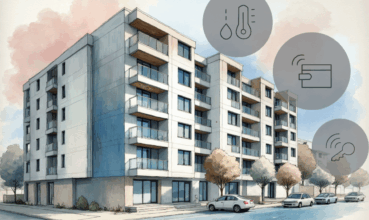
Multifamily operators now face a decision similar to the hotel industry’s past approach to internet access: will smart building technology remain a premium amenity fee, or will it beco...

Why International Developers Struggle to Access US Lending Markets

Written by:
Date:
11 Mar 2026
Share via Facebook

Share via Linkedin

Share via X

Copy to clipboard


International real estate developers entering the US market face a capital access barrier unrelated to their financial strength or project quality. The main obstacle is not underwriting standards but the relationship-driven nature of US lending, which prioritizes local track record and trust over foreign credentials.
US lenders evaluate foreign developers as unproven operators, regardless of their experience elsewhere. Overseas firms may bring substantial balance sheets and a history of successful projects in their home markets, but American financial institutions remain skeptical without a local performance history.
Olzhas Ayazbayev, CEO of BI Group USA, identifies the lending relationship as the single most critical partnership challenge for international developers in the US, more important than finding the right brokers, legal counsel, or architects.
“You have to know the right broker to help you search for land, the right attorney for zoning, the right architect,” Ayazbayev says. “But the major difference here is having the right lender, someone who believes in you and understands your philosophy.”
The Track Record Gap Creates a Credibility Deficit
US financial institutions rely heavily on a developer’s local track record when assessing risk. Domestic operators benefit from years of completed projects, established banking relationships, and reputations built through multiple market cycles. International developers, regardless of their global experience, are treated as newcomers.
Ayazbayev describes this as a fundamental difference in risk assessment. The lack of US-specific experience affects both the availability and pricing of capital for foreign entrants. “Lenders and equity partners trust local developers because they have a track record here,” Ayazbayev says. “For foreign developers, there’s no local history. This is a new market for them.”
Even a strong record abroad does little to close the credibility gap. BI Group completed 2.4 million square feet in 2025 across Kazakhstan, Uzbekistan, Azerbaijan, Georgia, and Ukraine, and has delivered more than 400 projects since its founding in 1995. Despite this scale, US lenders evaluating projects in Miami or Houston give little weight to foreign performance. Regulatory differences, market dynamics, and execution risks unique to the US mean that international experience does not automatically translate into US credibility.
Why Lenders Demand More Than Financial Capacity
Beyond track record, US lenders want alignment on development philosophy and long-term vision. Developers must demonstrate not only the financial capacity to complete a project but also a commitment to operating sustainably in the US market.
This expectation adds complexity for international developers still establishing their US presence. Lenders look for evidence that a foreign developer intends to be a long-term participant, not just pursuing a one-off project. For BI Group, this has meant communicating a client-focused approach and the company’s motto, “Building happiness.” Lenders require more than marketing, however. They want these values reflected in project execution and ongoing relationships.
“Our goal is to become local by executing our first project, building the right relationships, and earning trust from clients and lenders,” Ayazbayev says.
This creates a circular challenge: international developers need lending relationships to execute projects, but need completed projects to build those relationships. As a result, they often accept less favorable terms on initial projects to establish the track record needed to secure better access to capital in the future.
Relationship Access Is a Bigger Barrier Than Interest Rates
While industry discussions often focus on interest rates as the main financing challenge, Ayazbayev argues that relationship access is the more significant barrier for foreign developers.
Interest rates affect all developers equally. Both domestic and international operators face the same rate environment. However, cross-border developers lack the established banking relationships that allow consistent access to capital. A domestic developer with longstanding connections can secure financing across various rate cycles, while an international developer without those relationships may struggle to obtain capital at any rate.
Ayazbayev notes that interest rates do influence overall market activity, particularly since most US buyers use financing rather than cash. He points to three rate reductions in 2025, with another expected in 2026, as positive signals for residential development. Still, for international developers, access to debt depends first on building trusted relationships. Favorable rates are irrelevant if lenders remain unwilling to extend credit due to a lack of familiarity with a developer’s long-term presence.
Construction Costs Are a Global Challenge, Not a US-Specific One
Construction cost increases are often cited as a key development challenge. Ayazbayev says this is a global issue, not unique to the US. “I haven’t seen any market where construction costs go down,” he says. “With inflation everywhere, costs always trend upward.”
Managing construction costs requires strong relationships with contractors and subcontractors, but this is true in every market where BI Group operates. The real US-specific barrier for international developers remains the difficulty of establishing lending relationships.
Building Credibility Requires a Multi-Year Commitment
Establishing lending relationships with competitive terms is a multi-year process that extends well beyond the timeline of a single project. International developers must approach their initial US projects as opportunities to build credibility and trust, not just generate returns.
This reality shapes how experienced foreign operators approach US market entry. Rather than maximizing deal volume, they focus on executing a small number of projects successfully to demonstrate competence and long-term commitment. The goal is to convert skeptical lenders into partners who will eventually offer financing terms comparable to those available to domestic developers.
For BI Group, this strategy means focusing on four current projects, two in Miami and two in Houston, rather than pursuing rapid expansion. The company plans to break ground on its first Miami project within two months and a second four months later, while one Houston project is already underway. These projects serve a dual purpose: generating returns and establishing the US track record needed to unlock better lending relationships in the future. Success in this initial phase will determine whether BI Group can access the capital required for its broader long-term vision in both markets.
For International Developers, Relationship Building Is a Core Competency
For international developers, the lending relationship challenge is a hidden cost of US market entry, distinct from acquisition prices, development timelines, or construction budgets. Building the trust and track record that domestic developers take for granted requires a multi-year investment and shapes every aspect of strategy, project selection, and the pace of expansion.
Developers who succeed in the US treat relationship building as a core competency, not an administrative formality. Access to capital depends less on balance-sheet strength than on a demonstrated commitment to becoming a credible local operator. For cross-border developers, the path to growth runs through patience, persistent execution, and the slow work of earning trust, one project and one lender at a time.
Similar Articles
Explore similar articles from Our Team of Experts.