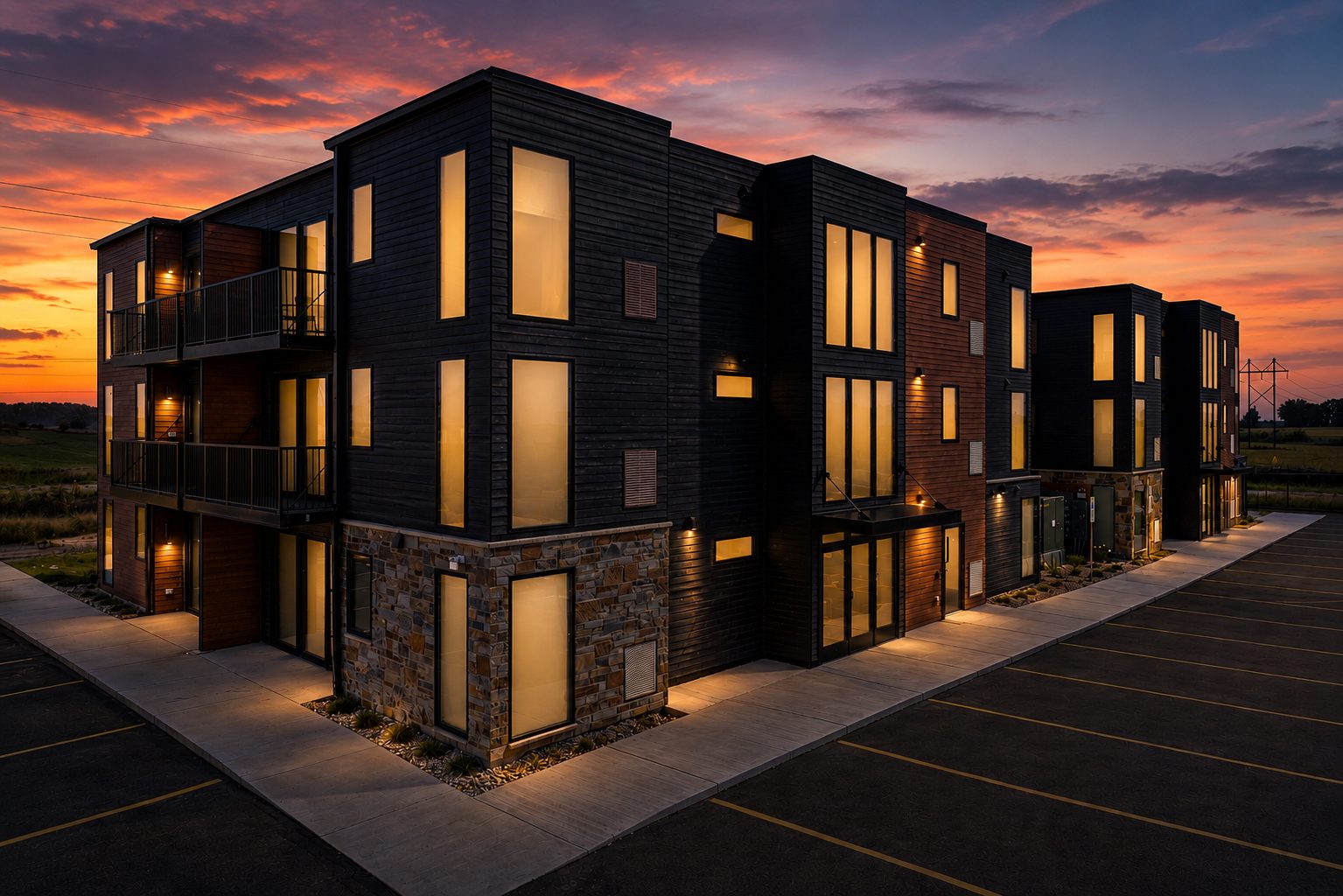
Ask most people about apartment rents and they will tell you rents are too high. Dusten Hendrickson, founder of Mailbox Money Real Estate, sees the numbers differently. His firm develops workforce housing in Sioux Falls, South Dakota, and other secondary and tertiary Midwest markets, and from where he sits, today’s rents are low compared to what it costs to build new apartments.
That gap between rents and replacement cost affects what renters pay today, how much new housing gets built, and where rents may head over the next few years. Here is how Hendrickson explains it.
Renting Is a Good Value Right Now
Hendrickson estimates that renting currently costs about 30% less than buying in most large U.S. metro areas.
“It’s probably about 30% less to rent than to buy right now in most major metros,” he said.
Rents have also held steady. According to Hendrickson, market-rate rents saw little change for about four years, and increases are now starting to return. He notes that the data shows people are staying in apartments longer.
Public perception has not shifted with the numbers. “The sentiment still is that the rent is too high, because that’s always what the sentiment is,” he said. “But actually the rent is as cheap as it’s going to get.”
What Replacement Cost Means
Replacement cost is what it would take to build a comparable property today, including land, materials, labor, and financing. Rents need to reach a certain level before new projects make financial sense for builders who rely on rental income to cover expenses and pay a return.
“If people think rents are expensive now, it’s way out of line for the replacement cost,” Hendrickson said.
In his view, this is what sets up future rent growth. As fewer new apartments come online and demand holds steady, rents move toward the level needed to support new construction, and he believes that shift is already underway.
How Much Room Rents Have to Grow
By Hendrickson’s estimate, rents need to rise about 30% to line up with today’s replacement costs.
“We need about 30% rent growth so that the rents are actually in line with replacement costs,” he said.
At organic rent growth of 2% to 5% a year, he estimates it would take about five years for rents to line up with today’s building costs.
Some locations are already moving more quickly. At one of Mailbox Money’s communities, renewals and new leases this year are coming in about 10% higher. Hendrickson calls that uncommon. Across most of the firm’s markets, he is seeing increases of 2% to 5% this year.
What It Means for Renters and Investors
For renters, the current market offers good value, especially in newer communities with modern finishes and rents that have moved very little in recent years.
For investors, the gap points to where rents are headed. With fewer new apartments being built, Hendrickson expects rents to keep moving toward the level needed to support new construction. Meanwhile, newer apartments in good locations are leasing well.
“If you have a nice new product, it’s very easy to occupy those buildings because market rate rents are low,” he said.
That combination of steady demand and attainable rents is the thinking behind Mailbox Money’s focus on workforce housing in stable Midwest markets, where the firm builds quality apartments priced for working professionals.
If you’re interested in learning more, book a call with Mailbox Money’s investor relations team.
About Mailbox Money Real Estate: Mailbox Money Real Estate is a vertically integrated developer of workforce housing in secondary and tertiary Midwest markets, including Sioux Falls, South Dakota, and Rochester, Minnesota. The firm manages each project in-house, from site selection and construction through leasing and asset management, on behalf of its accredited investor partners.
This article is based on information provided by the expert source cited above. It is intended for general informational purposes only and does not constitute legal, financial, or real estate advice. Readers should conduct their own research and consult qualified professionals before making any real estate or financial decisions.