
In New York City, challenging your property tax assessment is far from straightforward. The city’s property tax appeal system is so understaffed, rushed, and opaque that even large institu...

Chicago Faces Post-War Level Challenges as Construction Costs and Delays Mount

Written by:
Date:
23 Sep 2025
Share via Facebook

Share via Linkedin

Share via X

Copy to clipboard

A perfect storm of economic and regulatory challenges has created the worst environment for new construction in nearly 80 years, according to one prominent Chicago developer who sees alarming parallels to post-war building constraints.
“I’ve arrived at the thinking that we’re at the most difficult time to build since World War II, because everything seems to be stacked against building now,” says David Wilts, Founder and CEO of Digital Masterplanning, who is currently developing the 1.4 million square foot Woodlawn Central project on Chicago’s South Side.
The Evidence of Crisis
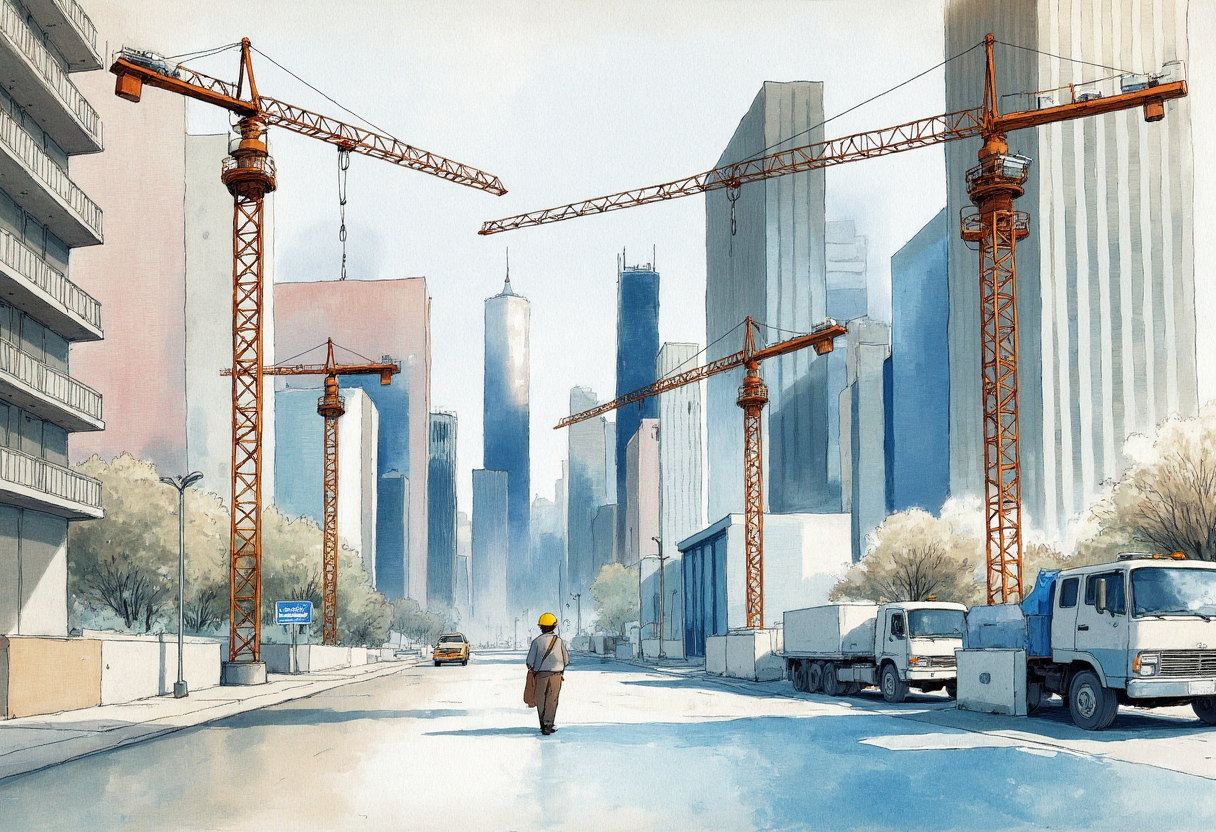
The most visible sign of Chicago’s construction slowdown can be seen in its skyline – or rather, what’s missing from it. “There were 60 cranes in the air [a decade ago]. Now there are six,” Wilts notes, pointing to a dramatic decline in new development that threatens to worsen the city’s housing shortage.
According to Wilts, several compounding pressures are making new construction extraordinarily difficult. Financing has become far more expensive due to high capital and debt costs, while persistent supply chain disruptions continue to delay projects and inflate budgets. Labor shortages, particularly significant given that immigration-based workers represent about 30% of the construction workforce, further strain timelines and expenses. At the same time, entitlement and permitting costs keep climbing, and uncertainty surrounding federal funding programs such as LIHTC and Fannie Mae/Freddie Mac creates additional risk, leaving many developers hesitant to break ground.
The Perverse Incentives
Perhaps most concerning, Wilts says, is that many experienced developers have simply stopped trying to build in Chicago because their existing properties are generating stronger returns without new competition.
“What I am learning from all of the other developers in the city that have been developing for decades more than I have – they’ve all stopped building in Chicago a decade ago,” Wilts explains. “If they don’t build all their existing assets, they’re making way more money.”
This creates what Wilts describes as a “downward spiral” where reduced construction activity threatens to erode Chicago’s specialized construction expertise – particularly in areas like concrete work where the city has historically excelled. “Chicago has some of the best concrete subcontractors. No other city can build a slab a week like we can, but if we don’t have enough volume of work that expertise and institutional knowledge will disappear.”
The Housing Impact
The construction slowdown is already having real impacts on housing availability and affordability. “Talk to anybody coming out of any of the universities here in Chicago, and no one can find a place to live,” Wilts says.
While recent policy changes like the elimination of parking requirements show promise, Wilts argues these incremental improvements aren’t enough to overcome the broader challenges facing developers.
Looking Forward
Despite the challenges, Wilts and his team are pushing ahead with innovative approaches to make development viable, including new construction management techniques and creative financing structures. “We’re at the most difficult time to build,” he acknowledges, “but we’re looking at every lever we can pull to create naturally occurring affordable housing.”
Whether other developers follow suit may determine if Chicago can reverse its construction decline before losing the institutional knowledge that once made it a leader in urban development.
Similar Articles
Explore similar articles from Our Team of Experts.