

The Florida real estate market is showing signs of a gradual rebound, but moving a deal from contract to closing has become more complicated than ever. Fluctuating mortgage rates, stricter f...

A New Approach to Public Space Programming Is Shaping Cities Across the U.S.

Written by:
Date:
16 Jul 2025
Share via Facebook

Share via Linkedin

Share via X

Copy to clipboard

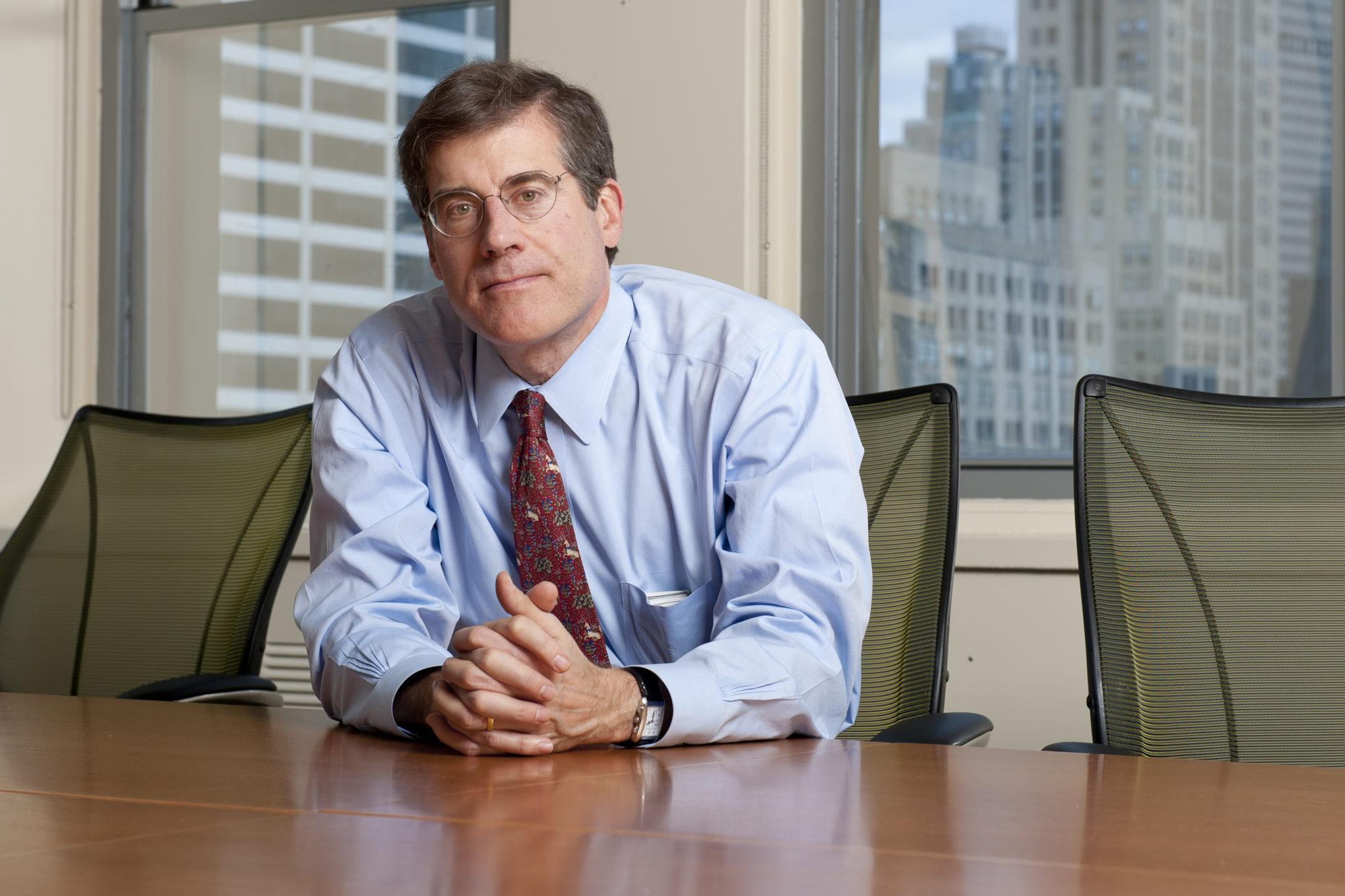
The conventional wisdom for fixing troubled public spaces has long centered on massive capital expenditures, tear everything down and rebuild from scratch. But Dan Biederman, President of the 34th Street Partnership and the architect behind Bryant Park’s legendary transformation, has spent decades proving there’s a better way.
“When a client calls me in and says, ‘We got a terrible public space. We’ve raised $180 million for a capital expenditure program. It’s 17 acres,’ and then they look at me and I’m raising my eyebrows,” Biederman explains. “They say, ‘Not enough money?’ And I say, ‘No, much too much money.'”
This counterintuitive approach has become Biederman’s signature, and it’s changing how cities across America think about public space revitalization. Rather than relying on expensive reconstruction projects, his model emphasizes programming and management, a strategy that can improve spaces in years rather than decades.
From 40 Years to Three: Accelerating Urban Transformation
Biederman’s latest success is San Francisco’s Union Square, a space that had been on his personal list of “10 American public space problems that only Dan can solve” for years. The square had become synonymous with the city’s broader struggles with street disorder, culminating in a shooting incident involving a 49ers rookie that made national headlines.
“We’ve been there five months now,” Biederman reports. “The amount of drug interaction—you basically have in San Francisco sad cases of people on drugs on the sidewalks on Market Street and some of the other areas, and that was afflicting Union Square, and it’s basically on its way to disappearance at Union Square. It feels totally different. Everybody’s noticing.”
The rapid improvement reflects decades of refined methodology. When Biederman started at Bryant Park at age 26, he had to learn real estate and design while wrestling with New York’s complex political landscape. “Bryant Park has taken 40 years to perfect,” he notes. “We now can perfect the same thing in cities other than New York in about three, sometimes two.”
The Programming and Management Formula
The secret lies in what Biederman calls “programming and good management” a deceptively simple phrase that encompasses a sophisticated understanding of urban dynamics. In cities with disorder problems, passive parks simply don’t work. The solution requires active engagement and meticulous attention to detail.
“Programming is divided by us into two things,” Biederman explains. “One is actual concerts that are scheduled at a given time. A lot of people stop at that point, 1:30 on Thursday, we have a jazz concert, whatever. Not enough, especially in dangerous cities like New York.”
The more crucial element is what his team internally calls “amenities”, though Biederman warns his staff not to use the term with outsiders who might not understand its specific meaning. Walk through Bryant Park and you’ll see chess areas, pétanque courts, reading rooms with newspapers and magazines, children’s play areas, a carousel, shuffleboard, knitting circles, and fitness programs.
“That means you don’t have a passive park,” Biederman says, “and therefore Midtown is just loaded with troubled people who are making life miserable for others.”
The management component is equally critical, focusing on details that many overlook: no litter, no graffiti, exceptional public restrooms, and quality lighting. “Some park designers forget that it’s going to be dark half the time on average,” Biederman observes.
Scaling Success Across 36 States
Despite running what he describes as “a tiny company with 15 people,” Biederman has extended his model across 36 states and multiple countries. The scaling happens largely through word-of-mouth referrals from successful projects.
“A lot of it relies on incoming, people come across one of the parks and they say, ‘Who did that?’ And then they call me,” he explains. Bryant Park serves as a powerful calling card, but so do projects in San Francisco, Dallas, Tennessee, and Houston.
International expansion has focused primarily on English-speaking markets. “The places that have listened most? Canada, we’ve had a few jobs. Obviously, it’s nearby, and there’s no language problem. England, we helped set up the first BIDs in London.”
The Contrarian Approach to Funding
Perhaps Biederman’s most controversial opinion involves funding sources. Despite working with government entities, he advocates avoiding government money whenever possible.
“If you’re going to do a project like this, try to stay away from government money,” he advises. “Bryant Park has no government money for the last 29 years, and it allows us to run things totally outside, the second you take government money in cities like New York, blue cities, you’re in trouble, because then they’ll grab you into their normal procurement processes and the like, and it makes it very hard to do the right thing.”
This independence allows for the rapid decision-making and innovative approaches that characterize successful transformations. While some projects require initial government support, like Union Square’s contract with San Francisco, the goal is always to achieve operational independence.
The Investment Opportunity in Urban Revival
Biederman’s optimism about certain markets runs counter to popular sentiment. When asked by an investment group about the most underrated city in the world, his answer surprised them: London, despite Brexit concerns. For investment opportunities, he pointed to San Francisco.
“It’s got a bad reputation for street disorder, but they’ve decided to fix that, and they’re going in the right direction,” he explains. “My best current clients are two San Francisco entities.”
This perspective reflects a deeper understanding of urban cycles and the potential for rapid improvement when the right approach is applied. Cities that commit to addressing disorder problems through programming and management can see significant improvements in relatively short timeframes.
The Broader Urban Challenge
Biederman’s work addresses a fundamental challenge facing American cities: the breakdown of public space civility. As he puts it, “There’s a very savvy radio station owner here who said something very quotable one day, 3,000 New Yorkers are making 8 million New Yorkers miserable. That’s exactly right.”
The solution isn’t necessarily more policing or higher barriers to entry, but rather creating environments where positive activities crowd out negative ones. This approach has implications far beyond parks and plazas, it’s a model for how cities can reclaim public spaces and restore quality of life for residents and visitors alike.
Looking Forward
As Biederman continues to refine his model and expand to new markets, the implications for real estate investors and urban developers are significant. Properties adjacent to well-managed public spaces see increased values, and the programming approach offers a cost-effective alternative to massive redevelopment projects.
The success in Union Square and other recent projects demonstrates that even spaces with serious challenges can be improved relatively quickly with the right approach. For cities struggling with public space issues, Biederman’s model offers hope that solutions don’t require decades of planning and hundreds of millions in capital expenditure.
Instead, they require something perhaps more challenging: the commitment to active, intelligent management and the willingness to think differently about what makes public spaces work. In today’s urban environment, that’s a lesson worth scaling.
Similar Articles
Explore similar articles from Our Team of Experts.



Industry Profiles, Residential Real Estate, Real Estate Investment, Market Analysis & Policy, Industry News
Miami’s luxury real estate market presents a paradox: while headline statistics show price per square foot at record levels, experienced market participants observe a different reality. Th...