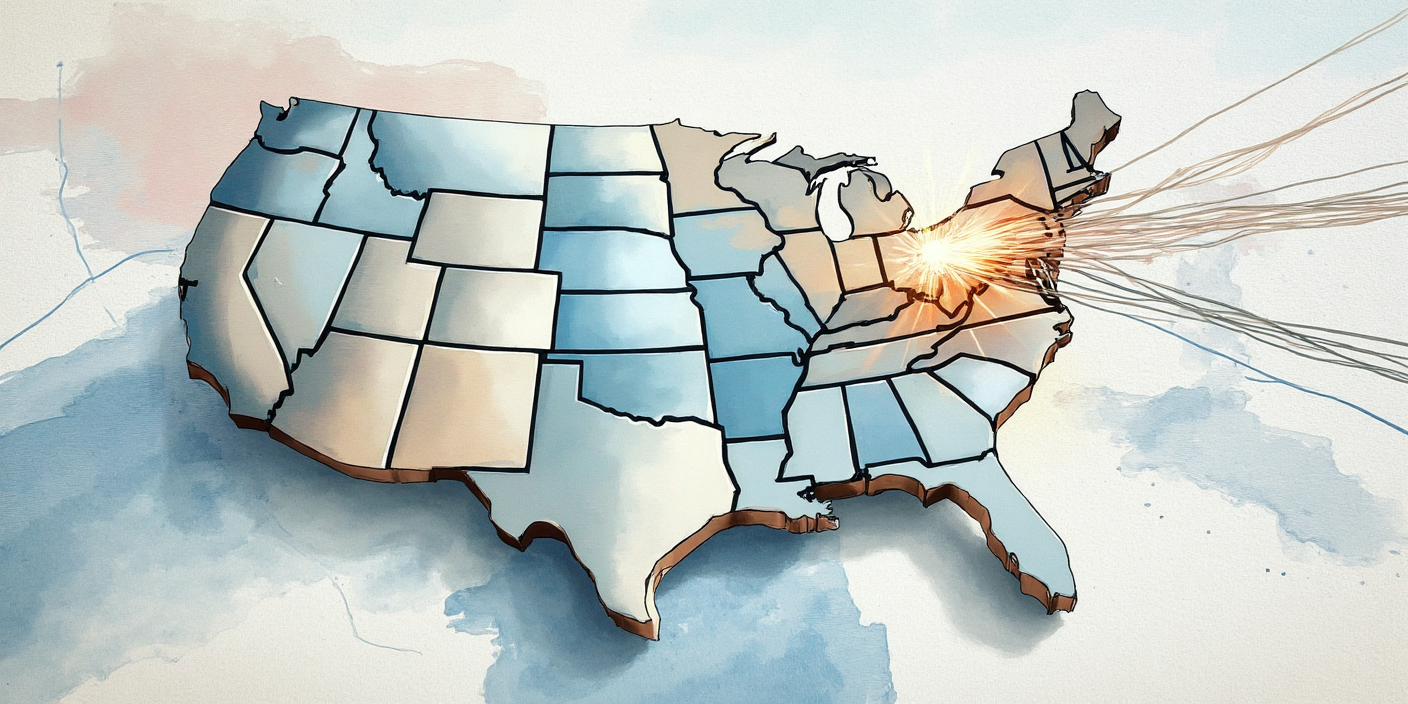
The United States is undergoing its largest communications infrastructure overhaul since the telephone era, according to one industry leader who sees a historic shift from copper to fiber networks reshaping the digital landscape.
“The country is going through a metamorphosis where for the last 100 to 120 years, copper wire was the main foundation, and that’s all changing to basically fiber glass. The entire country is being rewired,” says Glenn Meyer, President of Pavlov Media, a national broadband provider.
Breaking Free from Legacy Systems
Meyer argues this transformation represents more than just a technology upgrade, it’s a fundamental restructuring of how communications infrastructure is funded and deployed in America.
“There’s a fair amount of institutional capital that’s helping fuel that private industry, essentially rebuilding the communications network that historically were controlled by monopolies like AT&T back in the day,” Meyer notes, pointing to his own company’s partnership with Macquarie Asset Management, which he identifies as the world’s largest infrastructure investor.
This shift from monopoly-controlled copper networks to privately funded fiber deployment is creating new opportunities for both providers and customers, according to Meyer. He says the old model of relying on legacy carriers and their pricing structures is being disrupted by companies that control their own fiber networks.
“One of the benefits that we offer in the markets that we serve is that by having our own municipal fiber networks, not only can we serve what I’ll call larger properties that have economies of scale, but in those local markets, anyone can get on our network at a very affordable price,” Meyer explains.
The Economics of Modern Networks
Meyer says this new model eliminates many of the economic barriers that previously made high-speed connectivity cost-prohibitive for smaller properties and businesses. “They don’t have to worry about pulling in a very large pipe or circuit from a legacy carrier, and the economics get blown up at that point in time,” he notes.
The demand for higher speeds appears to validate this approach. According to Meyer, “We’re seeing about 40% of the people now subscribing to higher than what I would call industry standard one gigabit service, so to five and 10 gigabits.”
Looking Forward
As one of the companies at the forefront of this infrastructure transformation, Pavlov Media plans to accelerate its fiber network expansion over the next two to four years, Meyer says. The company is preparing to announce additional markets this fall, focusing particularly on college towns where they already have anchor customers.
Meyer suggests this private capital-driven transformation will continue reshaping America’s digital infrastructure landscape in the coming years. With institutional investors increasingly recognizing the strategic value of fiber networks, the “great rewiring” of America appears to be well underway.