
South Florida’s mixed-use developments are evolving from retail-driven centers into modern city plazas, where retail serves a supporting role. According to Nicolas Pinzon, Associate Princi...

'The Average Tenant Stays 17 Years:' Insights from a Manufactured Housing CEO

Written by:
Date:
25 Jul 2025
Share via Facebook

Share via Linkedin

Share via X

Copy to clipboard

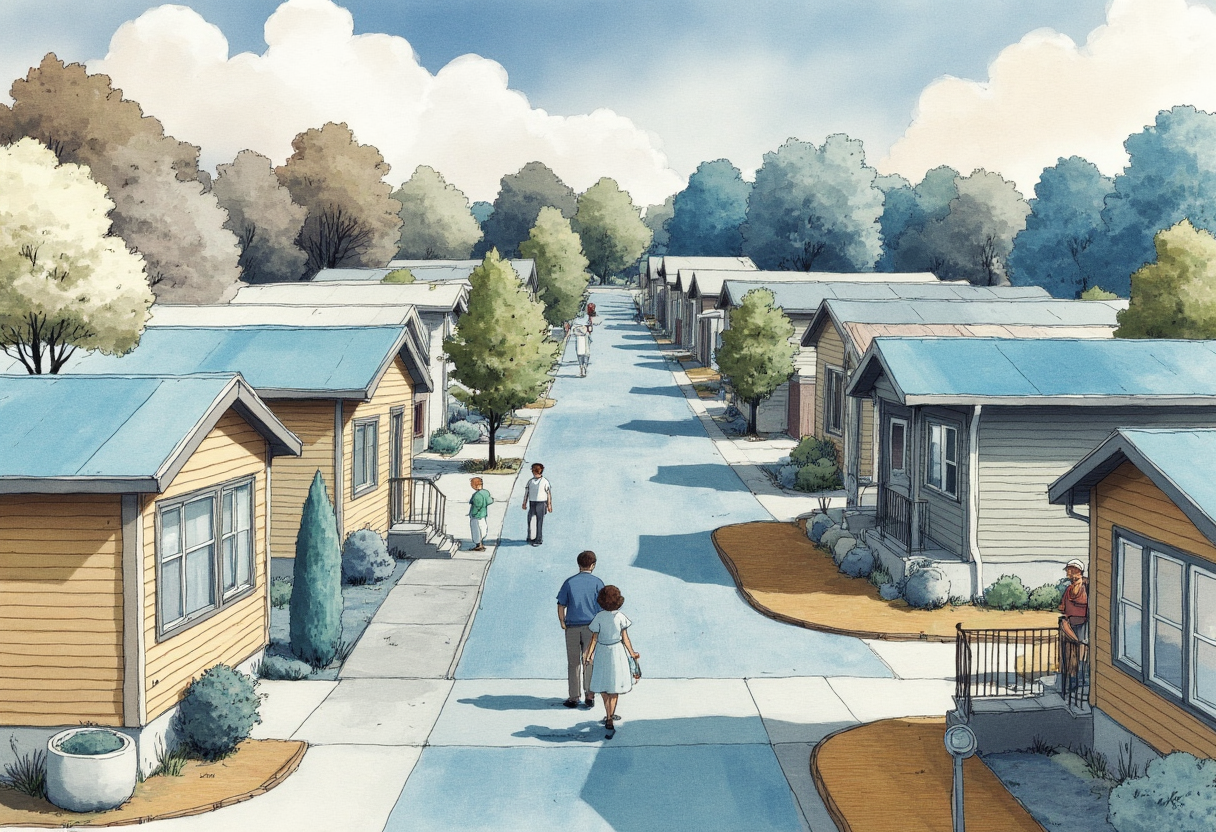
In an era of increasing housing transience, one sector stands out for its remarkable stability: manufactured housing communities, where average tenancy stretches nearly two decades, according to one industry leader.
“The average tenant in our communities stays for over 17 years,” says Michael Anise, CEO of FG Communities. “A lot of them just pass it on to a relative or friend when they do leave.”
The Foundation of Stability
According to Anise, this extraordinary retention rate stems from a unique ownership structure. “Most of our tenants own their homes, and they just pay us lot rent,” he explains. “It’s a land lease model, and that makes those tenants very sticky.”
This stability creates operational advantages that Anise says traditional multifamily can’t match. “When you just maintain the land and the infrastructure, you have pretty low overhead compared to when you own the homes and have to spend money and time maintaining them,” he notes.
Beyond Basic Maintenance
However, Anise argues that maintaining the status quo isn’t enough. “We’ve put a lot of capital expenditures subsequent to our acquisitions, improving the roads, paving the roads, beautifying the landscape, putting branding signs and gates, and really improving the life quality for our tenants,” he says.
This investment approach marks a shift from traditional ownership patterns. “Most of our communities we buy from mom and pops that have had these communities for a long time,” Anise explains. “We’re putting in the capital expenditures that some of these mom and pops didn’t really have or couldn’t afford to do.”
The Evolution of an Industry
FG Communities, which Anise co-founded in 2022, represents a new wave of professional ownership in the sector. The company has acquired about 50 properties with over 2,000 home sites, primarily in Southeast markets experiencing strong population growth.
“We’re seeing a lot of migration and growth. Folks are migrating out of the Northeast and out west for better climate,” Anise notes. “Even a lot of companies are building headquarters here or second headquarters here, especially in the Carolinas.”
Looking ahead, Anise sees room for significant expansion while maintaining the community-focused approach that drives tenant stability. “We really want to see this portfolio grow to 5,000-10,000 home sites in the future,”he says.
Similar Articles
Explore similar articles from Our Team of Experts.