“If Grey Gardens was in the Midwest, I probably would have listed it and sold it.” – Alex Wolking, Keller Williams ONEChicago In a real estate landscape increasingly filled wit...

The Art of Adaptive Reuse: Jeffrey Rosenblatt Reshaping Manhattan's Commercial Landscape

Written by:
Date:
17 Jun 2025
Share via Facebook

Share via Linkedin

Share via X

Copy to clipboard

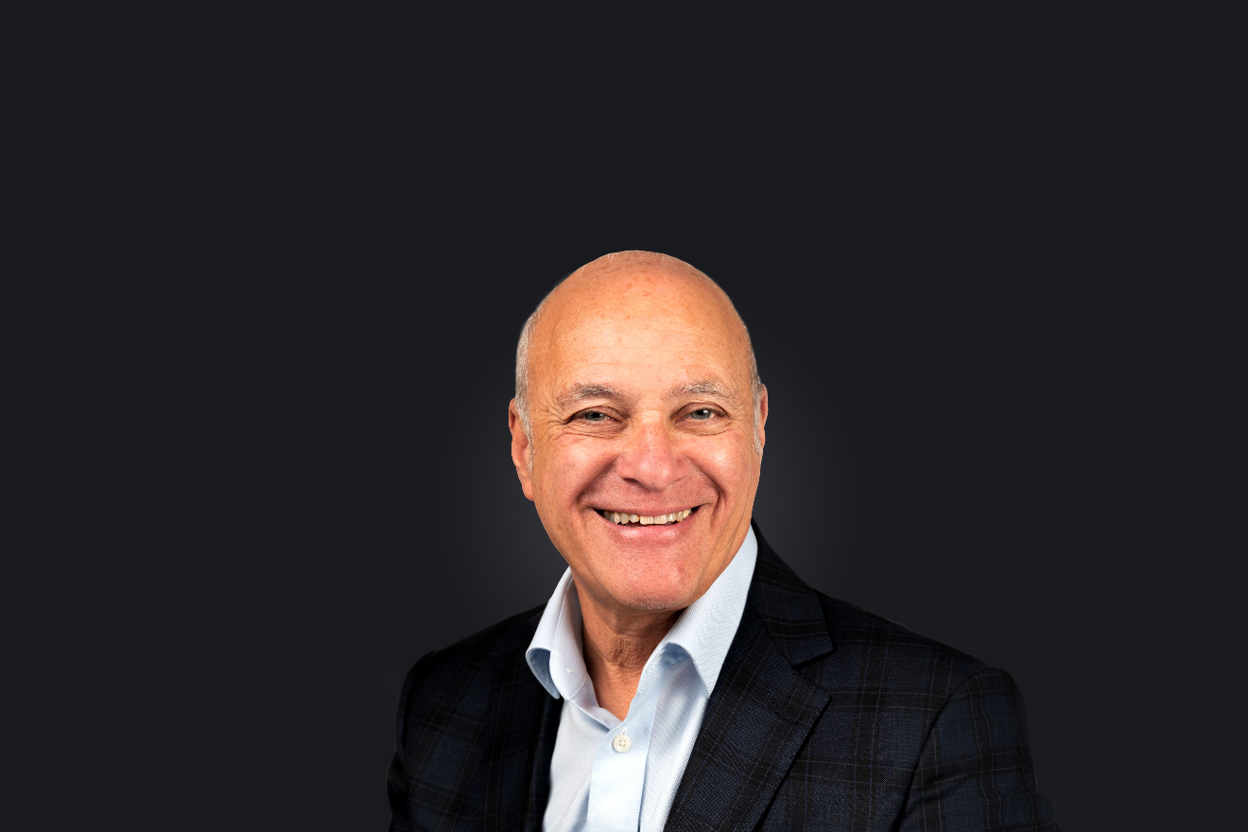
“When I started in business, people would turn their nose up at schools, gyms, and dance companies,”says Jeffrey Rosenblatt, Senior Vice President of Leasing at Lincoln Property Company. ” But now, landlords who’ve had vacancies for years are embracing these alternatives because empty buildings provide no return on investment.”
With over 30 years navigating New York City’s commercial real estate market, Rosenblatt has become a master of creative problem-solving in a post-pandemic landscape where adaptive reuse has transformed from last resort to strategic necessity.
The Paul Taylor Dance Company: Reimagining the Impossible
One of Rosenblatt’s most innovative recent projects showcases his approach to seemingly impossible challenges. The world-renowned Paul Taylor Dance Company needed a new Manhattan home with specific requirements that rarely exist in the city: very high ceilings, no columns, and a limited budget.
“It took about two years to complete the deal because their requirements were almost impossible to fulfill,” Rosenblatt recalls. After exhausting traditional options, he approached a landlord in the struggling Penn Station area with a bold proposition: would they consider cutting out floor slabs to create double-height spaces and reinforcing the building’s steel structure in exchange for a long-term lease?
“No one’s ever asked us that,” the landlord responded, “but we would consider it because we have a problem—nobody wants to be on Eighth Avenue.”
The economics made sense for both parties. The dance company secured a 30,000-square-foot home with the ceiling height they needed, while the landlord filled a long-standing vacancy in an area where “rents keep declining and expenses keep going up.” The deal also included a special lease structure where the nonprofit doesn’t pay taxes, saving them millions.
“For them, Eighth Avenue is fantastic,” Rosenblatt explains. “Everyone can get there: the dancers, performers, parents, employees. They used to be on Grand Street, which was nearly impossible to access.”
A Tale of Two Markets: Manhattan’s Widening Divide
While Class A buildings in Hudson Yards and on Park Avenue continue to thrive with rents reaching $200-250 per square foot, Class B and C buildings face unprecedented challenges. Some spaces have sat vacant for 5-7 years with no prospective tenants as companies gravitate toward newer, amenity-rich properties.
“This represents a fundamental shift in usage patterns,” Rosenblatt says. “Premium locations don’t need to adapt because demand remains strong, but B and C buildings are being forced to reconsider uses they would have rejected outright in the past.”
He points to 1501 Broadway, which recently made deals with a dance company and a pickleball club—tenants that would have been unthinkable pre-pandemic. These alternative users are willing to pay rents in the $45-58 per square foot range, which is attractive to owners facing prolonged vacancies.
“Most buildings still won’t accept these uses,” Rosenblatt notes. “The ones willing to accommodate rehearsal studios or tenants that generate noise are taking a calculated risk, but it’s preferable to continued vacancy spanning a decade.”
Beyond Arts: Education and Medical Uses Transform the Landscape
The trend extends beyond arts organizations. During the COVID era, Touro College secured a 300,000-square-foot lease in one of Times Square’s main buildings. “If the market was strong, they would never have spoken to Touro College,” Rosenblatt observes.
Medical uses have been gaining acceptance for even longer. “When I started, medical was also frowned upon—’we don’t want doctors,” he says. “Now it’s considered desirable.” The aging population ensures continued growth in the medical sector, making these tenants increasingly attractive to landlords.
The Ultimate Adaptive Reuse: Office-to-Residential Conversions
Perhaps the most significant trend is the conversion of office buildings to residential use, a phenomenon that began in the Financial District and is now spreading to Midtown.
“There’s substantial conversion activity underway on Third Avenue and near Times Square,” Rosenblatt explains. While these conversions represent significant investments, the motivation is clear: “There’s always tremendous need for housing in New York City. Apartments are leased within hours, not days.”
As we move through 2025, Rosenblatt anticipates a strengthening market, particularly for B buildings that have been struggling. “I see the market becoming much tighter because many buildings are being removed from the office inventory. As buildings convert to other uses, the remaining office tenants will have fewer options, increasing demand for available space.”
The Foundation of Success: Honesty and Empathy
Throughout his career spanning high-profile clients like IBM, Mount Sinai Hospital, Fordham, and Columbia University, Rosenblatt has maintained that success comes down to fundamental principles: honesty and empathy.
“I believe the most important quality in any business is straightforwardness,” he says. He recalls advising young brokers who would ask what to tell clients when things went wrong: “Did you ever just tell the truth?”
This approach extends to putting clients’ interests first, even when it means a smaller commission. He recounts saving a client millions by convincing them they needed 10,000 square feet less than they initially thought.
“Some brokers wouldn’t have done that,” he acknowledges. “But clients truly appreciate this approach. They recognize when someone prioritizes their interests over commission.”
Similar Articles
Explore similar articles from Our Team of Experts.