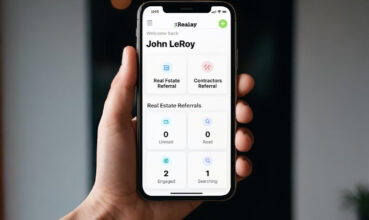
Michigan-based platform brings hands-free referral tracking to real estate professionals nationwide. Independent real estate brokers and agents now have a new tool for managing referrals on ...

The Anti-CRM Revolution: How Radius is Reimagining Real Estate Technology

Written by:
Date:
03 Jul 2025
Share via Facebook

Share via Linkedin

Share via X

Copy to clipboard

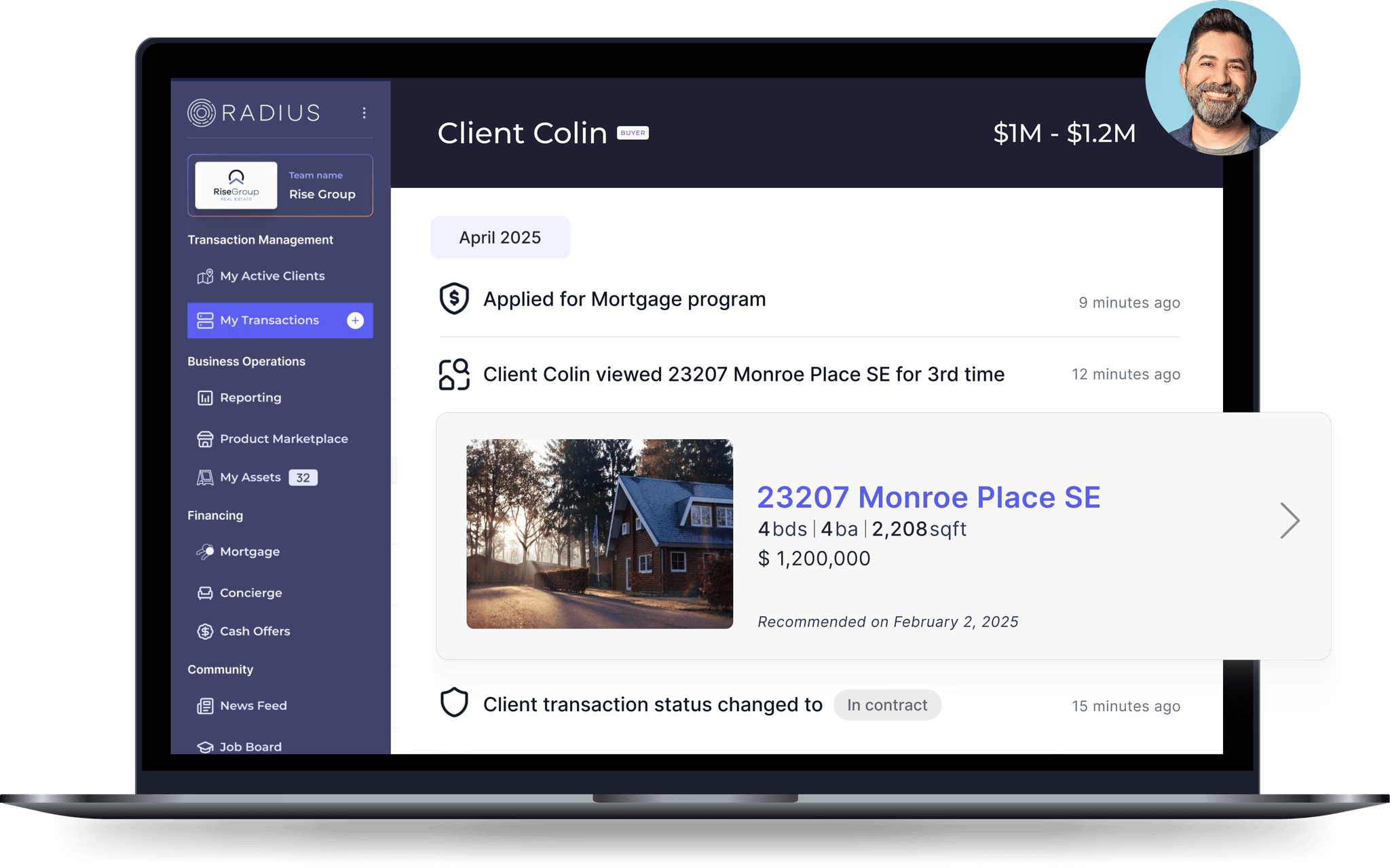
The real estate industry is experiencing its most significant technological transformation in decades. More than 75% of US real estate brokerages have adopted AI technologies to streamline processes, and by 2025, expect wallets to open even wider, as investors, developers, and other big shots ramp up their tech spending. But while most companies are focused on incremental improvements to existing systems, Radius founder Biju Ashokan is taking a radically different approach, one that challenges the very foundation of how real estate technology should work.
Breaking the CRM Paradigm
“We consider ourselves as a tech platform for brokerage agents and the brokerage,” explains Ashokan, whose company has been quietly revolutionizing how independent brokerages operate. But Radius’s most provocative stance isn’t just about being another proptech solution, it’s about fundamentally rethinking the role of customer relationship management in real estate.
Traditional CRMs, Ashokan argues, create more work than they eliminate. “Most of these chatbots that are around, they’re reactive. So you ask them questions and they tell you the answers. Mel does that too, but it also does proactive stuff,” he explains, referring to Radius’s AI assistant that represents the company’s “anti-CRM” philosophy.
The distinction is crucial. While traditional systems require agents to input data, create campaigns, and manage workflows manually, Radius’s approach flips the script entirely. “What agents typically do today is they set these leads on an email campaign, and usually they get the same email campaign. Like all the leads get the same email campaign. So it’s not personalized. And with Mel, because Mel is learning more and more about you as a client, it is able to send extremely personalized messages.”
The Independence Movement
This technology-first approach aligns with a broader shift in the real estate industry. Independent real estate brokerages often allow agents more freedom. They also have the benefit of being perceived as more “local” than large franchises, and Ashokan believes this trend will accelerate dramatically.
“Agents have always wanted to be independent. And by nature, they’re independent because they sign an independent contractor agreement with any brokers they join,” Ashokan observes. “If you ask any agent whose eventual goal is to become independent and start their own firm, this is how they think.”
The timing couldn’t be better. Well-known franchise brands have proven their staying power, but more brokerage brands are scaling up nationally, capturing agent and consumer attention. Radius positions itself as the technical backbone that makes this independence financially viable.
“That time is over where brokerages dominated the industry. Now is the time for agents to start their own independent brokerages and they can dominate the industry,” Ashokan declares. The company’s white-label approach means agents can build their own brands while leveraging enterprise-grade technology traditionally available only to large franchises.
Making the Complex Simple
The real estate transaction process involves hundreds of touchpoints, from initial lead generation through closing documentation. Artificial intelligence (AI) and machine learning (ML) will improve workflows, anticipate industry changes, and proactively assess client needs, but most solutions address individual pain points rather than the entire ecosystem.
Radius takes a different approach. “From an end user’s perspective, they don’t have to go to many different softwares or many different people to get all this stuff done. They’ll go to just this one brand,” Ashokan explains. “Brand XYZ takes care of all of that for them.”
This vision extends beyond simple consolidation. The company’s roadmap includes mortgage, escrow, insurance, and property management services, all integrated into a single, AI-powered platform. “Eventually in the next 12 months what we want is we want Radius to be like this one-stop shop for everything that a client needs when it comes to buying a property or selling a property.”
The AI Advantage
Gen AI could generate $110 billion to $180 billion or more in value for the real estate industry, according to McKinsey research, but most companies are struggling with implementation. Radius has built AI capabilities directly into its core architecture rather than bolting them onto existing systems.
“Even a mid-tier agent can work like a really, really good agent if that person leverages technology and leverages AI,” Ashokan explains. The company’s MEL AI assistant doesn’t just answer questions—it proactively manages client relationships, schedules appointments, and even has the capability to conduct calls that sound like the agent themselves.
“Very soon it will have the capability of talking as well. We’re exploring the opportunity of Mel having the ability to speak exactly like the agent, because it’s learning how the agent speaks,” he reveals. This isn’t just automation, it’s augmentation that allows agents to scale their expertise across more clients simultaneously.
The Shopify Moment
Perhaps the most compelling aspect of Radius’s approach is how it democratizes sophisticated technology. Just as Shopify enabled millions of entrepreneurs to build e-commerce businesses without technical expertise, Radius aims to enable agents to build independent brokerages without operational complexity.
“We want to be in the background, kind of like a Shopify model, where we provide all the tools for you, it’s white labeled, you go build your brand using our tools,” Ashokan explains. “Anyone who’s even hesitating to start their own independent company, they don’t need to worry. We’ll take care of all the setup, all the training. They just need to do what they do best.”
This approach addresses a fundamental tension in the real estate industry: agents want independence and brand ownership, but they also need sophisticated support systems to compete effectively. Radius resolves this by providing the infrastructure while keeping the brand equity with the agent.
The Bottom Line
As the real estate industry continues its digital transformation, companies like Radius represent more than just technological advancement, they represent a fundamental shift in power dynamics. By combining AI-first architecture with white-label flexibility, they’re enabling a new generation of independent brokerages that can compete with franchise giants while maintaining local market expertise.
“Success would be closing like 100 properties for one agent. It’s going to be easy in a year. I think that world is going to happen pretty soon because of tech and AI, where they can dream bigger, make a lot more money if they’re very intentional about it,” Ashokan predicts.
For an industry that has traditionally moved slowly, the anti-CRM revolution represents something rare: a genuinely disruptive approach that could reshape how real estate professionals think about technology, independence, and client service.
Whether Radius’s vision becomes reality remains to be seen, but their willingness to challenge fundamental assumptions about how real estate technology should work makes them a company worth watching.
Similar Articles
Explore similar articles from Our Team of Experts.