In Tampa Bay, the typical signs of a cooling real estate market — rising inventory, higher interest rates, and cautious builders — are not translating into lower land prices. Listings have increased, interest rates have doubled since mid-2022, and national builders have scaled back on land acquisitions. Yet, sellers remain firm on their asking prices.
Buyers hoping for distressed owners to slash prices are likely to be disappointed. The main reason is simple: most Tampa Bay landowners are not carrying debt.
Why Sellers Digging in
Most land in Tampa Bay is owned outright — a structural shift that traces back to the 2008 financial crisis. When the housing market collapsed, banks were hit hard by defaults on speculative land loans and largely pulled back from financing raw land purchases. Unlike finished homes, undeveloped land generates no income and can take years to secure zoning and development approvals, making it one of the riskiest asset classes in a downturn.
As a result, over the past decade and a half, buyers who acquired land typically did so with cash, significant equity, or long-term family ownership. Many parcels were never leveraged at all — they were inherited or purchased decades ago at much lower prices. That means today’s sellers are not facing monthly loan payments, maturity deadlines, or lender pressure. Without debt service weighing on them, they have little incentive to discount simply because market conditions have cooled.
According to Bill Eshenbaugh, founder of Eshenbaugh Land Company and a veteran broker along Florida’s I-75 corridor, landowners understand they have only one opportunity to sell a legacy asset such as a ranch and are reluctant to accept steep price reductions that cannot be recovered later.
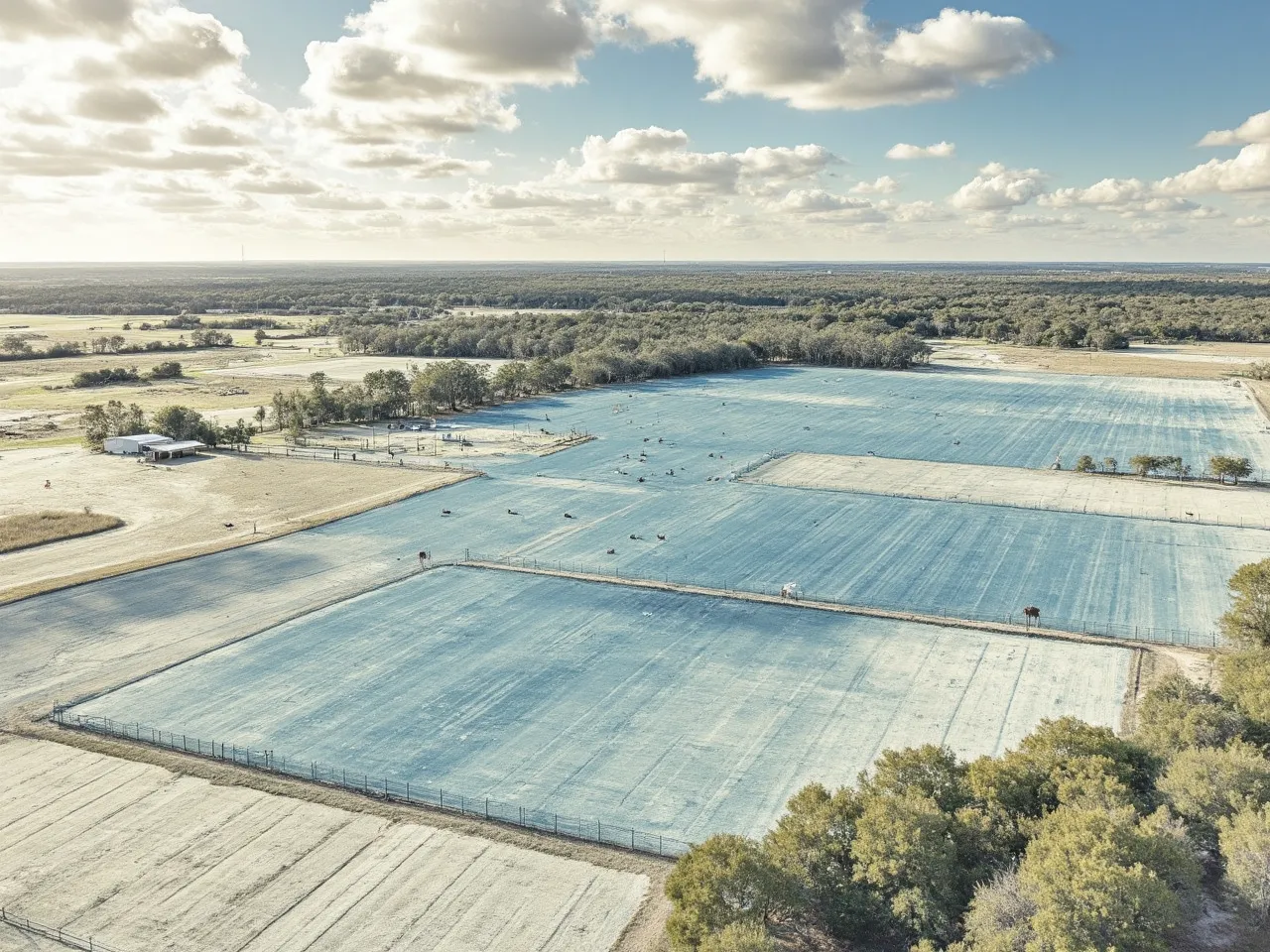
This patience is especially common among families who have held ranches or citrus groves for generations, some for over a century. They are not under financial strain. Many are earning significant income from cattle, which is now selling at record prices. Even citrus growers, despite facing disease and foreign competition, are in no rush to sell. Their land remains valuable, with high, dry, sandy soil ideal for future residential development. They are content to wait for the right moment.
The Buyer Outlook
For buyers, the land market in Tampa Bay is slower but not cheaper. The frenzied pace of two years ago, when builders competed for sites and contracts closed within months, has cooled significantly since mortgage rates doubled in mid-2022. Transactions now take longer, underwriting is tighter, and offers are more conservative. But that slowdown has not translated into broad price reductions.
National builders began selling land to third-party “land bankers” to improve liquidity and reduce balance-sheet exposure. That shift created a new layer of required profit in transactions. Builders now need to acquire land at lower basis prices because they are reselling to intermediaries who also need to make a profit.
As Bill Eshenbaugh describes it, sellers are effectively folding their arms, unwilling to accept today’s lower offers. Buyers are responding by submitting discounted bids and requesting contract extensions, sometimes stretching deals by six months to watch market conditions. Yet sellers remain patient. With continued population growth and steady job creation in the region, most see little reason to transact at a discount.
The Risk of Waiting
Seller patience has defined Tampa Bay’s land market, but it is not without risk. Holding out for peak pricing assumes that population growth, job creation, and agricultural income will remain strong. That may prove true. But land is an illiquid asset, and timing matters. If economic conditions weaken, credit tightens further, or housing demand slows materially, buyers could pull back even more aggressively, reducing not just pricing but transaction volume altogether.
Rising development costs also pose a threat. Insurance premiums, infrastructure expenses, impact fees, and construction labor have all climbed in recent years. If finished home prices fail to keep pace with those inputs, builders’ residual land values will compress, limiting what they can afford to pay, regardless of a seller’s expectations.
There is also interest-rate risk. While many landowners have no debt, their buyers do. Prolonged high borrowing costs reduce leverage capacity and investor returns. If rates remain elevated longer than expected, today’s “wait and see” strategy could translate into fewer qualified buyers tomorrow. For now, patience remains a rational strategy. But in land markets, cycles turn slowly — and often before participants fully recognize the shift.
What Comes Next
The next phase of Tampa Bay’s land market will be defined less by distress and more by endurance. Sellers, largely unleveraged and supported by agricultural income and long-term demographic growth, can afford to wait. Buyers, facing higher capital costs and layered profit requirements, must adapt to longer timelines and thinner margins.
That dynamic suggests a market of slower deal flow rather than falling prices. Transactions will likely hinge on motivation — estate planning, generational turnover, or strategic portfolio shifts — rather than macroeconomic pressure alone.
For developers and investors, underwriting discipline will matter more than timing the cycle. Securing raw land in Tampa Bay still requires a multi-year horizon: often 12 to 24 months for rezoning, followed by another year or more for permitting, with significant upfront capital committed before construction begins. Those constraints limit the buyer pool to well-capitalized groups with operational expertise.
Unless there is a meaningful economic shock, a sustained collapse in housing demand, or a structural shift in credit markets, broad repricing appears unlikely. Instead, Tampa Bay’s land market is positioned for measured, selective movement — steady rather than speculative, negotiated rather than forced.
This article is for informational purposes only and does not constitute legal, financial, tax, or investment advice. Readers should conduct their own due diligence and consult qualified professionals before making any investment or development decisions.
This article was sourced from a live expert interview.
Every month we conduct hundreds of interviews with active market practitioners - thousands to date.
The Atlanta real estate market is approaching a pivotal moment, with local experts noting early signs of renewed momentum even as many buyers remain hesitant due to elevated interest rates. ...
The ultra-luxury market in Miami is seeing growth that surpasses previous benchmarks, according to Ana Bozovic, founder and owner of Analytics Miami. In a recent interview, Bozovic offered h...
Wichita-based real estate investor Joseph Hamer of ReeceNichols South Central Kansas, says medium-term rentals are gaining traction as a practical alternative to both traditional long-term l...
In today’s real estate market, the definition of a “sellable” home has fundamentally shifted, according to veteran real estate professional Angie Heitzer of Summer House Re...
The ongoing artificial intelligence boom is fueling a surge of ultra-high-net-worth buyers in Silicon Valley, generating record activity in the region’s luxury real estate market. At the s...
South Florida’s affordable housing shortage is forcing architects and developers to rethink how they design, finance, and operate new projects. The challenge goes far beyond cutting costs;...