
The typical first-time homebuyer in America is now 40 years old, according to data from the National Association of Realtors cited by Sam Ratner, a Connecticut-based broker and team leader a...

Southern California Retail Market Shows Resilience as Store Openings Outpace Closures for the First Time Since 2021

Written by:
Date:
16 Mar 2026
Share via Facebook

Share via Linkedin

Share via X

Copy to clipboard

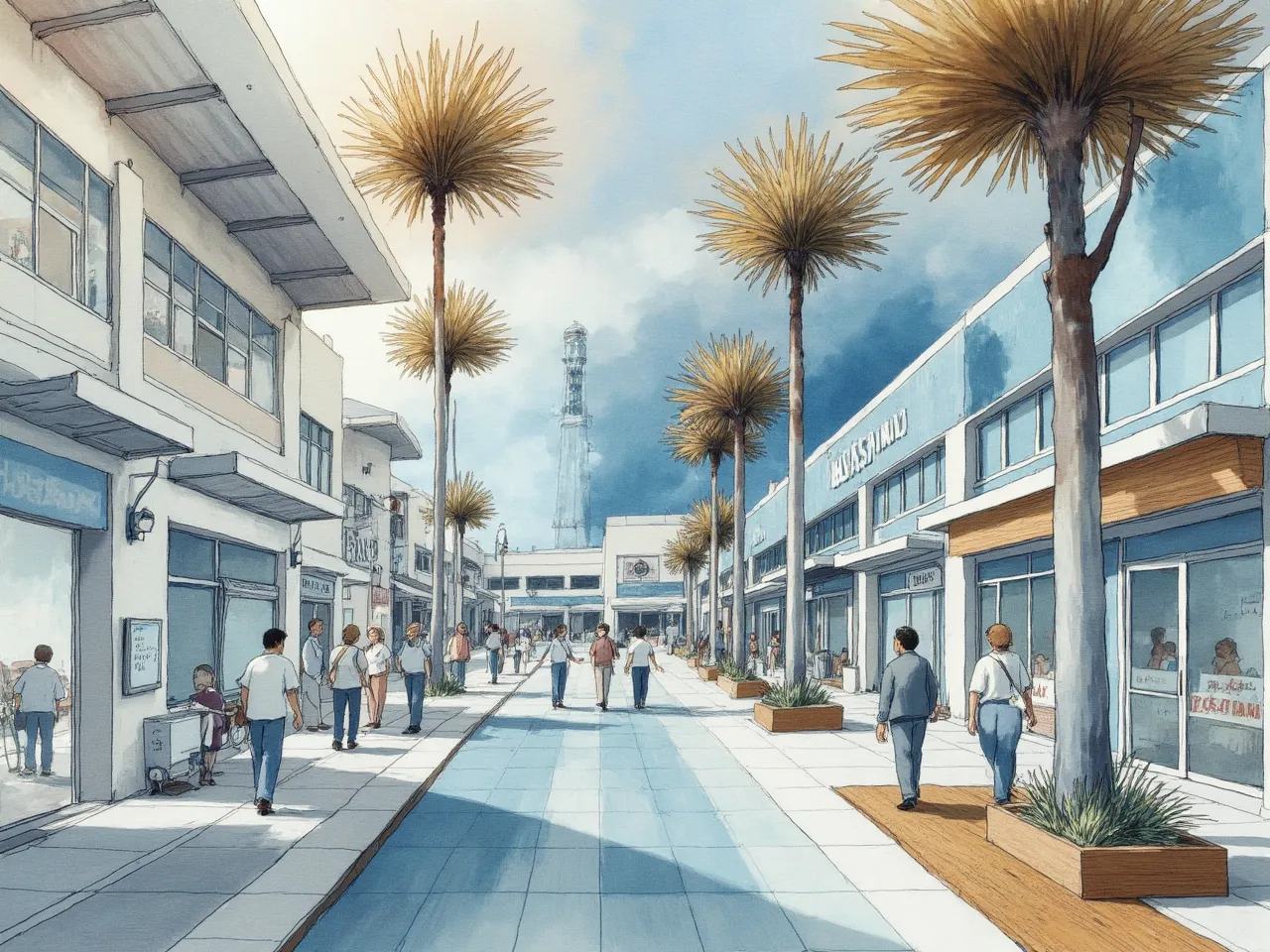
A Southern California retail broker argues that national headlines about store closures ignore strong local demand and historically low vacancy rates driven by limited construction and selective tenant expansion.
Southern California Retail Shows Strength That National Headlines Overlook
National news coverage frequently highlights retail store closures, fueling predictions of a broader decline in brick-and-mortar retail. Stephanie Skrbin, broker at Axiom Retail Advisors, argues that these stories misrepresent the actual state of Southern California’s retail market. In her view, store closures are not evidence of a collapsing sector but rather opportunities for retailers ready to enter one of the country’s most competitive markets.
Skrbin points to a key metric. In 2026, store openings in Southern California are expected to exceed closures for the first time since 2021. Meanwhile, retail vacancy rates remain at historic lows, a result of minimal new construction and steady tenant demand for well-located space.
“Store closures just mean there’s an opportunity for retailers who have been highly selective and cautious,” Skrbin says. These tenants are targeting proven trade areas and avoiding marginal sites, rather than exiting the market altogether.
This dynamic signals a market consolidation, not a collapse. Retailers are not walking away from physical locations. They are becoming more disciplined about site selection. For landlords with properties in prime locations, this means continued demand and pricing power.
Southern California’s Demographics Continue to Support Retail Demand
Skrbin also disputes the narrative of a mass exodus from California. While some population decline has been documented, Skrbin emphasizes that Southern California’s lifestyle, including proximity to beaches, mountains, entertainment, and major economic centers, continues to attract new residents.
“Yes, people are leaving, but there are also people coming in to take advantage of the lifestyle and location,” Skrbin says.
Retailers, Skrbin argues, base expansion decisions on demographic data rather than headlines. Southern California’s population fundamentals remain strong enough to support continued retail growth, particularly in grocery-anchored and needs-based centers. The region’s high barriers to entry ensure that when space becomes available, it attracts disciplined operators rather than speculative tenants.
This demographic stability helps explain why many retailers have remained cautious rather than exiting the market. The real challenge has been a lack of suitable inventory. Retailers are interested, but quality space in desirable locations remains scarce.
Limited Retail Supply in Southern California Is Intensifying Tenant Competition
Supply constraints also explain the gap between negative headlines and local market performance. New retail construction in Southern California has slowed due to high development costs and limited land availability. Rather than building new projects, landlords focus on maximizing the value of existing properties by adding pad sites, renovating centers to improve tenant mixes, or timing lease expirations to secure higher rents.
“Because of the lack of new construction, vacancy rates are just at a historic low,” Skrbin says.
This tight supply requires retailers to act quickly and strategically. When quality space becomes available, competition is immediate. Retailers that have been cautious about expansion now find their selectivity tested by limited options.
Skrbin notes that fitness operators, discount retailers such as Dollar Tree, grocers, and medical practices are among the most active categories. These tenants are filling spaces left by drugstore closures and other vacancies, demonstrating that demand persists across multiple retail segments.
How Axiom Retail Advisors Is Navigating Southern California’s Competitive Retail Market
Axiom Retail Advisors helps landlords navigate these conditions by focusing on tenant mix and long-term value creation rather than simply maximizing rent. Skrbin recently leased a challenging 34,000-square-foot, two-level space in West Los Angeles to a fitness operator that had struggled to find available space on the West Side. The flexibility of the fitness layouts made the two-level format viable, resulting in a deal that satisfied both the landlord and the tenant.
“With fitness, there’s more flexibility in layout and prototype,” Skrbin says. “We were able to fill that space and achieve economics that work for the landlord.”
Axiom’s strategy mirrors the broader market reality. Retail leasing success now depends on matching the right tenant to the right space, not simply filling vacancies. As store openings begin to outnumber closures, landlords who understand this selective environment are best positioned to benefit.
Southern California Retail Outlook: Discipline and Selectivity Define the Market Ahead
The Southern California retail market is not experiencing a collapse but a recalibration. Retailers are becoming more disciplined and strategic, focusing on locations with proven demand and strong demographics. Landlords who adapt by curating tenant mixes and investing in property upgrades are seeing the benefits of sustained demand and low vacancy.
For investors and owners, the market rewards quality and selectivity, not speculation. As store openings begin to outpace closures for the first time in years, Southern California’s retail sector demonstrates resilience that national headlines fail to capture. The real story is not one of decline, but of a market that remains highly competitive and increasingly discerning.
Similar Articles
Explore similar articles from Our Team of Experts.