


The Canadian real estate investment landscape is experiencing significant shifts as interest rate pressures and overleveraged portfolios create opportunities for nimble investors. Virtus Div...

Private Capital Fills Growing Void as Traditional Lending Tightens

Written by:
Date:
05 Jan 2026
Share via Facebook

Share via Linkedin

Share via X

Copy to clipboard

The private lending sector is seeing record demand as real estate investors face tightened access to traditional bank loans. As banks raise lending standards and slow approval processes, private capital providers are stepping in to fill the gap, offering faster, more flexible financing to meet the needs of active investors.
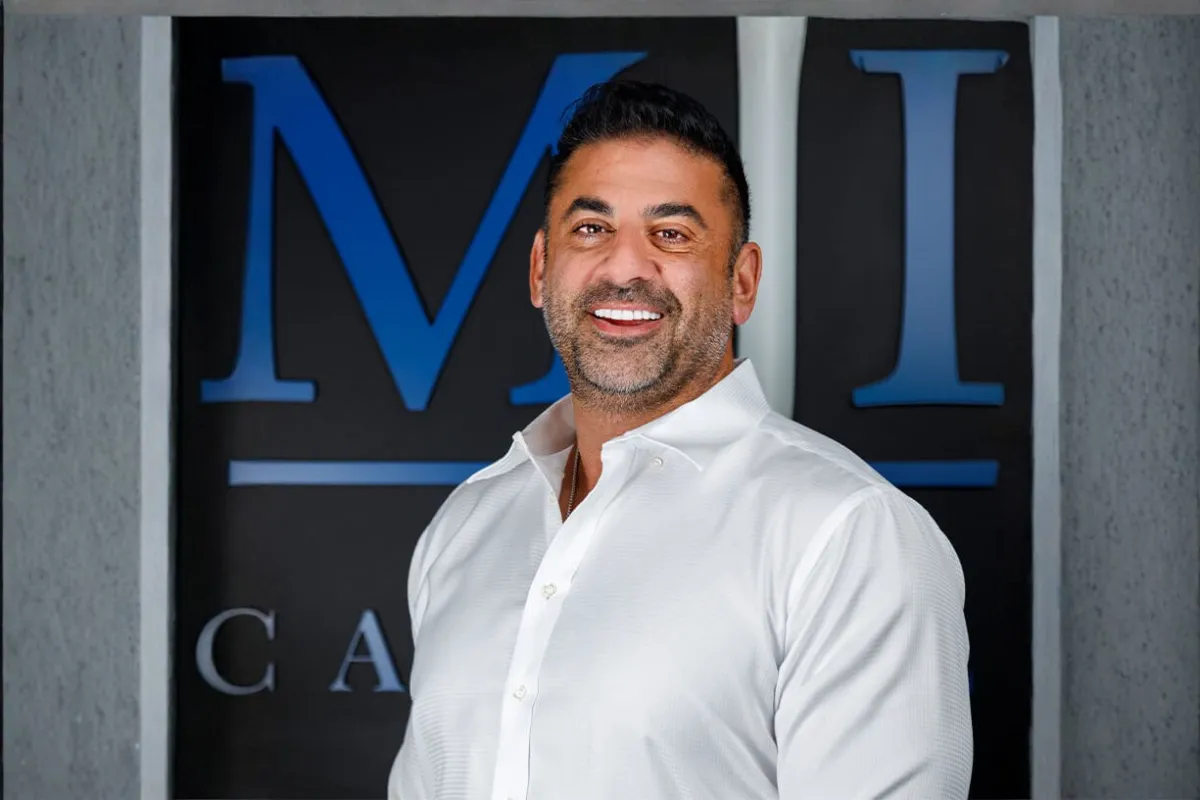
Michael Iuculano, founder of MJI Capital, has seen this shift over his 20 years in private lending. His Arizona-based firm operates in several high-growth states, including the Southwest, Florida, Texas, Utah, Colorado, and California. He notes that frustration with banks is a driving force behind the surge in private lending. “People are sick of banks, man. They are,” Iuculano says. “I’ve done a couple of refis this year alone on my own properties, and it’s a pain. You could have $10 million in the bank and ask for an $800,000 loan, and it doesn’t matter.”
Why Borrowers Are Turning Away from Banks
Traditional banks have become increasingly complex for real estate investors, even those with strong finances. Iuculano describes a typical scenario: “Let’s say you were in hard money and had a $4,200 payment, and you made that payment every month for 12 months in a row. They can see it, and you go and say, ‘Hey, I can refi and now have a $2,700 payment.’ They don’t care. The fact that it makes total sense doesn’t matter.”
This rigid approach, with heavy documentation and slow approvals, has made banks less appealing to investors who need to move quickly. Private lenders, in contrast, can evaluate deals on their merits and close transactions in days, not weeks or months. This speed and flexibility have made private capital an increasingly important resource in today’s market.
Changing Buyer and Seller Expectations
Current market conditions are creating confusion and opportunity for private lenders. “It’s weird because buyers think it’s 2008 and sellers think it’s 2022,” Iuculano observes. Buyers expect deep discounts, while sellers hope for pandemic-era prices. The result is a market where only well-priced, up-to-date properties sell quickly, while others linger. “If your home is not remodeled, you’re not going to get full price unless somebody has some magical obsession with your house,” he adds.
In Arizona, these trends are apparent. Phoenix now has about 29,000 active listings—up from 4,000 at the height of the pandemic—but still above the 16,000-20,000 range that marks a balanced market. This jump in inventory means buyers have more choices, and sellers must adjust expectations.
Surge in High-End Construction Lending
A major source of demand for private capital is high-end new construction. “New construction is on fire, at least out here in Arizona. A lot of higher-end stuff too—$2-4 million and up, even much higher than that,” Iuculano says. Investors are targeting desirable areas like Scottsdale, Phoenix, and Paradise Valley, often buying older homes just for the land and redeveloping entire neighborhoods.
This wave of construction is fueled by buyers from California and seasonal residents looking to make Arizona their permanent home. “There’s a lot of California money here, there’s a lot of Snowbird money here. People like Arizona, man,” he says.
Quality Over Quantity in Private Lending
In a competitive lending market, Iuculano emphasizes the importance of careful deal selection. Rather than chasing high volumes, he focuses on quality and thorough vetting. “When I do a deal and someone calls, I actually look for a reason not to do the deal. I don’t look for a reason to do it,” he explains. By applying strict filters—seeking out weaknesses rather than trying to make every deal work—he ensures only strong deals go forward.
This strategy pays off in relationships with investors. “We submit clean files, we vet them, we filter them, we set expectations. Because of that, we get preferential treatment, we get speed.” The most frequent reason for rejecting a deal is excessive leverage requests. “The number one thing is leverage. Some of these people and their requests—look, I can’t blame somebody for wanting 100% financing. Why not? But we are a lender, we’re not a partner. If you bring me a deal and I’m going to fund it 100%, why don’t I just go find my own deals and keep 100% of the profit?”
Ground-Up Construction: Higher Barriers, Bigger Returns
Looking ahead, Iuculano sees the most opportunity in ground-up construction financing. This segment requires more patience and capital, but offers higher returns. “Ground-up construction is where the money is. Flips and everything else, there’s money, but the barrier to entry—because ground-up has that barrier from the patience, from buying the land, getting plans drawn—not many people have the ability, desire, or bank account.”
Securing permits and approvals can take months, especially in coastal California, where entitlement processes can stretch to 18 months or even two years. “You’re holding that dirt, and it’s just that barrier, then being able to build the project promptly and know your market.” As a result, only experienced investors with substantial reserves and management skills can consistently succeed in this space. “The guys that I fund for ground-up don’t even mess with fix-and-flips unless it’s a large fix-and-flip and a great deal.”
Interest Rates: Market Realities Over Wishful Thinking
Despite frequent calls for lower interest rates, Iuculano urges investors to understand the tradeoffs. “People say, ‘We want rates to go down.’ Do you understand what needs to happen for rates to go down? You need a weaker economy. It’s not like, ‘Hey, you know what time it is? Let’s just lower rates.'”
Even with current rates, demand for private financing remains strong. “Demand for financing is through the roof,” he says, noting that borrowing costs have stayed relatively stable in recent months.
Why Private Lending Is Attracting More Investors
Private lending remains attractive for both borrowers and investors. Borrowers benefit from speed, flexibility, and relationship-driven underwriting. Investors are drawn to the opportunity for substantial returns backed by real estate collateral. “Obviously, investors can get great returns and get the best collateral they possibly can have, which is a physical piece of property,” Iuculano says.
Peer-to-peer lending, while not new, is gaining traction with more sophisticated investors. Direct real estate lending offers higher yields than bank deposits and more control over risk. “People are starting to smarten up as to where and why their money should be going. Money sitting in the bank is just adding a layer that you’re not getting paid on.”
Looking Ahead: Private Capital as a Permanent Fixture
As Iuculano marks his 20th year in the business, he remains confident in the long-term prospects for private lending. “It’s not like our business is going to ever go to zero, at least not in my lifetime. I don’t sit around waiting for it to come to me.” He credits his firm’s emphasis on systems, relationships, and education as key to its ability to adapt and thrive across different market cycles.
With strong demand, limited access to traditional loans, and continued real estate investment activity, private capital is expected to play an even larger role in the future. For real estate professionals and investors, private lending has moved from a niche alternative to a core part of the financing landscape—offering solutions that banks increasingly cannot provide in today’s market.
Similar Articles
Explore similar articles from Our Team of Experts.




Commercial Real Estate, Real Estate Investment, Industry Profiles, Residential Real Estate, Market Analysis & Policy
Economic development in Chicago’s south suburbs is getting a refresh with a focus on local strength first. The Southland Development Authority (SDA) is challenging traditional approaches t...

