The commercial construction sector in Northwest Florida continues to reflect broader industry trends while maintaining steady project pipelines, according to industry veterans navigating workforce shortages and regulatory complexities. Despite national concerns about construction slowdowns, regional markets like Pensacola are demonstrating consistent demand across key sectors.
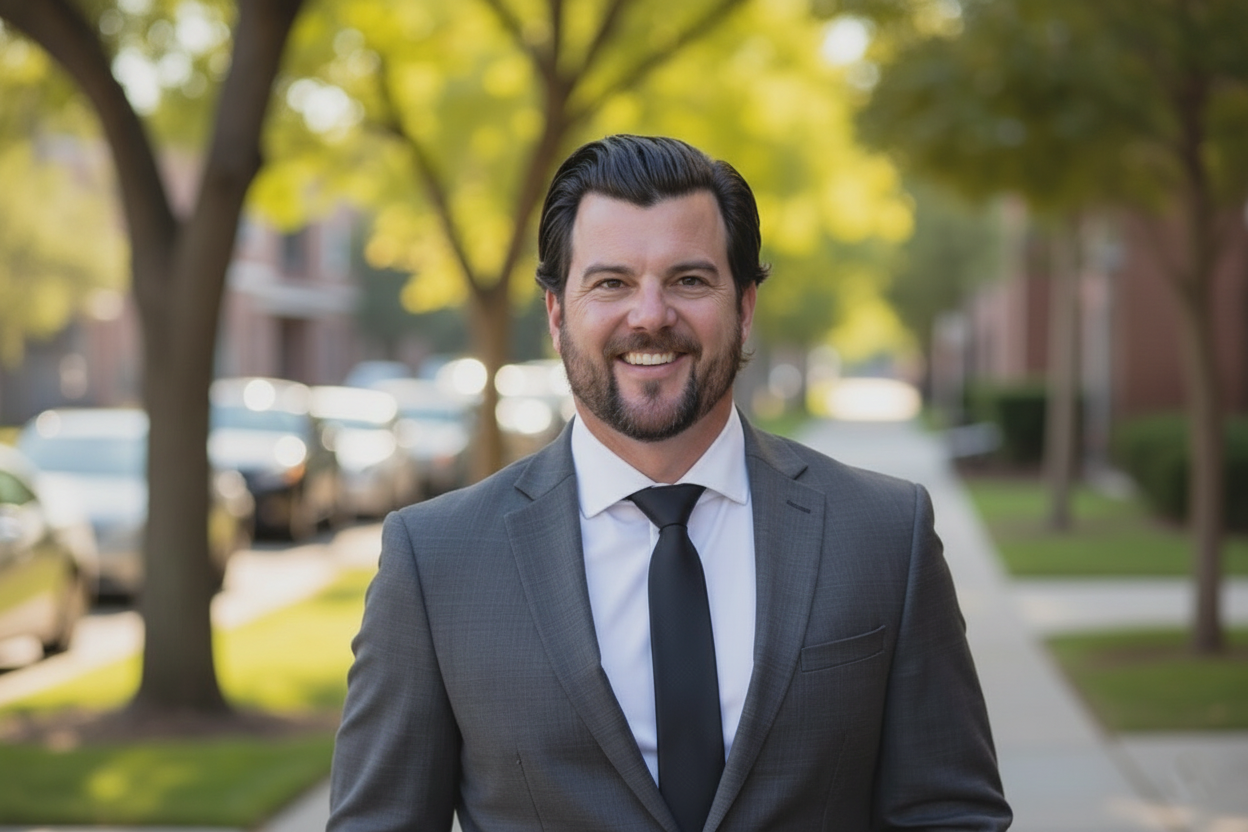
Kelvin Enfinger, Vice President at Greenhut Construction Company, offers a direct perspective on these market dynamics. With 26 years in the industry and nearly a decade at the third-generation firm, he has witnessed the evolution from hands-on trades work to executive leadership while also serving as 2025 chairman of Associated Builders and Contractors of Florida.
Regional Market Stability
Greenhut Construction, nearing its 80th year in business, operates primarily within a two-county area centered on Escambia County. The company’s focused geographic approach has yielded consistent results in a market Enfinger describes as stable rather than experiencing rapid growth.
“Right now, I think we’re seeing some consistency,” Enfinger observes. “I don’t know that I’m seeing extreme growth in the community, but we’ve seen consistency in projects coming out that are certainly providing work for us and our competition as well. I’ve yet to see any kind of downturn in the commercial sector at all.”
This stability stands in contrast to residential market conditions in the region. “There’s been some talks of some residential downturn here in Escambia County, and you’ve got to be selective when you talk about that—the type of residential that’s in the downturn right now. But the market’s still a little bit hot,” he notes.
Education and Healthcare Drive Demand
Healthcare and education remain the strongest sectors for Greenhut Construction, with higher education showing notable momentum. “Higher education work has been hot these past few months,” Enfinger reports. “Our local university has received some funding for a couple of projects, putting some very nice projects in planning for them and a nice project on the books for us.”
The consistency extends to public education, where Escambia County schools continue to generate steady project flow. “We haven’t really seen a slowdown at all from the local education system. It’s still going strong,” he adds.
The aerospace sector also presents emerging opportunities as Northwest Florida positions itself as an attractive destination for industry growth. Greenhut has completed projects at Pensacola International Airport and MRO facilities in neighboring Santa Rosa County, with economic development teams across the panhandle working to attract further aerospace investments.
“I think Northwest Florida has been discovered in the sense that there’s a lot of opportunity here. There’s a lot of people that want to live here. It provides a great way of life,” Enfinger explains. “So you’ve seen some industrial growth, some aerospace park growth.”
Labor Shortage Challenges
The most significant challenge facing the industry remains workforce development. Enfinger’s role as ABC Florida chairman has provided him with a statewide perspective on labor shortages that mirror national trends.
“The biggest headwind is labor. Labor has been a headwind for this industry, not just here locally, but across the nation for a number of years,” he states. “The numbers are staggering when you look at it across the US, just north of 500,000 workers that we were short coming into this year, and the trend is continuing to head in a negative direction for 2026.”
The solution, he says, requires industry-wide collaboration. “It’s really going to come down to us in the industry. It’s going to come down to the associations and all of us working collectively with the trade schools to get kids back engaged and interested in this industry,” Enfinger emphasizes.
He identifies the root cause as generational: “I think we’ve gone through a generational period where we did not promote workforce development, skilled trades to young men and women. It’s going to take getting back to mom and dad and getting back to young people, maybe even in middle school age, to get them re-engaged and help them understand that not everybody in this country that’s successful comes out of an institute of higher learning with a four-year degree.”
Immigration’s Role in Construction
Enfinger addresses the impact of immigration on construction workforce availability. “Immigration is obviously a very unpopular topic. A lot of people don’t want to talk about it. Most people in our industry don’t talk about it. But I think we know, ultimately, that there are ramifications to the industry across the country.”
His position emphasizes legal pathways: “I support legal immigration. The immigrant workforce is a huge benefactor to this industry. They’re great paying jobs. They’re great workers. And the ones that I’ve had an opportunity to work around have been great community partners and love where they live.”
The association is exploring solutions through federal policy: “The Association on the national level has been working on the idea of some merit-based visa programs, meaning workers with no criminal records have a job, kids are in school. There’s no reason why we shouldn’t be allowing them into the workforce and being part of our community.”
Technology Integration and Future Outlook
While larger construction firms deploy advanced technologies, including robotic site monitoring, mid-sized companies like Greenhut take a measured approach to technological adoption. Enfinger serves on ABC National’s technology committee to stay informed about emerging tools, particularly artificial intelligence applications.
“The AI technology and the advancement of what it’s going to be able to do for our industry is pretty wild, and it’s exciting stuff,” he notes. “We’re not fully implemented into the world of AI yet, but we’re watching it and interested and hopeful that it’ll do some things that are really positive for this industry.”
He sees particular promise in training applications: “When I think about the workforce shortage and AI, I immediately go to how it can assist in training. What a young man or woman looking to get in this industry could gain from the benefits of what AI can potentially teach.”
Virtual reality represents one promising avenue: “Kids are interested in technology, so seeing tech being implemented to get kids interested in this industry, something as simple as a VR headset that can immerse a teenager into the world of construction and showcase different trades in an augmented reality world—I think that’s huge.”
Regulatory Environment and Advocacy
As ABC Florida chairman, Enfinger advocates for balanced regulation that does not unnecessarily burden the industry. “The construction industry is one of the most regulated industries in the country. We work through regulations from the federal government, state government, and local municipalities,” he explains.
“I’m not anti-regulation, and I’m not anti-government, but what I am for is just a free, open and fair market where we can do business with limited government interference to not make our jobs more difficult than they already are,” he adds.
The association’s lobbying efforts have achieved significant victories for Florida’s commercial construction sector, with policy efforts focused on creating favorable business conditions rather than eliminating necessary oversight.
Looking Ahead
Enfinger remains optimistic about both Greenhut Construction’s trajectory and the broader industry outlook. The combination of regional growth, consistent project pipelines, and emerging technological solutions provides a foundation for continued success, even as workforce challenges require ongoing attention and new approaches.
For an industry facing national headwinds, Northwest Florida’s construction sector demonstrates that regional stability, strategic focus, and collaborative workforce development can create sustainable growth opportunities in an evolving market landscape.
This article was sourced from a live expert interview.
Every month we conduct hundreds of interviews with active market practitioners - thousands to date.
The commercial real estate market is in a period where capital access is sharply divided. Family offices and private funds with strong balance sheets and established banking relationships ar...
The commercial real estate finance industry faces a set of challenges: a $3 trillion debt wall looming over the next few years, increasingly complex capital structures, and traditional lendi...
The Naples real estate market has changed sharply since the pandemic-fueled surge of 2021 and 2022. Inventory is now at its highest level in five years, and buyers have become more selective...
Miami’s luxury real estate market presents a paradox: while headline statistics show price per square foot at record levels, experienced market participants observe a different reality. Th...
Upstate South Carolina is undergoing rapid growth as developers and investors seek new opportunities away from crowded coastal markets. With Greenville nearly out of available land and neigh...
Detroit’s real estate landscape is defying traditional market categorizations, creating unique opportunities for both buyers and investors while challenging long-held assumptions about...