
The real estate industry has long relied on backward-looking market comparables and gut instincts to guide multimillion-dollar development decisions. But a fundamental shift in renter behavi...

Navigating the Non-Traditional Lending Landscape in Today's Capital Markets

Written by:
Date:
02 Sep 2025
Share via Facebook

Share via Linkedin

Share via X

Copy to clipboard

The commercial real estate finance sector has undergone significant change since the Federal Reserve began raising interest rates in 2022. While many anticipated a wave of distressed assets to flood the market, the reality has proven more nuanced, with private credit emerging as a dominant force and non-traditional lending solutions becoming increasingly essential for complex deals.
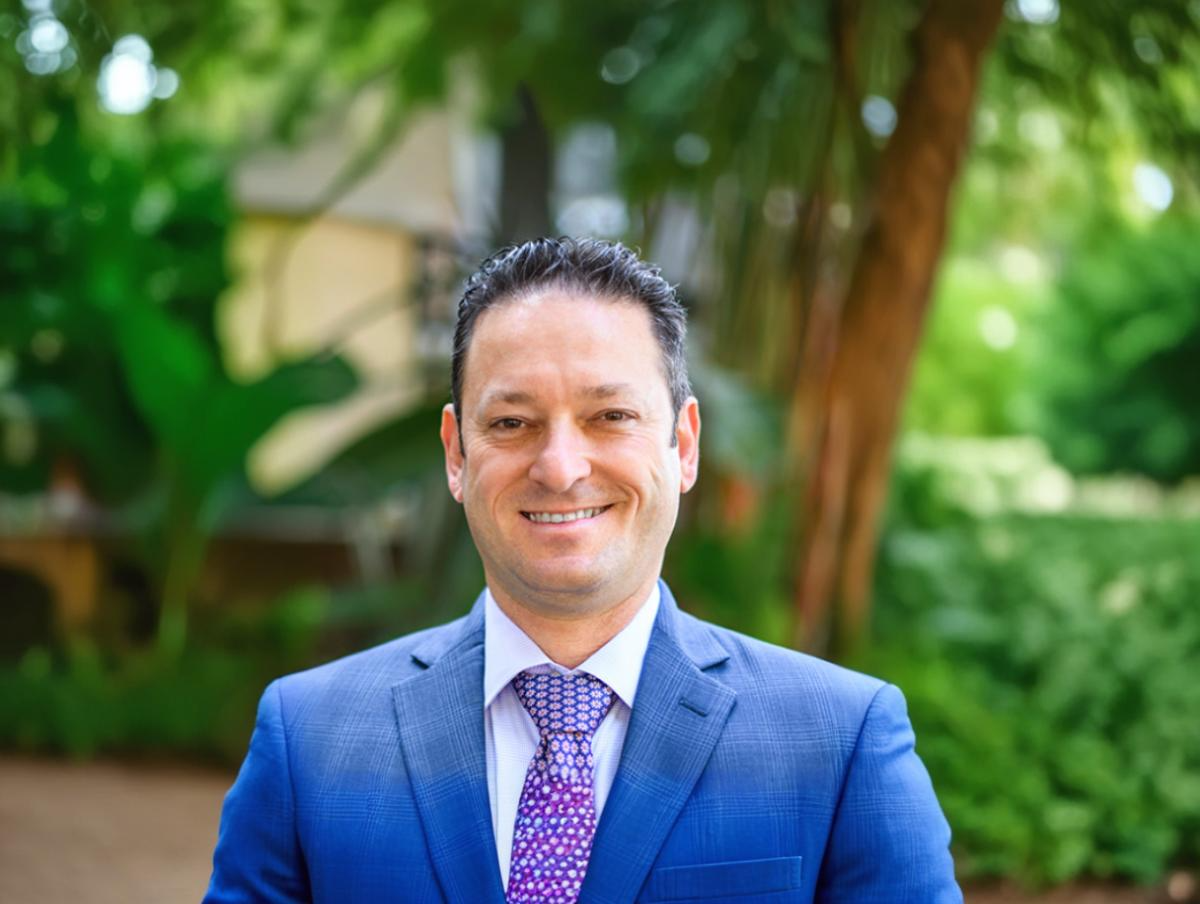
W. Antonio Hachem, Principal at Slatt Capital, has built his career around what he calls “the difficult deal,” transactions that make traditional lenders hesitate. His journey into structured finance began during the Great Financial Crisis, when he witnessed clients lose assets not due to payment defaults, but through technical covenant violations.
“I could not believe that. I could not accept that,” Hachem recalls of watching borrowers lose properties despite making payments. “I decided to follow the money and figure out how the money works.” This experience led him to focus on non-covenant capital sources and ultimately shaped his approach to complex deal structuring.
The Rise of Private Credit
Today’s lending landscape is dominated by what Hachem identifies as the industry’s current buzzword: private credit. “The debt funds are extremely busy,” he explains, noting how discretionary capital flows have shifted dramatically. “Instead of actually lending on commercial deals to borrowers, big banks would rather cut a check and finance the financiers, meaning finance the lenders who can then distribute those loans to developers.”
This shift represents a fundamental change in how capital flows through the commercial real estate ecosystem. Life insurance companies and major banks, seeking to avoid regulatory constraints while maintaining yield, are increasingly funding debt funds rather than making direct loans. For banks, this approach reduces their required cash reserves from a one-to-one ratio to approximately 20 percent when funding portfolio-based lenders.
“It’s a five-time reduction,” Hachem notes. “It frees up a lot of capital and makes them not have to have the infrastructure to actually make those loans.”
Evolving Underwriting Standards
The current market has forced significant adjustments in deal structuring and borrower expectations. Where developers previously relied on trended numbers and optimistic projections, today’s environment demands more conservative approaches and greater borrower commitment.
“Cash in is king,” Hachem emphasizes when discussing refinance transactions. “Any refinance, whether it’s stabilized or not, if it’s an office asset or an asset that’s not credit tenant-based, borrowers have to show more commitment.”
The shift is particularly pronounced in debt yield requirements. Hotels and other business-reliant assets that were previously financed at sub-10 debt yields now require minimums of 12.5 to 14 percent. “Nobody wants to have a deal or a portfolio go south on their watch,” Hachem explains.
The Delayed Distress Cycle
One of the most significant market developments has been the delayed emergence of distressed opportunities. Many investors raised capital expecting a “Black Friday” shopping spree of discounted assets that largely failed to materialize as anticipated.
“A lot of folks raised capital to buy distressed assets and distressed notes, but they’re not finding the deals to place that capital,” Hachem observes. “We’re a capitalist society, but we’ve created a lot of padding and cushions and soft landing, so it doesn’t impact everybody that badly.”
However, this dynamic appears to be shifting. In recent quarters, Hachem has observed banks becoming more aggressive about disposing of non-performing notes. “Banks are now not giving ultimatums. They’re like, ‘That’s it. We don’t want this note on the books.’ They’re selling to loan-to-own note buyers.”
This represents what Hachem characterizes as a “delayed start” rather than a false start. “Here we are in 2025 and it’s not really happened the way people expected. Now we’re seeing it happen actually. I’m seeing the wheel gaining momentum.”
Preferred Asset Classes and Market Opportunities
Despite market challenges, certain asset classes continue to attract strong capital interest. Data centers lead the pack, followed by multifamily and self-storage properties. Hachem describes self-storage as “the multifamily with no rollover,” a reliable asset class that takes longer to stabilize but offers consistent performance once operational.
The firm’s recent transactions illustrate the complexity of today’s market. Notable deals include a 95 percent loan-to-cost stretch senior financing on ground-up multifamily construction in Arizona, structured as a non-recourse participating loan where the lender shares in profits.
Another example involves financing the Dolby Theater in Hollywood and the Yamashiro restaurant, deals that require underwriting business income rather than traditional real estate metrics. “We do the funky, crazy deals,” Hachem notes.
Structuring Solutions for Complex Scenarios
Slatt Capital’s approach focuses on comprehensive capital stack solutions for borrowers who don’t fit traditional lending boxes. This can involve pairing experienced developers lacking balance sheet strength with capitalized but inexperienced investors, or reversing participating loan formulas to benefit borrowers while giving lenders enhanced yields.
A recent success story involved a built-to-rent project in San Diego completed on time and on budget. “It’s a unicorn,” Hachem explains. “Ground-up deal that we did with a debt fund, and we actually permanent financed it now with agency and cashed out the borrower’s equity with little cash left in the deal.”
Looking Forward
As the market continues changing, Hachem expects non-traditional lending to become increasingly important. “I would say 95 percent of my business is non-traditional,” he notes. “Everything is construction, ground-up, or pre-construction.”
The firm is working on several notable transactions, including financing a Culver City project emerging from construction amid a lawsuit. Despite the complexity, they secured over 20 competing lenders for a sub-7.5 percent non-recourse financing for a foreign borrower.
“We’re in the math business. We sell numbers, and numbers have to make sense,” Hachem explains. While the current environment requires working “10 times harder” to close deals, opportunities exist for those willing to navigate complexity and structure creative solutions.
The evolution of commercial real estate finance continues, with private credit, non-traditional lending, and sophisticated deal structuring becoming essential tools for navigating an increasingly complex market landscape. For borrowers with challenging deals, the key lies in finding partners who understand both the mathematics and the market dynamics driving today’s capital flows.
Similar Articles
Explore similar articles from Our Team of Experts.