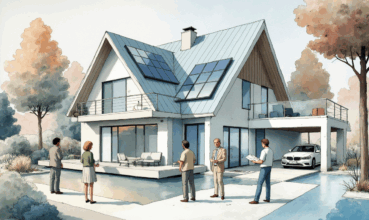

The residential development industry faces a fundamental mismatch between how it finances projects and how high-performance construction creates value, according to Cary DeCamp, Managing Dir...

Navigating the New Office Market Reality

Written by:
Date:
15 Sep 2025
Share via Facebook

Share via Linkedin

Share via X

Copy to clipboard


The commercial office market continues to evolve in ways that challenge conventional wisdom, creating both opportunities and complications for tenants and landlords alike. While headlines often paint a picture of doom for office real estate, the reality on the ground reveals a more nuanced story of adaptation and strategic repositioning.
Scott Savacool, Senior Vice President of the Occupier Services Division at Colliers, brings over 23 years of commercial real estate experience to this changing landscape. Having transitioned from a family-owned firm to the global platform of Colliers, Savacool has witnessed firsthand how market dynamics are reshaping tenant decision-making processes and deal structures across multiple markets.
The Flight to Quality Phenomenon
Despite predictions of office market decline, certain segments are experiencing unexpected demand. In St. Louis, two new A-plus office towers delivered in 2022 at the highest rents and parking costs in the market’s history, yet both buildings managed to lease up.
“It makes you wonder how that’s possible,” Savacool observes. “But it goes back to the trend of companies downsizing and compressing their footprint. Some of the groups that moved in were law firms and large financial institutions, where image is key for them, as a marketing tool to say they are in the nicest, newest building in the market.”
Premium buildings offer amenities designed to draw employees back to the office: outdoor amenities, high-end fitness facilities, and retail services, including food and beverage alternatives. Companies use these features to justify return-to-office mandates by positioning the workplace as offering work-life balance integration.
The “amenities arms race” has reached older buildings, which are investing in cosmetic upgrades to compete. One building even added wine lockers, a status symbol borrowed from high-end restaurants, to appeal to higher end tenants who might use them for client entertainment.
Changing Tenant Decision-Making Processes
Modern tenant representation increasingly relies on data-driven approaches. Savacool has implemented heat mapping technology for larger tenant transactions, incorporating data layers including employee home locations, labor pool demographics for recruiting, and client locations.
“We actually had that live on a screen on a laptop as we were driving around on a recent tour,” he explains. This real-time analysis allows tenants to evaluate properties against their actual operational needs rather than relying solely on traditional factors like rent per square foot.
The results often surprise clients. “We made the client place a bet on their expected favorite buildings before we toured, based on preliminary data. At the end of the day, when we narrowed it down to the short list, it was completely different” from their initial expectations.
The Footprint Compression Reality
While office demand hasn’t disappeared, it has fundamentally changed. Companies are consistently reducing their space requirements, and in some cases by as much as 20%-25%, according to Savacool. This reflects a shift from private offices for every employee toward more collaborative spaces with touchdown stations to accommodate alternating work schedules.
Many companies that initially put their entire offices on the sublease market during the pandemic now recognize they still need physical space, just less of it, and in better buildings. This is driving relocations from older B and C-class buildings to newer, more expensive properties where smaller footprints help offset higher costs.
Deal Structure Complications
The current market has created significant challenges in deal structuring and timing. Tenant commitment levels have shifted, with many clients focusing on shorter lease terms, often of only three years, a stark contrast to the five, seven, or ten-year commitments that were previously standard.
“A lot of my clients right now, right out of the gate, only want to discuss short term flexibility,’” Savacool notes. This reluctance severely limits options, as most landlords, especially with bank financing, require longer-term commitments to satisfy lender requirements.
Shortened lease terms create complications. Landlords willing to accept three-year leases typically won’t provide tenant improvements, free rent, or concessions beyond broker commissions. When tenants realize they’ll need to fund all space modifications themselves, most reconsider longer commitments, but this realization often comes after months of negotiations.
Extended Transaction Timelines
These dynamics have extended deal timelines. Transactions that previously took a few months now require two to three times longer to complete, despite ultimately reaching similar outcomes in most cases. The extended process stems from factors such as tenant hesitancy, increased lender involvement, and supply chain and labor shortages affecting construction timelines.
“We’re getting a third to a half of the work done in the time that it used to take,” Savacool explains. “Most of our pipelines are just as full, but things are stacking up and getting behind schedule.”
The complexity has increased transparency, as tenants now understand lenders are actively involved in building owner decisions. Previously, tenants were skeptical when owners claimed they needed bank approval for lease terms. Now, this reality is widely accepted, even if it adds layers of complexity to negotiations. The other new wrinkle in the current market is that in some cases, savvy tenants are asking landlords to prove their financial wherewithal to establish a comfort level for their ability to fund the tenant improvements required by the lease.
Market Intelligence Beyond Headlines
The disconnect between market headlines and ground-level reality reflects the nuanced nature of current office market conditions. While overall demand has decreased and many older buildings struggle with vacancy, quality properties with modern amenities continue to attract tenants willing to pay premium rents for smaller, more efficient spaces.
This bifurcation suggests that successful office investment and development strategies must focus on providing the amenities and experiences that support modern work patterns rather than simply offering low-cost space. Companies succeeding in tenant attraction are those that understand office space as a tool for culture building and employee retention rather than merely a functional necessity.
Looking Forward
The current market represents what Savacool characterizes as a “hurry up and wait” environment, where all parties are working to accelerate understanding and confidence while dealing with structural delays in the transaction process. Success in this environment requires patience, flexibility, and sophisticated analysis tools that can help tenants make informed decisions despite uncertainty.
For real estate professionals and investors, the key insight is that office demand hasn’t disappeared, it has changed. Companies still need physical space for collaboration and culture building, but they want that space to be efficient, amenity-rich, and strategically located. Understanding and adapting to these new requirements will determine success in the evolving office market landscape.
Similar Articles
Explore similar articles from Our Team of Experts.