

Despite rapid advances in artificial intelligence, the technology isn’t ready to handle high-stakes real estate transactions, according to a leading industry technology educator who ar...

Navigating Parking Requirements in Transit Zones: Developers Weigh Options

Written by:
Date:
19 Mar 2025
Share via Facebook

Share via Linkedin

Share via X

Copy to clipboard

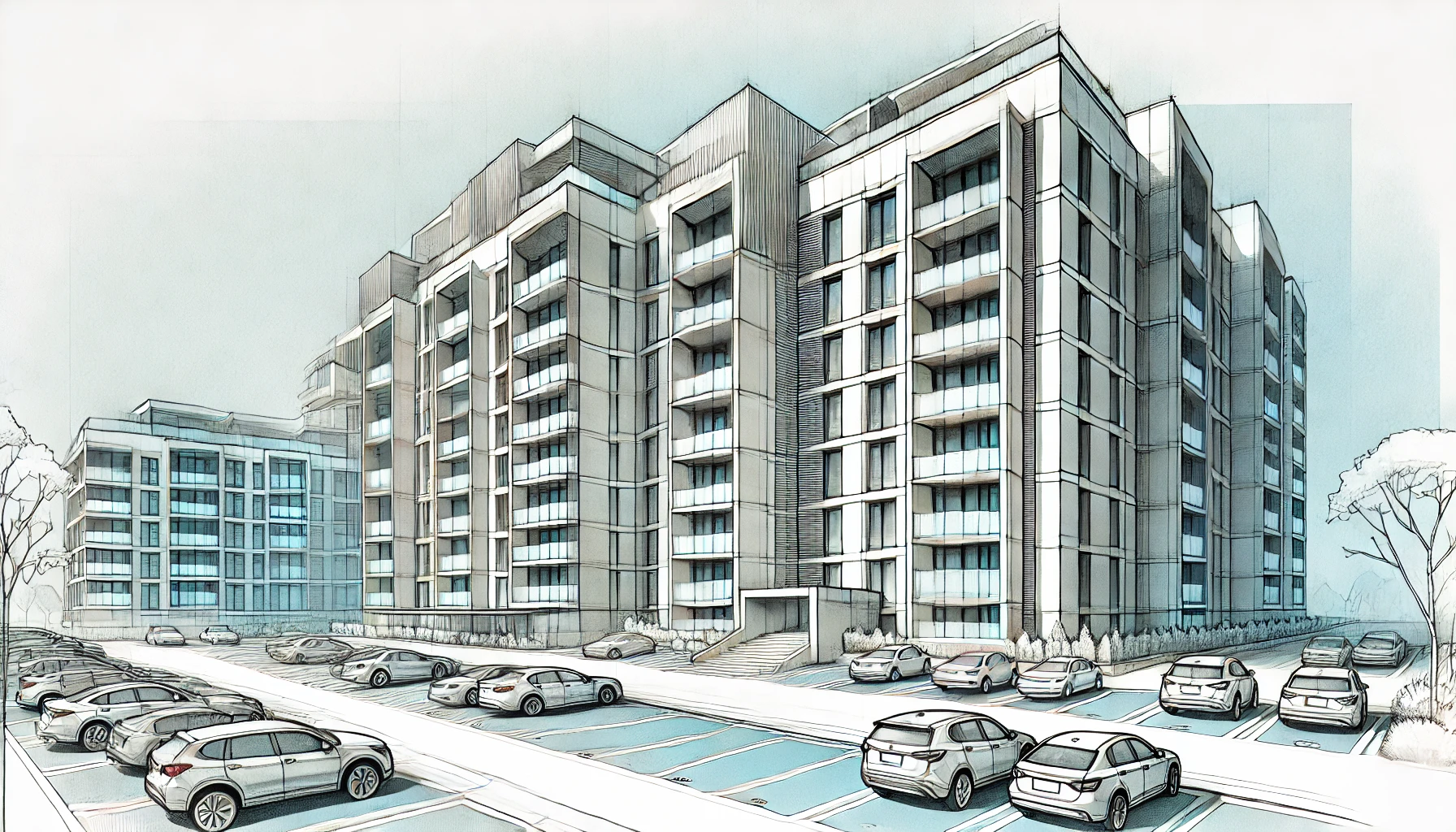
“Multifamily developments need parking to satisfy their rental tenants and condominium owners needs and expectations of being able to park and store their vehicles where they live,” says Christopher Tiessen, President and CEO of KLAUS Multiparking America Inc. “It is an amenity to have on-site parking to make a project viable and competitive in the market place.”
As cities modify parking requirements near transit hubs, developers face a practical challenge: how to achieve cost savings while meeting resident demands for convenient parking.
Policy Shifts Reduce Parking Requirements
Recent legislative changes favor transit-oriented development (TOD) principles. In New York City, the “City of Yes” initiative has modified zoning regulations to reduce or eliminate parking mandates in areas well-served by public transit. This policy change aims to increase housing production while encouraging alternative transportation methods.
Similarly, California enacted Assembly Bill 2097 in 2022, which prohibits public agencies from imposing parking requirements on developments within half a mile of major transit stops. This legislation removes the burden of providing parking spaces for housing and commercial projects, encouraging greater reliance on public transportation.
Residents Still Value Parking
Despite policy shifts encouraging car-free living, many residents still expect parking amenities. Community opposition to reduced parking often centers on concerns about increased congestion and parking spillover into surrounding neighborhoods.
Developers recognize this tension. While reducing parking can cut construction costs and potentially lower housing prices, completely eliminating parking risks alienating potential tenants and buyers who rely on personal vehicles.
Space-Efficient Parking Technologies
Rather than choosing between all or nothing, many developers are turning to space-efficient parking technologies. Christopher Tiessen, who has witnessed firsthand how these innovations are transforming previously unfeasible sites into viable projects, explains how mechanical and automated parking systems offer compelling advantages:
“By implementing KLAUS Multiparking America’s automated parking system solutions, developers and property owners can cut costs, improve efficiency, and maximize space utilization—all while offering a premium user parking experience.”
These systems deliver significant operational advantages compared to traditional parking structures:
“Lower maintenance costs [include] fewer moving parts than traditional garages (no ramps, elevators, or extensive lighting systems) [and] reduced wear and tear on parking surfaces due to controlled vehicle movement,” Tiessen notes.
Energy efficiency represents another key benefit: “Reduced lighting needs – unlike open garages that require constant lighting, enclosed automated systems use minimal lighting, only when necessary. Lower HVAC costs – enclosed parking systems require less ventilation since cars are not idling or driving around inside.”
Alternative Approaches: Car-Light Developments Remain Niche
While most developers continue to provide parking even in transit zones, a small number of pioneering projects have explored minimal-parking or car-free models:
Culdesac Tempe in Arizona represents an outlier case—the first entirely car-free neighborhood built from scratch in the U.S. Opened in 2023, it spans 17 acres and houses approximately 200 residents, with plans to accommodate up to 1,000. Instead of parking, residents rely on walking, biking, and public transit, supported by amenities like bike parking and nearby light rail access.
Similarly experimental, The Joinery in Charlotte, North Carolina, located along the Blue Line light rail, offers residents free access to Tesla rentals, e-bikes, and e-scooters. This approach eliminates the need for personal vehicles while still providing motorized transportation options.
These projects, while generating media attention, represent a minority approach in the market. Most developers, even when permitted to reduce parking, continue to provide it in some form.
Finding the Right Balance
For most developers, the question isn’t whether to include parking but how to do so efficiently. Automated parking systems can reduce the footprint required for parking while still meeting resident expectations.
“More efficient use of land means a higher return on investment per square foot,” says Tiessen. Additional benefits include “lower liability & insurance costs [due to] reduced risk of theft, vandalism, and accidents since vehicles are stored securely and are not accessible to the public.”
As transit-oriented development policies advance, developers who optimize parking efficiency while meeting resident expectations will maintain market competitiveness and maximize returns on their investments.
Similar Articles
Explore similar articles from Our Team of Experts.

Perspectives, Residential Real Estate, Market Analysis & Policy, Real Estate Investment, Industry News, Featured Articles
Recent zoning changes in Boise have created new opportunities for alternative housing development, with both ADUs (Accessory Dwelling Units) and co-living arrangements gaining traction among...


Industry Profiles, Real Estate Investment, Commercial Real Estate, Industry News, Market Analysis & Policy
The Massachusetts commercial real estate market is experiencing a tale of two sectors, with industrial properties stabilizing while traditional office space faces significant pricing pressur...