

Brooklyn’s real estate landscape has shifted markedly in recent years, a transformation Tali Berzak, a realtor at Compass, has witnessed firsthand. She points to renewed demand for townhou...

Market Cycles and Strategic Flexibility Drive Success at Invictus Real Estate Partners

Written by:
Date:
21 Nov 2025
Share via Facebook

Share via Linkedin

Share via X

Copy to clipboard

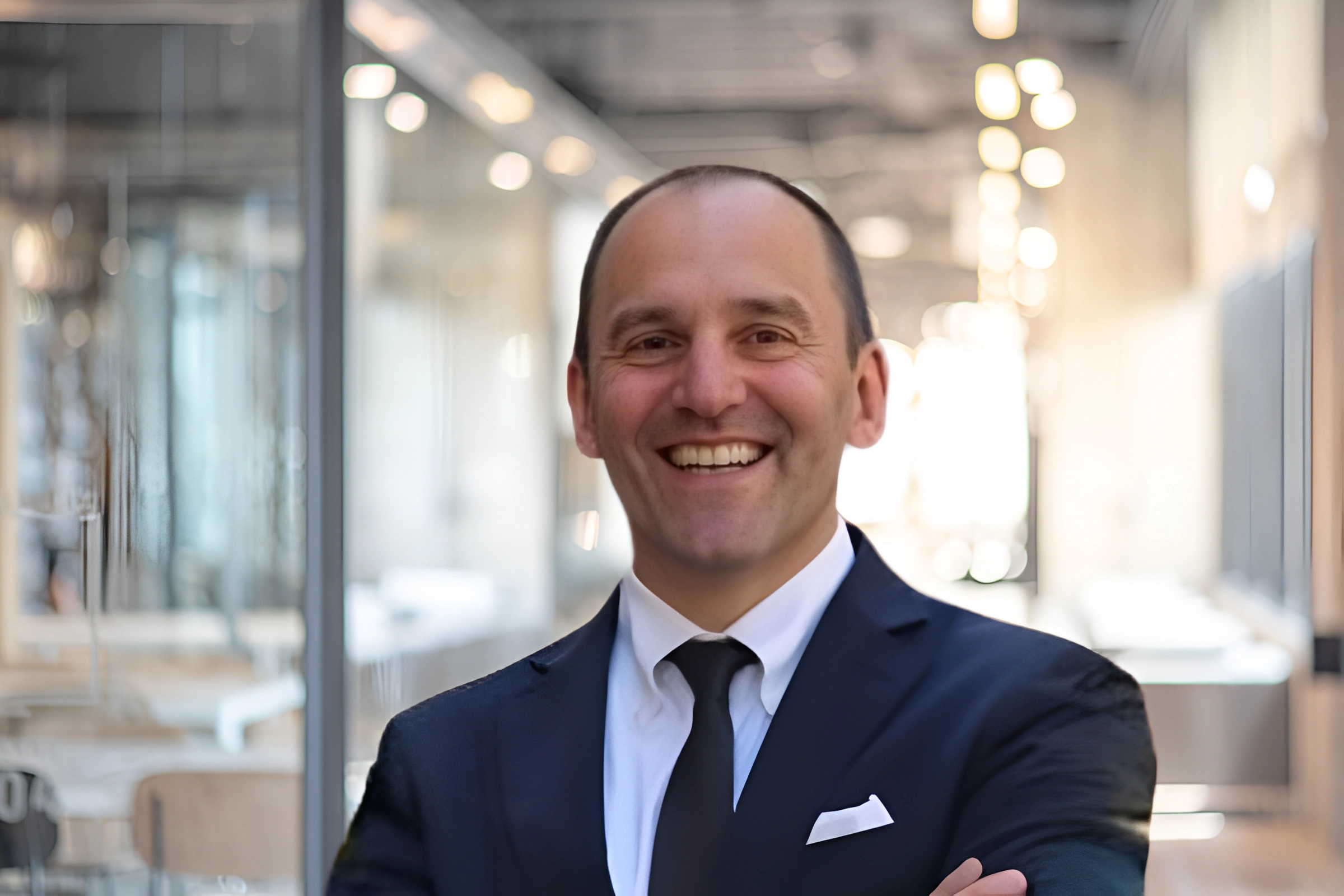
In a real estate market marked by fragmentation and volatility, some investors are finding success by remaining adaptable rather than specializing narrowly. Eric Scheffler, co-founder and managing partner of Invictus Real Estate Partners, has built his firm’s strategy around flexibility across market cycles, a principle shaped by decades of firsthand experience.
“At different phases of my life and my partner’s life, we’ve been doing one thing or the other,” Scheffler says. “Sometimes we’ve been real estate developers and built ground-up projects. Other times we’ve been lenders. Other times we’ve been straight equity purchasers. It seems most advantageous to be that particular skill set at different times in the cycle.”
This approach has enabled Invictus, a New York-based firm with just six team members, to complete approximately $2 billion in transactions over the past two years. Their deals span lending, equity investments, and development across multiple asset classes, reflecting a willingness to pivot as market conditions change.
A Career Shaped by Market Volatility
Scheffler’s perspective on market cycles is rooted in his career trajectory. After 11 years as a real estate attorney, he moved to Bear Stearns, where he ran construction lending and balance sheet lending desks managing $5-6 billion in loans. The collapse of Bear Stearns during the Global Financial Crisis provided a lesson in market timing and risk management that would shape his approach.
“Bear Stearns blew up, which was quite a spicy time during GFC,” Scheffler recalls. That experience led him to Madison Realty Capital as general counsel, then to founding another fund before launching Invictus.
Now with 31 years in the industry, Scheffler describes Invictus’s approach as a “flexible strategy to hit the market.” Rather than sticking to a single focus, Invictus adapts its activities based on where the best risk-adjusted opportunities are at any point in the cycle.
“Some people are just real estate developers, and that works great for five years out of every 10-year cycle, and they’ll make money, and then they’ll get hammered in the other cycles,” he notes. “We try to be in the smart time.”
Current Market Positioning: Debt Over Equity
Today’s market environment illustrates the kind of fragmentation Scheffler describes. “It’s a very disjointed part of the cycle,” he says. “If you go back during past cycles, it’s either been kind of good for real estate or bad for real estate, mainly on macroeconomic cycles and the cost of debt. I think there’s a lot of odd opportunities right now.”
Invictus has responded by focusing heavily on debt strategies for the past four years. “Since there’s been a lot of disjointment in the debt market and the equity market has not made that much sense, we’ve been focusing primarily on debt and making loans to other people, kind of stepping off the risk curve.”
The firm uses structured finance to maximize returns. “If I make a regular loan, like a 15% loan on a bridge property transition, I’ll take that, I’ll sell off a senior piece to a senior lender, and I’ll get myself to a mid-to-low teens return, which is much better than I would yield in equity.”
This approach is not unique to Invictus. “You’ve seen a tremendous number of people, everywhere from Blackstone to other big institutional equity players, all switching over either to debt focus or having a big credit strategy as part of their platform, just because it’s a smart place to be at this part in the cycle.”
Conservative Fundamentals in Opportunistic Markets
Despite pursuing a range of strategies, Invictus maintains conservative underwriting focused on capital preservation. Scheffler credits his father with instilling this rule: “Rule one is don’t lose money, and rule two is make money.”
This principle informs the firm’s deal evaluation process. “You see a gazillion opportunities a day of people very optimistically proposing different things where you can really have a complete disaster,” Scheffler says. “We generally think about covering our assets, making sure you’re not going to lose money. Everything’s very conservatively put together, and I’d rather lose a deal than win a bad deal.”
Invictus targets markets with clear exit strategies supported by comparable sales and available capital. “We’re trying to stay in markets where we clearly see the exit out of our property that’s clearly supported by comps, clearly supported by availability of capital,” Scheffler explains. “You can build something beautiful, but if you build a beautiful, successful building in a suburb of Cleveland, Ohio, you’re not going to find an institutional exit for it.”
Sourcing Opportunities Through Industry Networks
Invictus relies on deep industry relationships to access deals before they reach the broader market. “We’re very much dialed in. I practiced as an attorney for years, we’ll get calls from attorneys that have projects that need things. My partner came from a development background. He’ll hear from architects that haven’t been paid on something, or contractors that see an opportunity.”
This network-driven approach allows Invictus to find opportunities that are not widely marketed. “We see some of our better opportunities in those niches where it’s not as competitively marketed,” Scheffler notes. The firm then structures these opportunities for institutional partners and family offices.
With a small team, Invictus is selective about resource allocation. “Workouts and distressed loans are very profitable. They’re very time consuming. So we’re cognizant, with not a big team, about how we best allocate our resources to make the biggest impact in the market.”
Market Observations and Developer Psychology
Scheffler’s dual role as lender and occasional equity partner provides a window into developer psychology. “Real estate by definition requires a big ego and a lot of hubris, because everything you buy, you’re buying it from somebody because you can do better than they’ve done.”
This outlook can lead to overreach, especially in luxury markets. Scheffler recently advised a Miami developer considering another ultra-luxury tower: “I said, ‘looks like a great project. I feel like it should have been done three years ago. Miami is a very heavily saturated market, especially in the upper tier, high-end condo market.’”
He points out that the luxury market is inherently limited. “The world is a pyramid where there are a lot of less wealthy people, and there are very few wealthy people at the top, and you have a lot of people seemingly chasing those $20 million apartments, and there’s not that many people in the world that buy those things.”
Invictus’s experience suggests that less glamorous projects often generate better returns. “We found the more boring things in our portfolio have been the moneymakers. And when you reach with aspirational design to make your mark in the world is usually when, like Icarus, you reach too high, and that’s where problems happen.”
Looking Ahead: Preparing for the Next Cycle
As market conditions shift, Invictus is preparing to rebalance its portfolio. “We’re starting to see debt opportunities are getting a bit leaner and not yielding as much, and equity opportunities are presenting themselves. I wouldn’t say they’re robust yet, but we’ll probably rebalance our portfolio to match the opportunities in front of us.”
The firm continues to expand its debt platform while maintaining the flexibility that has defined its approach. “We’ve attracted more institutional and lower-price capital, which is letting us attract better quality borrowers, better underwritten deals, and getting into better quality debt overall.”
For Scheffler, long-term success depends on matching strategy to prevailing market conditions, not forcing markets to fit a predetermined approach. In an environment where asset classes perform differently across geographies and sectors, this adaptability may prove increasingly valuable for investors focused on prudent capital allocation rather than chasing the most attention-grabbing deals.
Similar Articles
Explore similar articles from Our Team of Experts.