The affordable housing market in Florida faces a significant supply shortage that developers are not addressing, despite broad recognition of the crisis, according to Justin Ford, Founder and CEO of Pax Properties, LLC. In a recent interview, Ford detailed the major barriers to workforce housing and described his approach to addressing the issue.
“Everyone’s talking about the luxury products, and then they always mention, boy, but we need that workforce housing. But then you ask everyone what they’re building. They’re all building luxury. No one’s building that,” said Ford, who has built a 1,600-unit portfolio since founding Pax Properties in 2002.
The Florida affordable housing sector has a disconnect between market needs and developer focus, with Ford estimating the country faces a shortage of “about 4 million homes.”
Ford highlighted several major obstacles currently constraining affordable housing development in Florida. High land costs make it difficult to deliver workforce housing in desirable urban areas, particularly where property values and permitting delays drive up overall project expenses. “It’s hard to build workforce housing near a market that’s expensive, where the land is expensive, especially where the cities are slow in approving permits,” he explained.
Developers also face financial and geographic pressures that make affordable projects less appealing compared to luxury developments. Ford noted that profit margins are significantly lower in the affordable segment, reducing incentives for builders to pursue such projects. In South Florida, he added, the market’s focus on high-end real estate further limits opportunities for workforce housing, as industry attention and capital remain concentrated on luxury products.
Ford cited South Florida as being especially impacted by the affordable housing crisis, noting the prevalence of luxury development in high-cost coastal areas. He sees potential solutions in central Florida markets where land costs are lower.
“I think you can probably build a little bit outside of Miami, maybe 20 minutes to 40 minutes where you can deliver attainable housing,” he said.
To address these challenges, Ford pointed to recent legislative changes and different construction strategies.
“The Live Local Act of Florida, legislation that was passed by Governor DeSantis, I think a year ago, year and a half ago, allows you to build more density if you’re serving a certain market where a portion of your units are priced for people making like 120% of the area median income.”
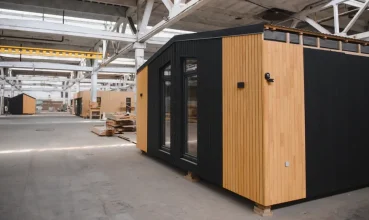
Ford’s strategy includes vertical integration to reduce costs, noting that while contractors might charge $400 per square foot for construction, his in-house team can potentially deliver at $150-175 per square foot, making it possible to serve working-class buyers.
The affordable housing industry in Florida has mainly responded to these challenges through policy advocacy rather than actual development, according to Ford’s observations at industry events.