


Institutional investors entering secondary markets often overlook how neighborhood opposition and complex entitlements can derail otherwise viable projects, according to a Kansas City develo...

Nearshoring Gains Momentum as U.S. Production Capacity Falls Short of Demand

Written by:
Date:
02 Oct 2025
Share via Facebook

Share via Linkedin

Share via X

Copy to clipboard

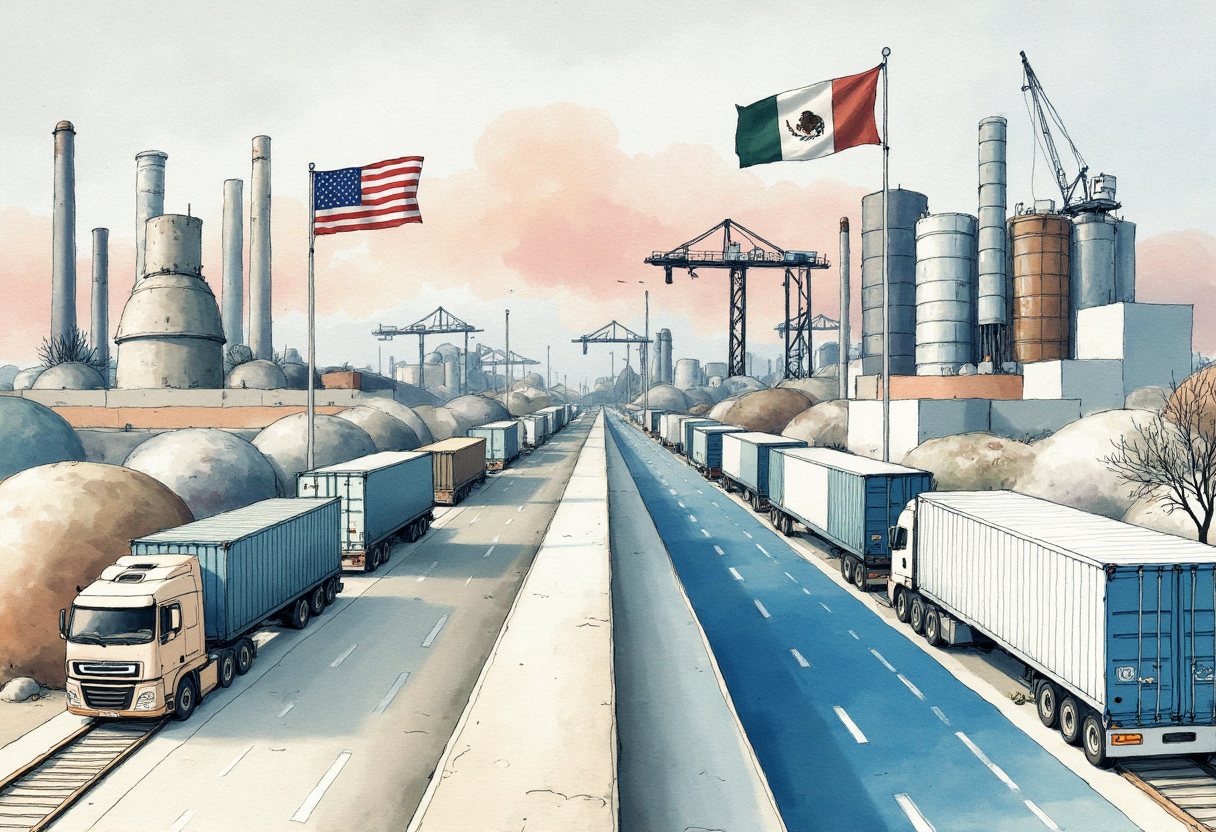
Despite political rhetoric and tariff threats, a new wave of manufacturing nearshoring to Mexico appears inevitable, according to one industry leader closely watching cross-border industrial development.
“It’s absolutely impossible that the US can produce everything that they can consume within the US,” argues Fernando Olloqui, CEO of construction technology platform Licify. “With heavy tariffs in China and the European Union, really, I think that that is benefiting Mexico.”
The Reality Behind the Headlines
While recent months have seen heated political discourse around US-Mexico trade relations, major industrial projects continue advancing steadily, Olloqui notes. He points to significant ongoing developments in Monterrey, including a massive new Volvo factory, recently completed Lego facilities, and major infrastructure projects.
“Last week, I was talking to probably the largest developer and builder of warehouses and industrial [facilities] in Monterrey,” Olloqui says. “Basically what he was saying is, ‘I think in terms of my business in half-cathedral thinking, I think long term. So a couple of announcements are not going to change my plans for my company.'”
This long-term perspective appears to be prevailing across the industry. After a brief period of uncertainty in early 2025 that slowed some decision-making, Olloqui says May and June have shown “very positive momentum” in Mexico’s industrial development sector.
The Economic Fundamentals
According to Olloqui, the current situation mirrors dynamics seen during previous trade tensions, which ultimately strengthened cross-border industrial ties. “I think we’re going to see the same story that happened in Trump’s first presidency, when he hit [Mexico] with the initial tariffs and he renegotiated NAFTA, and that hugely benefited Mexico,” he observes.
The key factors driving this “Nearshoring 2.0” trend, as Olloqui describes it, remain firmly in place: geographic proximity, established supply chains, and competitive labor markets. While some manufacturing may shift to the US, he argues the idea of complete reshoring is unrealistic given market fundamentals.
Looking Ahead
Olloqui’s company Licify, which provides procurement and payment solutions for construction projects, is positioning itself to support this expected wave of industrial development. The firm recently expanded its presence in Mexico while also growing its core business in Colombia.
“If the US economy keeps up, and hopefully there’s no recession, and things go well in the next few years for the US, I think that’s going to very much affect, positively, Mexico,” Olloqui predicts. However, he emphasizes that realizing these opportunities requires patience and sustained focus on long-term trends rather than short-term political noise.
Similar Articles
Explore similar articles from Our Team of Experts.

Perspectives, Market Analysis & Policy, Real Estate Investment, Industry News, Commercial Real Estate
As market pressures mount on inexperienced real estate operators, seasoned syndicators are strategically positioning themselves for what could be significant acquisition opportunities in the...



Perspectives, Commercial Real Estate, Market Analysis & Policy, Real Estate Investment, Industry News
The commercial real estate investment climate in the DC metro area is marked by low vacancy rates and targeted opportunities, according to Jesse Elliott, Managing Partner of The Ellitan Grou...

