


As residential real estate in Pinellas County faces rising insurance costs, regulatory hurdles, and unrealistic seller expectations, one commercial sector has remained resilient: industrial ...

Inside CBRE's EV Infrastructure Play: How One of Real Estate's Biggest Players is Transforming Property Electrification

Written by:
Date:
30 Jan 2025
Share via Facebook

Share via Linkedin

Share via X

Copy to clipboard


The world’s largest commercial real estate services firm isn’t just dipping its toes into the EV charging market – it’s leveraging its massive scale to fundamentally reshape how property owners approach the electrification challenge. CBRE has quietly built what may be the real estate industry’s most comprehensive EV infrastructure solution, turning the traditionally fragmented process of charging deployment into a streamlined operation that spans from site selection to ongoing maintenance.
“We’re able to score them. We’ve built our own internal scoring mapping system – it’s a GIS-based platform and our team has developed algorithms to help prioritize portfolios,” explains Jim Hurless, CBRE’s Global Real Estate Leader for Electric Vehicle Infrastructure. “I may have 500 locations, but these 50 are really great locations. The next 300 may be okay locations. And then the remainder may just not be ready for electrification yet.”
What makes CBRE’s approach particularly noteworthy is how it has weaponized its scale. With over 20,000 project managers overseeing $60 billion in capital spend globally, the firm can deliver cost efficiencies that smaller players simply can’t match. But it’s the maintenance piece that could prove most crucial – CBRE has turned its 23,000-strong network of facilities technicians into an EV infrastructure support team, providing the kind of reliable ongoing maintenance that has often been the Achilles’ heel of charging deployments.
The strategy is particularly timely given the challenging dynamics of today’s EV charging market. “When we start to look at REITs, developers and landlords that we have relationships with, they look at the fragmented market of EV charging and recognize there’s over 200 charge point operators and hardware providers within the United States, and they’re trying to figure out, how do we navigate who do we go to for equipment?” Hurless notes.
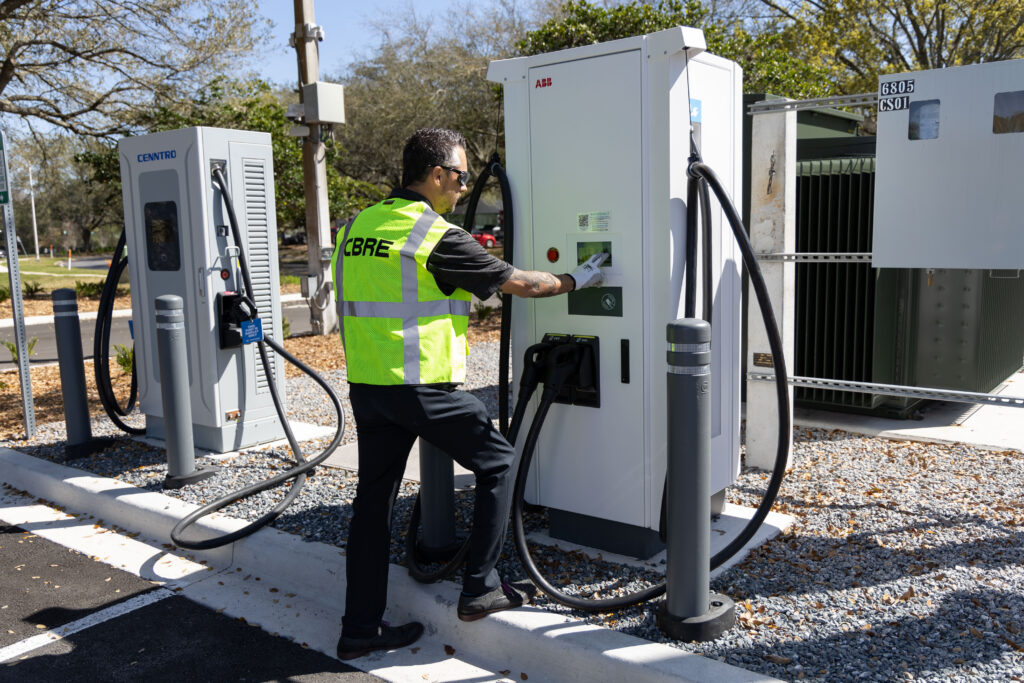
Perhaps most intriguing is CBRE’s behind-the-scenes work with utilities and municipalities. The firm has assembled a 170-person energy specialist team that maintains direct utility relationships – crucial for projects like 10-megawatt fleet charging depots. “We don’t have to call the 800 number,” Hurless points out. “We just pick up the phone and call our direct customer service rep.”
The company is also taking an unprecedented role in shaping local policy around EV infrastructure. “We go to specific cities in California and educate them on why an electrical depot is not the same as a traditional truck parking or truck depot or gas station,” Hurless explains. This includes addressing novel challenges like increased road wear from heavier electric vehicles – the kind of detailed planning that could make or break large-scale deployments.
Level 2 charging installations are currently seeing the highest deployment rates, with multifamily properties emerging as a key growth sector despite being historically underserved. This focus on multifamily could prove particularly significant given the sector’s crucial role in expanding EV adoption beyond single-family homeowners.
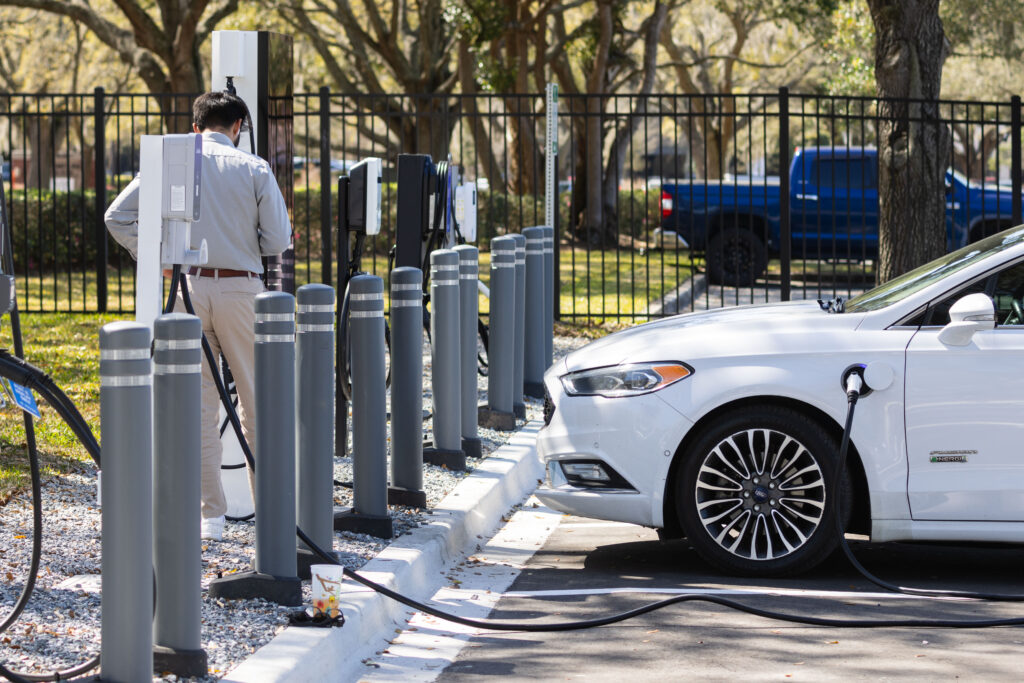
Looking ahead, CBRE sees private sector investment in EV infrastructure accelerating regardless of federal incentives. “I continue to see that EV adoption will continue to grow,” Hurless notes, drawing an interesting parallel to another transformative period in transportation: “I look at this very similarly as back when the automobile was first invented and the horse and carriage industry… they needed to build the gas stations. And as gas stations came, more and more adoption came, and we’re on a very similar path.”
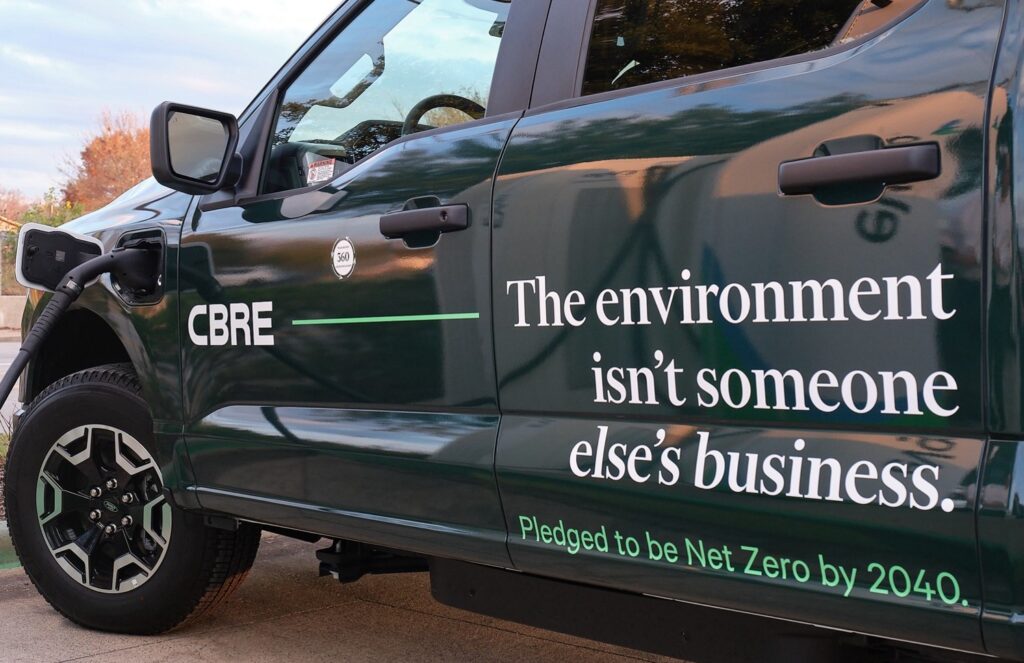
This comprehensive strategy reflects how far CBRE has evolved beyond traditional real estate services. By leveraging its global platform and deep industry relationships, the firm isn’t just participating in the EV infrastructure boom – it’s actively shaping how commercial real estate approaches the electric future.
Similar Articles
Explore similar articles from Our Team of Experts.

Bedrock Energy's Joselyn Lai on Making Geothermal Heat Financially Viable for Commercial Real Estate
“Sustainability is not a scalable approach if it’s just about thoughts and feelings and the idea of being green,” says Joselyn Lai, Co-Founder and CEO of Bedrock Energy. &#...


Industry Profiles, Commercial Real Estate, Property Technology, Market Analysis & Policy, Top Articles
Commercial real estate in smaller southern Illinois markets is experiencing rapid growth, driven by workforce availability, infrastructure, and demand for new technologies. BARBERMURPHY, a r...

