When a buyer purchases a house, the fundamental question is already answered: a home exists on the property, and its permitted uses are largely established. When that same buyer purchases vacant land in rural Northwest Florida, almost nothing is settled. Zoning restrictions, septic requirements, flood zones, wetlands, and building eligibility all need to be verified before a deal can move forward – and in many cases, those answers determine whether the deal happens at all.
That gap between what buyers expect and what rural land transactions actually require defines the market across Florida’s panhandle, particularly in small counties like Liberty County, where the average home price sits around $200,000 and government entities own roughly half the land, according to Hudson “Mitch” Willis, who leads the Hudson Willis Group at LPT Realty and works across Liberty County, Calhoun County, and the broader markets around Tallahassee and Panama City.
“When you’re buying land, there’s a lot of nuances you need to find out,” Willis says. “You need to be checking to make sure, number one, with the county, can I build a home on it? And then what else can I or can I not do on that property?”
Zoning as the Primary Deal Killer
In markets where residential transactions dominate, deals most commonly fall apart over financing, inspections, or appraisals. In rural land markets, the leading obstacle is more basic: the buyer discovers the property cannot support the use they had in mind.
Zoning varies significantly even within the same county. Some parcels allow four homes per acre; others require ten acres per home. Restrictions on mobile homes, campers, and pole barns vary by jurisdiction and have shifted in recent years. Willis describes one nearby county that, until a year or two ago, prohibited buyers from placing campers on small acreage – a use case common among seasonal residents moving from northern states who want a winter retreat. He believes the county has since changed some of those rules, though he is not certain of the current status.
“I think some things that can shock people are that sometimes there are certain things you can and cannot do on a piece of property,” Willis says. “That’s why you really want to research it, to make sure it can do what you want it to do.”
His approach is to conduct preliminary research before a buyer goes under contract, then direct them to the relevant county offices to confirm the findings independently. “Realtors always want to be the source of the source,” he says. “We don’t want to be the source, because that’s what gets us in trouble.”
For buyers unfamiliar with rural land transactions, that verification step is where deals either survive or collapse. A buyer who assumes a parcel can accommodate a mobile home, only to learn it is zoned otherwise, loses time and money – and in a market with limited inventory, may not find a comparable alternative quickly.
The Mobile Home Land Package
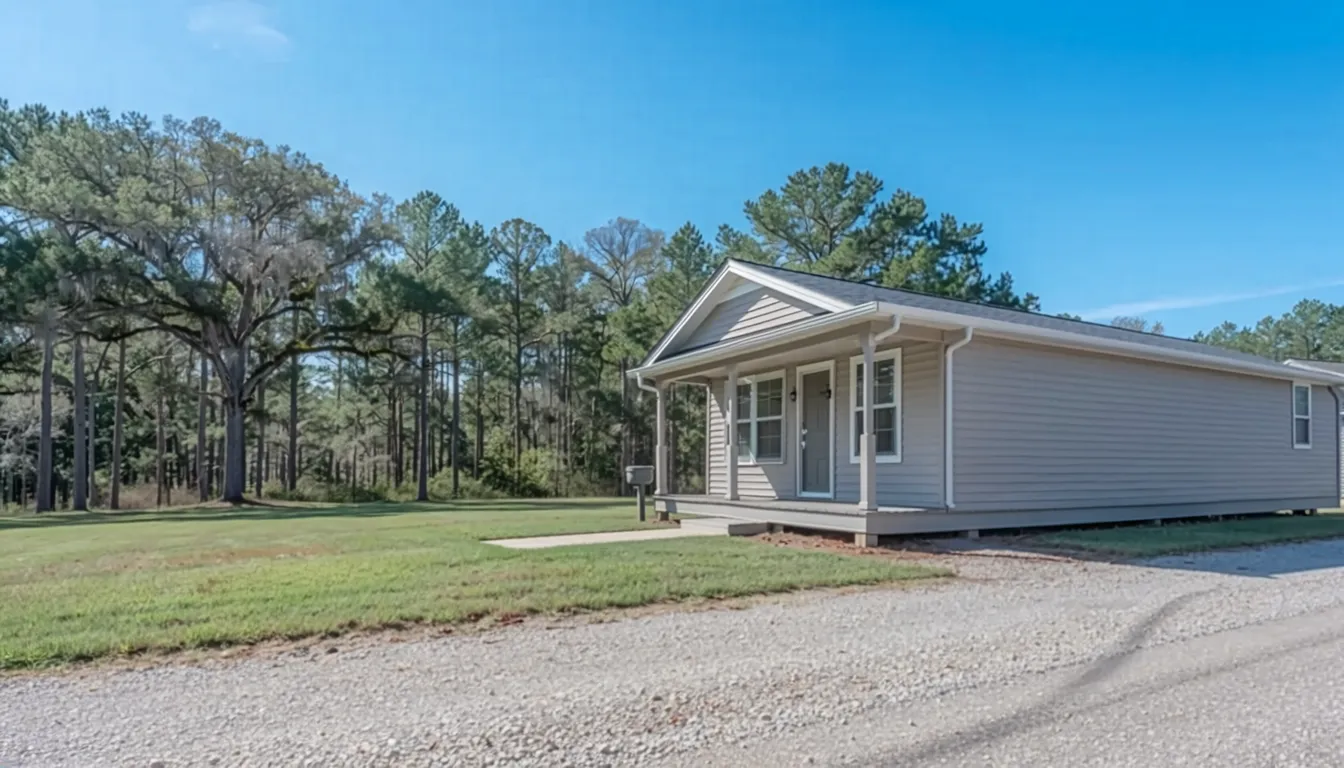
For buyers who cannot afford a traditional single-family home on acreage, the mobile home land package has become a practical alternative. Willis describes working with one family for roughly two years before they found a five-acre parcel that fit their budget. They had initially passed on it, but after surveying their options, came back.
“They were like, Mitch, we can’t afford a house and this much land, but we can afford to put a mobile home on it,” Willis says. “And that’s what they did.”
The family had been living in a smaller mobile home and needed more space as their household grew. The five-acre parcel gave them room they could not have gotten with a conventional home purchase at the same price. Willis says these deals are common in his market – buyers who cannot reach the cost of a site-built home on acreage can often get more land by going the mobile home route.
Septic systems, wells, and site preparation add costs that vary by parcel. Whether a septic system must be above-ground – which costs more – depends on soil conditions and county regulations. Those costs need to be understood before a buyer commits.
A Supply-Constrained Market With Specific Gaps
Liberty County’s roughly 8,000 residents live in a market where federal and state government ownership of approximately half the county’s land limits what is available for development. That constraint keeps land values somewhat elevated relative to neighboring counties, according to Willis.
The most visible gap is in affordable housing. Willis says he has heard from local school board members that the county struggles to retain teachers in part because there are not enough reasonably priced homes or neighborhoods for them to buy or rent. He sees an opportunity for developers willing to build modestly priced neighborhoods rather than higher-end construction.
“You can’t go in there building $500,000 homes,” he says. “The teachers can’t do that.”
The combination of limited developable land and a population too small to attract large-scale builders leaves Liberty County in a bind: the housing it needs most is the housing least likely to get built without deliberate, lower-cost development.
Sellers Are Adjusting, Slowly
Across both residential and land listings, Willis describes a market that is flat to soft, with sellers gradually accepting current pricing realities. Some push back initially, wanting to list above where comparable sales suggest they should.
“If they want to test the market, let’s do that,” Willis says. “But typically they do end up listening to the market and coming down to where they need to be, where offers may be coming in at.”
Willis says interest rates are the primary headwind he is watching, noting they have risen since he entered the business in 2021, when rates were around two and a half to three percent. But his broader view is pragmatic. Regardless of rate movements, he says, transactions continue because people’s circumstances – relocations, growing families, financial changes – force decisions.
The market also draws buyers from southern Florida, where prices are significantly higher. Willis says those buyers often view panhandle pricing favorably, while buyers making lateral moves within the region are more price-sensitive because values across the panhandle are broadly similar. That perception gap means the same listing can feel like a bargain or a stretch depending on where the buyer is coming from.
River lots attract a distinct buyer type. Willis says most purchasers use them as weekend retreats – placing a camper or fifth wheel on the property rather than building a permanent home. He describes one buyer who was tubing on the Chipola River, spotted a parcel for sale, and called to put it under contract. That kind of opportunistic, recreation-driven purchase is typical for the segment.
For buyers considering rural land in Florida’s panhandle, the central lesson is straightforward: verify what you can do with a property before you commit to buying it. In a market where zoning rules vary parcel to parcel and government land ownership limits alternatives, a failed deal is harder to recover from than in a conventional residential market.
About the Expert: Hudson “Mitch” Willis leads the Hudson Willis Group at LPT Realty, covering Liberty County, Calhoun County, and the Tallahassee and Panama City areas of Florida.
This article is based on information provided by the expert source cited above. It is intended for general informational purposes only and does not constitute legal, financial, or real estate advice. Readers should conduct their own research and consult qualified professionals before making any real estate or financial decisions.