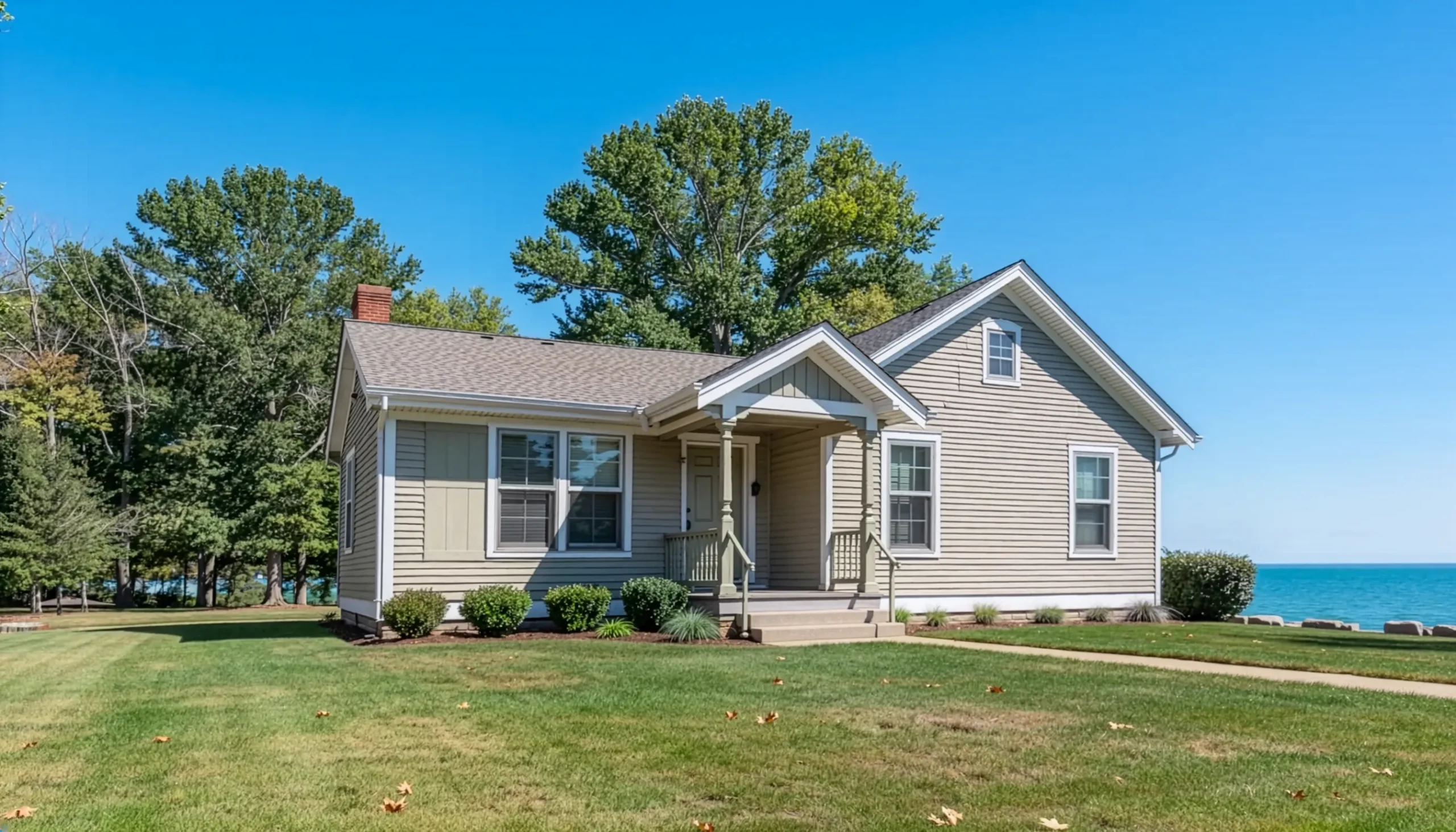
Most small markets have a dominant property type. Angola, a village in Erie County near the southern shore of Lake Erie, has village homes, rural properties with acreage, manufactured homes, and lakefront houses all packed into a radius small enough that a buyer can tour four completely different housing categories in a single afternoon. That compressed diversity, according to Kelly Zielinski, an agent with WNY Metro Roberts Realty who works the Angola and Evans area, is shaping how buyers evaluate the market, how sellers price their homes, and where investor capital is starting to flow.
“Within a 10-minute drive, you’re looking at completely different types of properties all over the place in our market,” she says.
That variety means there is no single buyer profile and no dominant price – but it also means pricing errors are punished fast.
The Market Speaks Quickly
A well-priced home in the Angola area typically goes under contract within one to two weeks, according to Zielinski. Homes that sit longer are sending a clear message.
“It’s not like when it was with COVID where things were going under contract in a day or two,” she says. “But if it’s not priced right, you really should adjust sooner rather than later because the market does tell you very quickly.”
The challenge is that many sellers arrive with a number already in their head. Zielinski describes walking clients through comparable sales and offering two strategies: list slightly below the comparative market analysis to generate more showings and competition, or list on the higher end and risk the listing going stale. She says the lower-listing strategy consistently produces better results – and often gets the seller the same final price.
“At the end of the day, you’re still getting the same result,” she says. “There are two different strategies, and I found that one strategy works a heck of a lot better and faster than the other one.”
Sellers who ignore the comparables and list high face a specific consequence: the listing goes stale, they eventually reduce the price, and they end up at the same number the market was willing to pay from the start – just weeks later.
New Construction and Outside Buyers Are Reshaping Evans
The town of Evans, which encompasses the Angola area, has seen roughly 72 building permits pulled for new construction, according to Zielinski – and a meaningful share of those are from buyers coming from outside the town.
What is pulling buyers in, Zielinski says, is perceived value. Much of the existing housing stock dates to the 1950s, and many homes are older cottages that need work. Rather than scaring buyers off, that condition is attracting people who see an opportunity to buy at a lower price and renovate. Vacant lots are also increasingly coming to market, adding options for buyers willing to build.
The average sale price for existing structures in the area sits around $250,000, Zielinski estimates. But she notes that buyers are increasingly focused not on the listing price but on what the home will cost them monthly – taxes, insurance, and total carrying costs. “People aren’t just looking at the prices of houses anymore,” she says. “They’re basically looking at what the house is going to cost them every month.”
That monthly-cost focus changes how buyers compare properties across Angola’s diverse housing stock. A cottage listed at $150,000 and a newer home listed at $280,000 may look far apart on price, but once taxes, insurance, and potential repair costs are factored in, the gap narrows or even reverses. Buyers who understand that distinction are making sharper decisions about where their money actually goes.
Where Investors Are Finding Opportunity
Investor activity in the Angola area has been picking up, particularly around three categories: vacant lots for new duplexes, cottage rehabs, and short-term rentals near the lake.
Zielinski points to a shortage of rental housing as a primary driver of duplex construction. Investors are also buying older cottages at low prices, rehabbing them, and either reselling or holding them as rentals. Proximity to the lake creates short-term rental opportunities, which has drawn additional capital.
“There’s so much opportunity right now, and I think investors are starting to catch on because I’m seeing more and more come to town,” she says.
The main risk for investors – and for buyers generally – centers on the condition of the older housing stock. Deals occasionally fall apart when homes fail to meet the requirements for FHA or VA financing due to their condition. Conventional mortgages and cash purchases are less affected. Zielinski says inspection issues on aging properties remain the primary transaction hazard she encounters, though she notes these failures are uncommon.
For investors considering the area, the financing method matters as much as the purchase price. A property that qualifies for conventional financing or a cash offer faces fewer obstacles to closing than one that requires FHA or VA approval, where stricter condition requirements can stall or kill a deal on an older home.
Buyers Are More Educated, and the Market Is Moving Toward Balance
Zielinski sees the Angola market moving toward equilibrium. Buyers have more inventory to choose from and are becoming more selective. Rather than being scared off by a stale listing, some buyers now recognize that extended time on market may reflect a pricing problem rather than a property defect – and they are willing to make offers accordingly.
For first-time buyers, Zielinski focuses heavily on affordability education. She describes a common pattern where a mortgage company approves a buyer for a number that sounds attractive on paper but would stretch the buyer’s monthly budget past comfort. “I try to explain to my clients, you don’t want to be house-broke and be at the top of your budget,” she says.
That guidance extends beyond the mortgage approval itself. Zielinski says she walks first-time buyers through the full cost picture – property taxes, insurance, and anticipated maintenance – so the monthly reality matches what they can sustain, not just what a lender says they qualify for.
Her outlook is practical rather than predictive. Sellers who price correctly will continue to move homes within one to two weeks. Those who do not will watch the market deliver its verdict just as quickly. “The bottom line is if the houses are priced right and people know what their monthly payments are going to be, that’s a huge thing right there,” Zielinski says. “The market’s going to talk to you pretty quickly.”
About the Expert: Kelly Zielinski is an agent with WNY Metro Roberts Realty, and has an investor business called Northeast Property Partners. She covers the Angola and Evans area of Erie County, New York.
This article is based on information provided by the expert source cited above. It is intended for general informational purposes only and does not constitute legal, financial, or real estate advice. Readers should conduct their own research and consult qualified professionals before making any real estate or financial decisions.