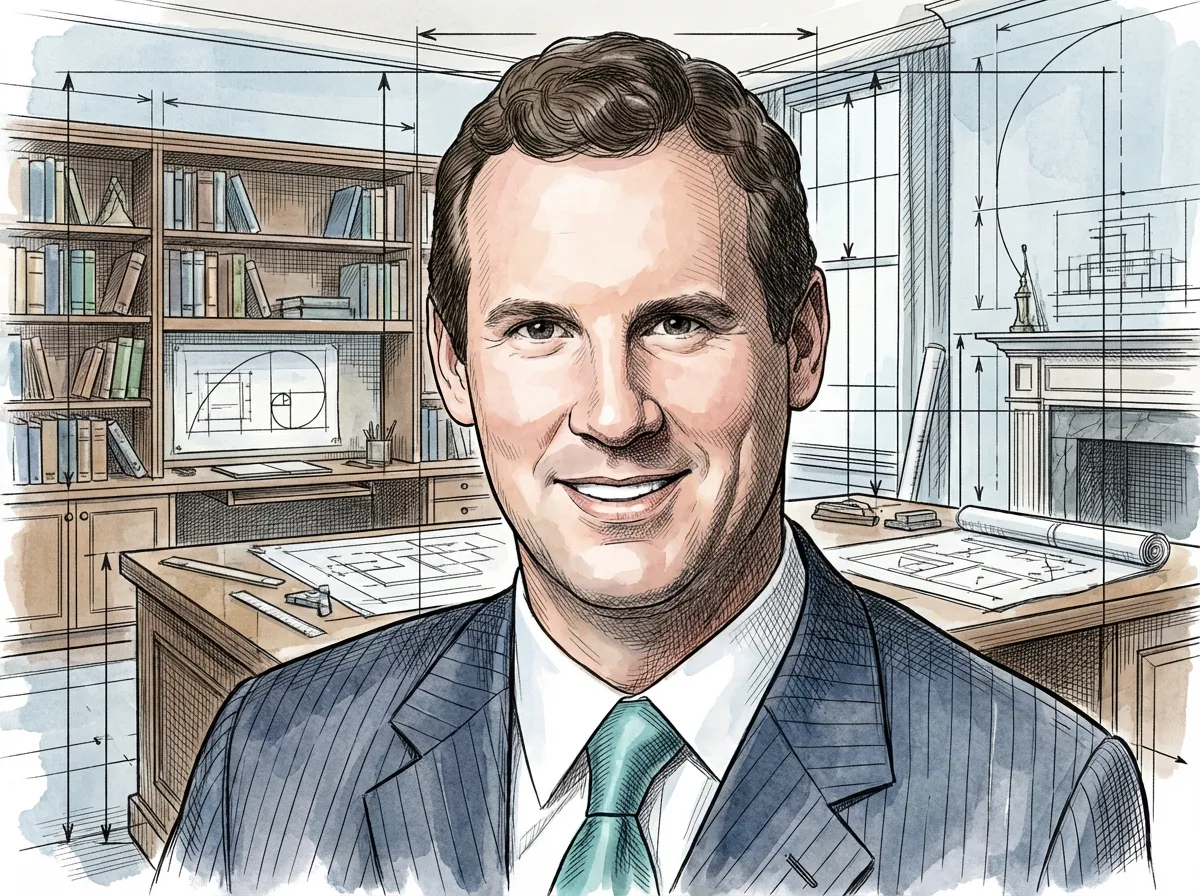
Hawaii’s commercial real estate market differs sharply from the mainland, shaped by land scarcity, regulatory hurdles, and cultural factors that influence every deal. For investors, these realities create both barriers and opportunities, requiring a distinctly local approach to succeed. Mark D. Bratton, Senior Vice President of Capital Markets and Investment Sales at Colliers International Hawaii, has spent over four decades navigating this environment.
Land Supply Constraints
The defining feature of Hawaii’s commercial market is a persistent shortage of developable land. Unlike much of the mainland, where new projects can expand outward, Hawaii’s geography and zoning laws sharply restrict what can be built and where. Areas zoned for dense development are tightly controlled, even though the islands have vast open and agricultural spaces. Efforts to rezone land or secure special use permits often take up to seven years, if they succeed at all.
A recent transaction illustrates how these constraints shape deals. Bratton’s team sold an apartment building that a hospital had held for over twenty years, originally purchased as a hedge against future expansion. When the hospital decided not to expand, it sold to a family that specializes in affordable housing. The buyers moved quickly — they knew the value and were prepared to take on significant rehabilitation, including plumbing, electrical, and spalling repairs.
Rates Transform Buyer Profiles
The rise in interest rates has affected Hawaii’s market. Rates below 6% are now rare, contributing to a roughly 20% decline in transaction volume compared to three to five years prior. Most recent transactions involve owner-users — businesses acquiring office buildings for headquarters or warehouses for their own operations. In the hospitality sector, hotel management companies are increasingly buying properties they already operate, a shift from the past when outside investors and institutional buyers played a larger role.
Institutional Capital Stays Cautious
The $2.3 billion acquisition of Alexander and Baldwin showed that Hawaii can attract institutional capital. Still, the scale must justify the distance. As Bratton describes it, off-island buyers were direct about their threshold: “It’s not worth flying 3,000 miles to do business unless you can give me three of them or five of them.”
Despite that headline deal, most institutional capital remains on the sidelines. Billions have been raised for Hawaii-focused investment, yet few large transactions have closed. Part of the pressure is structural — institutional funds typically have an investment horizon of usually 5-7 years; if capital is not deployed within that window, it reverts to investors, and the operator earns no fees. Scarcity, regulatory delays, and the need for local expertise keep many institutional players waiting.
Tourism Decline Pressures Hotels
More than half of Bratton’s business is in the hospitality sector. A weakened yen and Korean won have reduced visits from key international markets, and Canadian visitor numbers have dropped as travelers look elsewhere. The result is a softening in the mid-tier hotel market, even as the upper-luxury segment remains relatively stable.
Geopolitical uncertainty is compounding the pressure. Currency exchange was the first stress point, followed by reduced Canadian travel and, more recently, by caution among travelers in response to global conflicts. Bratton notes that instability in other destinations has occasionally worked in Hawaii’s favor — when travelers avoid certain markets, Hawaii reservations have benefited. Even so, a full rebound in Japanese tourism, a critical segment, may not occur until around 2030. For hotel owners who took on significant debt coming out of the pandemic, these trends are creating pressure to act and openings for investors willing to acquire properties with reduced net income or looming debt maturities.
Ground Leases Complicate Deals
A significant portion of Hawaii’s commercial properties operate under ground-lease arrangements, in which investors own the buildings but lease the land. The Alexander and Baldwin portfolio included a ground-leased net-lease portfolio alongside its shopping centers, illustrating how embedded these structures are even in major transactions.
As a general rule, ground-lease properties trade at roughly 200 basis points below comparable fee-simple properties, with shorter lease terms widening the discount further. Ground leases offer two concrete advantages: lower acquisition costs, since the buyer is not purchasing the land, and the ability to depreciate 100% of the real estate value relatively quickly — a meaningful tax benefit. Even so, Bratton says roughly 80% of buyers favor fee-simple ownership. The discount required to move leasehold properties considerably limits the pool of interested buyers.
Local Relationships Drive Success
The most overlooked barrier for mainland investors is cultural. Hawaii’s history and local norms play a central role in dealmaking, and those who ignore them pay a price. Bratton describes a common pattern: a brash developer arrives saying, “I can do that, no problem — I’ve done it before on the mainland,” and faces significant pushback at nearly every stage. He has watched many such investors dip their toes in the water, only to give up three to five years later and return to the mainland.
Successful investors take a different approach. They visit the islands at least once a quarter, rely on local partners to navigate community and government relationships, and invest in trust before committing capital. A local partner does not need to be a majority stakeholder — but their role in managing public-facing relationships is often the difference between a project that moves forward and one that stalls.
Rate Cuts Could Lift Volume
Colliers projects a potential 20% increase in Hawaii commercial real estate transaction volume, contingent largely on rate movement. Bratton frames it as much a question of mindset as economics. Even a modest reduction of 20 to 50 basis points, he explains, would shift how investors think and behave. “It’s really a mindset. People will just be more prone to investing and taking risks.” By contrast, geopolitical uncertainty has had the opposite effect, prompting investors to pause and hold cash rather than commit.
Development remains difficult regardless of the direction of the rate. Projects involving affordable housing or new construction routinely face opposition and lengthy approval timelines. “It’s not for the weak of heart on any of the islands to develop ground up,” Bratton says. For those who navigate the process, entitlements — the right to build on a property — are especially valuable and can yield significant returns.
Services Expand Beyond Transactions
The role of the commercial real estate advisor in Hawaii is broadening. Capital markets work — including debt and equity financing, refinancing, and strategic planning — is increasingly central to how clients are served, reflecting the reality that not every client is ready to transact and that value can be added throughout the ownership cycle.
Technology is also reshaping practice. Advisors are adopting tools, including AI-driven platforms, to reduce friction and improve access to information. In a market where opportunities must be seized quickly due to limited inventory, operational efficiency has become a competitive necessity.
Barriers Create Lasting Value
Hawaii’s constraints — limited land, slow entitlement processes, and a strong local culture — are the same forces that preserve its long-term value. Properties with approvals and community support are rare and highly sought after. Investors who understand these dynamics and build genuine local partnerships can find outsized rewards compared to more accessible markets.
High entry costs, slow development timelines, and the risk of community opposition mean this market rewards patience and local knowledge over speed and scale. For investors willing to commit, scarcity and complexity are not obstacles but sources of lasting value. The fundamentals — limited supply, regulatory rigor, and the primacy of local relationships — will remain the defining features of Hawaii’s commercial real estate landscape.
About the Expert: Mark D. Bratton is Senior Vice President of Capital Markets and Investment Sales at Colliers International Hawaii, where he has specialized in commercial investment transactions across all property types for over four decades. Based in Honolulu, Bratton leads a team covering hospitality, office, retail, and resort development, with deep expertise in the unique land, regulatory, and cultural dynamics that define Hawaii’s commercial real estate market.
This article is based on information provided by the expert source cited above. It is intended for general informational purposes only and does not constitute legal, financial, or real estate advice. Readers should conduct their own research and consult qualified professionals before making any real estate or financial decisions.