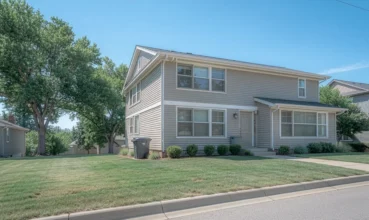
The focus on healthy buildings has become a core strategy for real estate investors seeking measurable financial returns, not just regulatory compliance. As bugdgets tighten and market conditions shift, prioritizing occupant health and wellness is proving to deliver real value, moving beyond sustainability labels.
Joanna Frank, founding president and CEO of the Center for Active Design, has observed this shift over her 15-year career. Her organization operates the Fitwel healthy building certification, working with major asset managers, REITs, and commercial real estate firms such as CBRE, JLL, and Cushman & Wakefield.
“Our clients are the largest asset managers in the world, the big institutional investors and REITs,” Frank says. “What they want is to optimize ROI and NOI by prioritizing their occupants’ needs.”
Residential Demand Surges After COVID
The pandemic fundamentally changed demand for healthy building certifications. While offices were once the primary focus, residential properties nowg make up the fastest-growing sector for Fitwel. Before COVID-19, residential demand for health certifications was minimal. Today, it is a central concern for both developers and tenants.
Frank points out that student housing leads the residential surge, driven by a generation attuned to how the built environment affects mental health and social connection. “There is strong demand for student housing optimized for health, especially mental health,” she notes. “Students today are aware of the impact their built environment has on mental health and their ability to connect socially.”
This focus on health extends across the residential spectrum, including multifamily and senior living, and is now gaining ground in hospitality. The change reflects heightened consumer awareness of how the built environment shapes daily life and well-being.
Certifications Linked to Rent Premiums
The business case for healthy buildings is backed by academic research, not just industry advocacy. In 2025, Cambridge University published a study showing that buildings with health certifications command a 4.4% to 4.8% rent premium. These findings are consistent with earlier MIT research, both based on large sample sizes and independent of certification organizations.
“These are academic studies that we are not involved with,” Frank emphasizes. “This is pure research happening at the academic level.”
Both studies controlled for building age, location, and class, confirming that the rent premium is tied to health features rather than other variables. This strengthens the case that healthy building strategies directly improve financial performance.
Institutional investors are taking note. Harrison Street, a major investor in student and senior housing with about 500 assets, now requires Fitwel certification as part of its lending criteria. The firm has identified a clear link between health-focused strategies and asset performance. “They found a strong correlation between Fitwel strategies and financial performance,” Frank says. “This is now part of their core business.”
Investors Pivot to Existing Assets
Rising interest rates, higher labor costs, and supply chain disruptions have shifted real estate investment away from new construction and toward repositioning existing assets. Developers who once prioritized ground-up projects are now focused on upgrading and certifying the buildings they already own.
“We have seen a predominance of repositioning and purchasing existing assets,” Frank explains. “Developers who would have built new construction in years past — that’s just not penciling out in the U.S. right now.”
This trend aligns with Fitwel’s approach. Roughly 80 to 90 percent of the built environment is already in place. The certification draws on more than 7,000 peer-reviewed studies linking building features to health outcomes, making it applicable to both new and existing properties.
Health Strategies Replace Sustainability Labels
Sustainability branding has lost traction in the U.S. real estate market, but the underlying strategies continue to gain ground. Instead of focusing on compliance or marketing, owners and investors are pursuing health and wellness initiatives due to rising consumer demand and clear financial incentives.
“The term ESG isn’t being used, but there is strong consumer demand for health outcomes and for focusing on human capital. The strategies are still being pursued,” Frank says.
The emphasis has shifted to practical risk management. Climate change is increasingly affecting real estate portfolios. Owners now recognize the links between environmental factors, occupant health, and long-term asset value. Health strategies are now seen as a way to reduce risk and enhance resilience, rather than as regulatory boxes to check.
Indoor Air Quality Lags Behind
Despite strong tenant demand for improved indoor air quality, this remains one of the least-adopted Fitwel strategies. Building owners hesitate to install air quality sensors or commit to monitoring, fearing liability if poor conditions are detected.
“Building owners are concerned that if they install sensors and detect poor air quality, they must address whatever is causing it,” Frank explains.
Often, the sources of poor indoor air quality are tenant-related, including off-gassing from furniture or personal care products, which complicates remediation. Still, tenant expectations are driving the industry to develop new solutions in this area.
People Drive Asset Performance
A major shift in real estate thinking is the recognition that occupants are central to asset performance. Traditionally, the industry focused on physical and financial metrics, often overlooking the people who use the space.
“We were not considering the people,” Frank reflects. “We considered asset performance and the physical performance of the building, but not the human element.”
Research shows that tenants can sense higher-quality environments, even without knowing the specific health strategies behind them. When health-focused measures are implemented, tenant satisfaction and Net Promoter Scores rise, whether or not occupants are explicitly aware of the changes.
Technology Could Close Valuation Gaps
One of the biggest challenges is integrating healthy building features into standard property valuations. Many attributes that drive rent premiums and tenant retention are not reflected in appraisal methods. This makes it easy for owners to overlook them when making investment decisions.
“Healthy building attributes are not captured in valuation frameworks,” Frank notes. “If we do not include these attributes in how we value assets, they can be ignored or overlooked.”
Artificial intelligence offers potential to address this gap. As AI is adopted across the real estate sector, it could enable more precise measurement of how specific health strategies affect financial outcomes, making it easier to justify investment in these features.
International Markets Lead Adoption
While U.S. adoption faces headwinds from economic and political uncertainty, international markets — especially in Asia-Pacific — are driving growth in healthy building strategies. Investors in these regions are increasingly requiring health and wellness certifications as part of their core criteria.
“It’s interesting to see how global leadership shifts and how investment strategies shift. But the momentum is moving forward,” Frank says.
For real estate professionals, the message is clear: healthy buildings are no longer a trend or a marketing tool. They are a measurable factor in asset performance. As consumer awareness grows and the financial benefits become harder to ignore, prioritizing occupant health is becoming a business necessity.
Health Becomes Industry Standard
The industry has moved from questioning whether buildings affect health to quantifying that impact in financial terms. Academic research links health certifications to rent premiums and improved tenant satisfaction. Institutional investors are now embedding these metrics into lending and investment decisions.
Going forward, the challenge will be to ensure that property valuation and underwriting frameworks recognize the value of health-focused strategies, especially as data analytics make these impacts more visible. Owners who adapt now are likely to see stronger returns and lower risk as consumer expectations continue to rise.
Healthy buildings are on track to become standard practice in real estate, with the market rewarding those who invest in occupant well-being and penalizing those who do not. As evidence and demand continue to grow, ignoring the health of building occupants is a risk that owners and investors can no longer afford.
About the Expert: Joanna Frank is the founding president and CEO of the Center for Active Design, the nonprofit organization behind the Fitwel healthy building certification. Over her 15-year career, she has worked with the world’s largest asset managers, institutional investors, and commercial real estate firms to advance evidence-based strategies that link occupant health to financial performance.
This article is based on information provided by the expert source cited above. It is intended for general informational purposes only and does not constitute legal, financial, or real estate advice. Readers should conduct their own research and consult qualified professionals before making any real estate or financial decisions.