The retail commercial real estate market has seen major shifts in recent years, with transaction volumes rising and falling as interest rates increased and economic uncertainty grew. For brokers in this sector, having firsthand knowledge of both retail operations and investment sales has become a key asset.
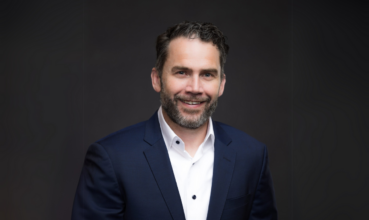
Ayson Shammami, Managing Partner at APEX Commercial Real Estate Advisors, brings a dual perspective to the table, having worked as both a retail operator and a commercial broker. His journey from retail operations to brokering triple net lease (NNN) properties illustrates how operational experience can inform investment sales strategy in today’s market.
From Retail Operator to Investment Broker
Shammami’s introduction to business began early, working at his uncle’s Comfort Inn in Farmington Hills, Michigan, at age 14. After high school, he gained mortgage experience at Quicken Loans before entering the cellular retail sector, where he opened his own stores in Brighton and Commerce, Michigan.
“I realized very quickly that it was not really a scalable business. It was more of an owner-operator type gig,” Shammami says. When he received an unsolicited offer for his Brighton location, he saw an opportunity to move into a new field.
This background in retail operations proved critical when he entered commercial brokerage seven years ago. “It’s very rare to meet a real estate broker who has experience in retail operations,” he notes. “Understanding the importance of a strong retailer as your tenant, and the role of location, is a huge advantage.”
Launching APEX Commercial
After six years at boutique firm Encore, where he was the top-producing agent in 2023, Shammami and his partner Sal Yaldo launched APEX Commercial Real Estate Advisors in early 2025. Their decision was motivated by the need for greater growth potential and ownership.
“At our previous firm, we had simply reached our ceiling,” Shammami explains. “As top producers, Sal and I wanted the ability to keep expanding without limits. Starting our own brokerage gave us that runway.”
APEX Commercial specializes almost exclusively in retail properties, with approximately 75% of its business focused on single-tenant assets and 25% on multi-tenant properties. The team operates nationally, having closed deals in 30 states, though about half of their transactions originate from Michigan.
Retail Investment Market: Volatility and Recovery
The retail investment market has experienced pronounced volatility over the last several years. Shammami identifies June 2020 through January 2022 as a record-setting period, with low interest rates fueling rapid deal flow. “It was probably an 18-month stretch where the most deals ever closed,” he says.
As interest rates increased, uncertainty took hold, and many investors paused activity. “When there’s uncertainty, people don’t know what to do, so they sit on the sidelines and wait for the dust to settle,” Shammami observes. However, after more than three years of higher rates, market participants are showing greater willingness to transact.
“Now that rates have been high for about three-plus years, people aren’t just waiting. Transactions are picking up. Sellers are starting to adjust to current market realities,” he reports.
Changing Investor Profiles and Return Expectations
One of the most significant changes Shammami has observed is the evolution of the retail real estate investor pool. The era of rapid equity multiplication through property appreciation has largely ended, replaced by more conservative return expectations.
“Real estate used to be a business where people could create a lot of value and multiply equity,” he says. “Those professionals who built massive wealth from real estate are no longer buying, and I don’t think they will again, because the opportunities for outsized returns have become much more limited.”
Today’s investors are primarily seeking reliable yields in the 6% to 8% range, rather than the 2-3x equity multipliers common in previous decades. As a result, many experienced real estate professionals have shifted to other asset classes, and the investor pool has changed accordingly.
New Buyers Entering the Triple Net Market
With traditional investors stepping back, a new category of buyers has emerged, drawn by increased information and awareness of the triple net lease model. “A lot more people now know you can buy a standalone property leased to a national tenant,” Shammami says.
These new investors often come from professional backgrounds outside real estate, such as medicine, law, or technology. “You might have a doctor who wants to diversify away from their 401(k), stocks, and bonds,” he explains. For these buyers, the appeal is straightforward: “They don’t want to deal with property maintenance or tenants. They want an investment that requires minimal time and effort.”
Educating Non-Traditional Investors
Working with non-traditional investors requires a significant educational component, especially regarding credit analysis and lease structure. “The biggest thing I find myself teaching is how to assess the credit risk and the financial strength behind the lease guarantee,” Shammami says.
He cites a recent case where a doctor considered purchasing a Walgreens property. “She didn’t realize the risk associated with Walgreens’ credit profile,” he recalls. After explaining the retailer’s recent financial difficulties and credit downgrades, the client opted instead for a quick service restaurant property with a strong corporate guarantee.
Lease structure is another area where education is crucial. “No two leases are the same. Even with the same tenant, terms can vary dramatically depending on the landlord’s negotiation,” Shammami explains. “I often help clients avoid poor investments by carefully reviewing the details of each lease.”
Current Market Conditions: Activity and Liquidity
Despite the challenges of recent years, Shammami reports increased deal activity over the past 12 to 18 months. One notable trend is a decline in 1031 exchange buyers, likely due to fewer property sales in the current environment.
At the same time, there is substantial capital waiting to be deployed. “There are buyers sitting on more liquidity than ever, just waiting for the right opportunity to invest,” he observes.
Institutional buyers remain active, maintaining their focus on specific asset types. “Each REIT has its specialty and sticks to it. They’re becoming more active now that sellers are showing more flexibility,” Shammami says.
What Lies Ahead for Retail Investment Sales
The retail investment market appears to be stabilizing after several years of disruption. While the days of outsized appreciation and windfall profits may be over, steady demand from both institutional and individual investors is supporting a more balanced market.
For brokers like Shammami, success increasingly depends on understanding the operational realities of retail as well as investment fundamentals. “In this business, what separates you is how many hours you’re willing to put in,” he says. “We’re 24/7, 365. We don’t take any time off.”
As the market continues to adjust to higher interest rates and changing investor expectations, brokers with operational experience and a commitment to educating new buyers are well-positioned to thrive. APEX Commercial aims to meet these needs by combining national reach, deep retail expertise, and a hands-on approach to client service.
For more information about APEX Commercial Real Estate Advisors, contact Ayson Shammami at their Farmington Hills, Michigan office.
This article was sourced from a live expert interview.
Every month we conduct hundreds of interviews with active market practitioners - thousands to date.
The multifamily development landscape in the New York metropolitan area presents significant challenges for small-scale developers, from complex regulations to rising construction costs. Yet...
“In the residential real estate industry, as a broker owner, when you want to sell, you can’t tell anybody. The second you do, rumors start, and your competitors hear about it. I...
When Lindsay Liu found herself serving on three different condo association boards while pursuing her real estate investment strategy, she couldn’t believe what she was seeing. “...
The Dallas luxury real estate market continues to attract high-caliber professionals, driven by major corporate relocations and significant commercial investment. Recent PwC rankings placed ...
The surge in artificial intelligence infrastructure has created record demand for data centers, but traditional construction methods cannot keep up. Conventional data center builds often tak...
The traditional path to homeownership is being challenged by a growing number of investors who are choosing to rent their primary residence while building wealth through secondary home purch...