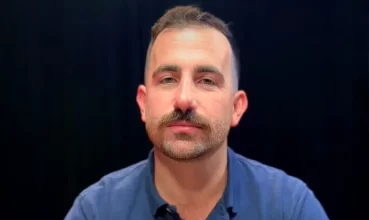

In an era dominated by artificial intelligence and digital solutions, real estate educator Jessica Randolph, is making a compelling case for the irreplaceable value of local, human exp...

Florida's Land Market Reflects Broader Real Estate Correction While Family Compounds Drive Demand

Written by:
Date:
28 Jun 2025
Share via Facebook

Share via Linkedin

Share via X

Copy to clipboard


Florida’s land market is experiencing the same correction patterns affecting residential real estate statewide, with values stabilizing after pandemic-era inflation while new buyer trends emerge around multi-generational living arrangements.
Donna Suchocki, ranch and residential sales and investment specialist with Keller Williams Realty, who has worked Florida land transactions for 28 years, reports that current market conditions mirror broader real estate trends. “The values have been correcting for the last couple of years because they were inflated during COVID,” she explains. “Everyone was saying the sky is falling and the market was going to crash, but really it was just correcting.”
The correction has created a buyer’s market environment with increased inventory levels. “We’re swinging into a buyer’s market now because the inventory is higher than it has been in quite a while,” Suchocki notes. “The buyers are going to have more to choose from, and if those interest rates go down, more buyers will come into the market.”
Multi-Generational Living Drives Land Demand
One of the most significant trends in Florida’s land market involves families seeking properties for multi-generational compounds. “There’s a lot of interest in buying land, and what I find the most of is families wanting to buy land and build multiple homes on them to make, in essence, like a compound for their family,” Suchocki observes. “Parents and children living on the same property in separate houses.”
These buyers typically seek five-acre parcels that can be subdivided to accommodate two homes, working within local zoning requirements that often mandate one house per five acres. For larger properties, the configurations become more creative. “In some cases, larger parcels that, depending on the road frontage, they’re building like one main home and then some tiny homes on there,” she explains.
The trend has produced some innovative living arrangements. Suchocki describes one local property featuring “four tiny homes and two regular homes on it,” creating a self-contained family community tucked away in wooded areas.
Regional Migration Patterns Within Florida
Data from Keller Williams Realty’s referral tracking system reveals interesting internal migration patterns within the state. “Orlando to Tampa and Tampa to Orlando are one of the most frequented purchases and referral patterns,” Suchocki reports. The movement often reflects practical considerations about quality of life.
“People move to Orlando, or even from out of state, they moved to Orlando and then realized that the Tampa area is better just because Orlando is so congested with Disney being over there,” she explains. The Tampa area offers advantages including better beach access and less congestion compared to the Orlando metropolitan area.
Equestrian Properties Maintain Strong Market Position
Florida’s position as a major equestrian hub continues to drive specialized land demand. With Ocala serving as “the horse capital of the world” and Tampa Bay Downs racetrack providing world-famous racing facilities, the central Florida region maintains significant equestrian activity.
“We just tend to have a lot of equestrian activity going on in this central area of Florida,” Suchocki notes. The market includes boarding facilities, training operations, and racing venues that create ongoing demand for suitable properties.
Ocala specifically has experienced substantial growth over the past two decades. “Twenty years ago there wasn’t so much there, and now it’s just become a hot spot,” she observes.
Land as Investment Asset
Florida’s limited land supply is driving investment interest from buyers focused on long-term value appreciation rather than immediate development. “We’re a small, fairly small, skinny state, and the land is, quite frankly, dissipating,” Suchocki explains. “To buy a piece of land here, eventually it’s going to get built on by somebody. So if you hold on to it long enough, somebody is going to pay a lot of money for it.”
The scarcity dynamic mirrors coastal real estate patterns. “It’s almost like you can liken it to oceanfront property. You know how it’s almost impossible to get that here now, or even on our Gulf side, it’s almost impossible without paying a fortune for it.”
This investment thesis has attracted institutional interest. “We have a lot of land acquisition companies that are buying here. And then a lot of our central Florida land is owned by attorneys, and obviously the counties,” Suchocki notes.
International Ownership Changes
Political and regulatory changes are affecting international land ownership patterns. “The people that are out of country owners are starting to sell because it’s becoming since the Trump administration there, it’s becoming more difficult for them to get to and from the States,” Suchocki reports. “We’re finding a lot of Canadians that are selling because they’re just tired of being hung up at the border.”
Short-Term Rental Market Evolution
Florida’s status as a retirement and vacation destination continues driving investment purchases for short-term rental operations. “People are buying for investments to rent and do Airbnbs. There’s a lot of Airbnb stuff going on,” Suchocki observes.
Local governments are adapting regulations to accommodate this trend. “We’ve got three of our major counties that are now changing their short term rental laws to better accommodate these people that want to buy and have an investment property here to allow for more shorter term rentals so they could do more like either by the day or seven day period.”
Intergenerational Wealth Transfer Patterns
Florida’s aging population creates ongoing land market activity through estate transitions. “Unfortunately, because we’re a retirement state, then you’ve got the people that are passing away, and then the kids get the family home or the land,” Suchocki explains.
However, many inheritors choose immediate liquidation over long-term holding. “The kids get it, and then they just sell it. They’re not interested in keeping it,” she notes. The decisions often reflect different priorities: “They just don’t appreciate the value of owning land or real estate, they don’t get it.”
Market Outlook
Looking ahead, Suchocki expects interest rate movements to drive market activity. “When the interest rates go down, our home values go up,” she explains. The current buyer’s market conditions position the state for increased activity when financing costs decrease.
The land market correction appears to be following residential real estate patterns, with commercial markets typically lagging. “Commercial is always two steps behind us,” Suchocki notes. “Once we experience something, then the commercial starts to experience it.”
For Florida’s land market, the combination of limited supply, diverse buyer motivations, and evolving family living arrangements suggests continued activity despite broader economic uncertainties. The state’s fundamental appeal as a retirement and vacation destination, combined with growing interest in multi-generational living arrangements, provides underlying demand support even as markets adjust from pandemic-era pricing levels.
Similar Articles
Explore similar articles from Our Team of Experts.