


Despite advances in water recycling technology and growing concerns about water scarcity, the residential construction industry has been slow to adopt graywater recycling. According to Melis...

Hotel Accessibility Standards Falling Short as Industry Faces Design Flaws

Written by:
Date:
11 Sep 2025
Share via Facebook

Share via Linkedin

Share via X

Copy to clipboard

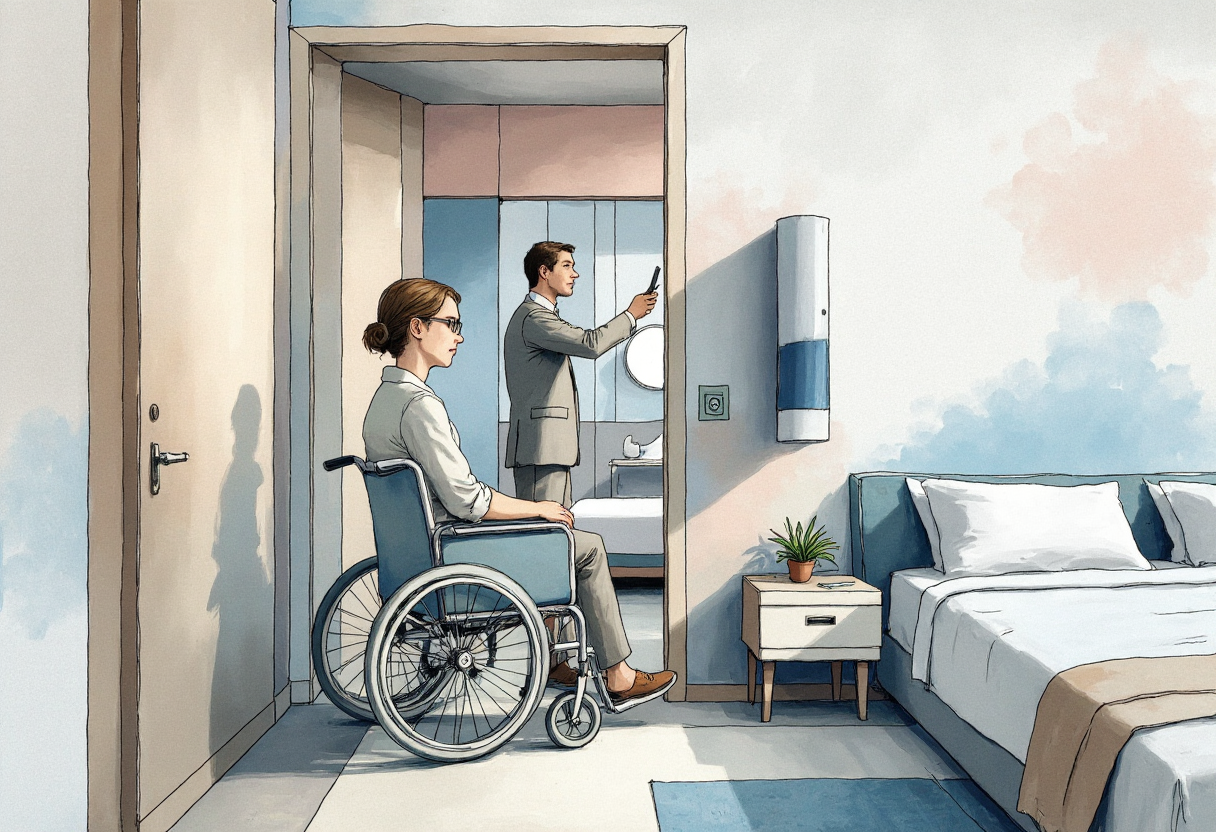
The hospitality industry has a dirty secret about accessibility that most operators don’t discuss: even their designated accessible rooms often fail to meet basic usability needs, according to one industry expert.
“Even if you get the room, the wall switches are never at the right height, because the building was built back in the 70s,” says Dhaval Patel, CEO of Lotus. “The room has physical corridors and doorways that are wider, but the physical wall switches are not at the right height, and certainly not in reach.”
The Hidden Infrastructure Challenge
According to Patel, while hotels have made progress on some accessibility features like wider doorways and roll-in showers, they continue to overlook fundamental usability issues that affect both disabled guests and the broader traveling public.
“For starters, everything from the moment they leave their home to the moment when they reach the hotel, very few things along that progression are deemed to be accessible,” Patel explains. He notes that most hotels only offer one or two accessible rooms per floor, creating availability bottlenecks during peak periods.
Beyond Traditional Accessibility
What many hospitality operators don’t realize, Patel argues, is that accessibility features benefit a much broader population than traditionally assumed. “The solution for all of them is actually finally the same thing that the wheelchair user uses. So it’s not just applicable to them, it’s usable by anybody,” he says.
This includes pregnant travelers, guests with temporary injuries, aging adults, or simply tired travelers at the end of a long day. Patel points to a common scenario: “You finally came traveling, you got into bed, and then you realize, oh crap, I forgot to turn off the lights. Now, it’s a hotel room, so you don’t really remember where the lights are.”
The Technology Solution
Lotus Laboratories is approaching this challenge through portable smart technology that can be temporarily installed without permanent modifications to the room. This allows hotels to make any room more accessible without expensive infrastructure changes.
“End users remember, ‘oh my god, I went and lived in that Marriott and they had this cool new technology that they gave me on check in, I’ll tell more people about it,'” Patel notes, highlighting the potential for hotels to differentiate themselves through accessibility innovation.
The approach appears to be gaining traction, Patel says their technology has shown promising results in early deployments, with benefits extending beyond just accessibility to operational efficiency and risk management for properties.
Similar Articles
Explore similar articles from Our Team of Experts.



Perspectives, Residential Real Estate, Property Technology, Real Estate Services, Market Analysis & Policy, Industry News
Industry expert argues rising costs are forcing innovation in transaction fee structures. The convergence of record-high home prices and mortgage rates has created an unprecedented affordabi...


