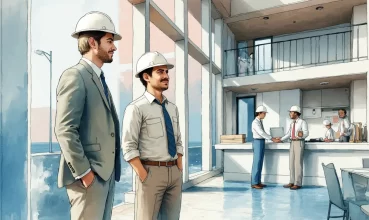
The construction industry is facing a severe labor shortage, with more than 500,000 workers needed nationwide as the trend is projected to worsen through 2026, according to Kelvin Enfinger Jr., Vice President at Greenhut Construction Company, Inc. and current state chairman of Associated Builders and Contractors of Florida. This shortage is now the industry’s most pressing challenge, surpassing concerns over insurance costs and material prices.
“The numbers are staggering when you look at it across the US, you know, just north of 500,000 workers that we were short, coming into this year, and the trend is continuing to head in a negative direction for 26,” said Enfinger, who serves as a board member with ABC’s North Florida chapter. “Labor has been a headwind for this industry, not just here locally, but across the nation for a number of years.”
The crisis is the result of several factors that have changed the industry’s workforce pipeline. Enfinger points to a generational shift in career guidance, noting that society moved away from promoting skilled trades to young people. “I think we’ve gone through a generational period to where we did not promote workforce development, skilled trades to young men and women,” he said.
Enfinger believes the solution involves reaching potential workers at younger ages. “I think it’s going to take getting back to mom and dad and getting back to the young men and women, maybe even in the middle school age, to get them re-engaged and interested, and help them understand that not everybody in this country that’s successful come out of an institute of higher learning with a four year degree.”
Immigration policy is another factor in the workforce challenge. While acknowledging it as a difficult topic for the industry, Enfinger argues that immigration restrictions have had a significant impact on the construction sector. “I support legal immigration. And I think everybody you talk to in this industry will tell you they support the idea of legal immigration. Immigrant workforce is a huge benefactor to this industry.”
Enfinger advocates for merit-based visa programs that would allow workers with clean records, stable employment, and children in school to legally join the workforce. “The ones that I’ve had an opportunity to work around have been great community partners and love where they live,” he said.
ABC of Florida has made workforce development a priority, working with trade schools and educational institutions to rebuild interest in construction careers. The association’s efforts go beyond recruitment, focusing on advocacy for industry recognition and respect.
Technology may help address the shortage through improved training. Enfinger sees promise in virtual reality applications that can engage younger, tech-oriented generations while providing practical skills. “What are kids interested in right now? Kids are interested in technology, and so seeing some of the tech that’s being implemented to get kids interested in this industry, which is something as simple as a VR headset,” he said.
However, construction’s hands-on nature means technology cannot fully replace the need for workers. “This is a very hands on industry, so it’s gonna be extremely hard to ever lose that human aspect of what we do. It’s a craft. It’s a skill, and it requires using your hands to do it.”
The labor shortage is more than a hiring issue, it threatens the industry’s ability to meet infrastructure and development demands. With construction among the most regulated industries in the country, workforce constraints could significantly impact project timelines and costs across all sectors.
Industry associations and individual companies must work together on solutions that address both immediate workforce needs and long-term development, according to Enfinger.
This article was sourced from a live expert interview.
Every month we conduct hundreds of interviews with active market practitioners - thousands to date.
Across the hospitality sector, fewer hotel deals are getting done, and the reason is largely practical rather than macroeconomic. As the cost of bringing properties up to current brand stand...
The widespread shift to remote and hybrid work has left office and retail real estate with more space than companies now need, creating a long-term oversupply that persists regardless of ret...
The affordable housing crisis in many secondary markets is worsening unexpectedly: condos and townhomes, once reliable entry points for first-time buyers, are becoming unaffordable due to ri...
Ken Jacobsmeyer, Associate Director of Investments at Marcus & Millichap, has observed a dramatic shift in how net lease properties are being evaluated and purchased compared to recent y...
The New York City luxury residential market has changed significantly since the pandemic, with buyers seeking different features and developers facing new obstacles. These shifts have opened...
The outdoor living design industry is moving beyond basic deck construction, led by professionals who recognize that homeowners now want more than visual upgrades; they want spaces that reli...