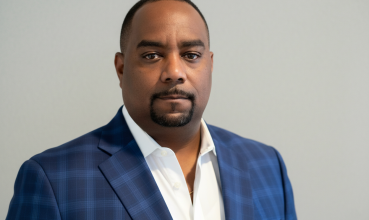
The commercial real estate industry continues to change amid shifting market dynamics, with established firms adapting their strategies to maintain competitive advantages. Eric Paulsen is leading this process as Chief Operating Officer at the largest fully independent commercial real estate firm in the Western United States. Founded nearly 60 years ago, Kidder Mathews now has more than 500 brokers in 20 offices across six states.
The firm’s approach stands in contrast to many of its larger competitors, who have increasingly shifted focus toward corporate services and global occupier relationships. While major players like CBRE, Cushman & Wakefield, and JLL pursue predictable revenue streams through outsourced real estate department services, Kidder Mathews has focused on its broker-centric model.
“Our competitors have actually changed their business model, and they’ve gone more to a corporate services real estate provider,” Paulsen explains. “The brokers are not the primary anymore. It really comes down to being the outsourced real estate department.”
This strategic divergence has created opportunities for firms like Kidder Mathews to attract experienced brokers seeking greater autonomy and compensation. The company operates on a desk cost model followed by a 90-10 split favoring brokers, with a 13-person board where nine members are active brokers themselves.
Current market conditions reflect the complexity facing commercial real estate investors and operators. Interest rate uncertainty, which dominated decision-making over the past several years, has begun to stabilize, providing clearer parameters for investment decisions.
“We have that clarity today, and that clarity is in interest rates. I think we’ve maxed out on the ceiling. So we know how high it can get. We just don’t necessarily know how low it can get,” Paulsen notes.
This environment has created distinct patterns among different investor classes. Institutional investors, pension funds, insurance companies, and similar entities, remain cautious, preferring to wait for market recovery signals. Meanwhile, private equity and fund managers demonstrate greater willingness to pursue opportunistic investments.
The office sector, long considered distressed, is beginning to attract value-oriented investors. A recent transaction in San Diego exemplifies this: the Irvine Company sold a 70% occupied office building for $115 per square foot, with the remaining 30% already built out for smaller tenants. The buyer’s rationale was straightforward, at that price point, downside risk appeared minimal.
“How can I go wrong at 115 bucks a foot? That’s an easy play. I will always be able to get a good return on that,” Paulsen explains.
Industrial markets present nuance. While strong markets like the Inland Empire maintain low vacancy rates, certain Arizona markets are experiencing 70% vacancy factors due to overbuilding. This creates both challenges and opportunities for diligent investors.
Technology Integration and Broker Support
The integration of technology in commercial real estate continues to develop, though adoption rates vary. Paulsen acknowledges that brokers, particularly those with decades of experience, tend to be slow technology adopters.
“The fun part about brokers is that they really don’t like change. They’re very slow adopters for the most part. And I would say the average age has a five in front of it or greater in a lot of the shops that are out there,” he observes.
Artificial intelligence and automation tools are finding practical applications in marketing materials, email campaigns, and client relationship management. The key lies in implementing technology that enhances rather than replaces the relationship-driven nature of real estate transactions.
“When you’re making big investments, leasing is the number two expense in your company, buying a building is a big expense. You really want to make sure that you’ve got the information and the professionals that backstop you,” Paulsen explains.
Regional Market Dynamics and Legislative Challenges
Geographic factors play an important role in strategy. California markets face challenges from evolving political and legislative landscapes, with new regulations targeting commercial real estate as a funding source for various programs.
“Some of the most significant challenges facing the industry today stem from politics and legislation,” Paulsen warns. “The political landscape in California favors rent control, tends to resist industrial development, and increasingly looks to the commercial real estate market as a revenue source for its programs.”
These regulatory pressures create additional complexity for investors and operators, requiring careful analysis of not just market fundamentals but also political risk factors.
Transaction Volume and Market Recovery Indicators
Despite ongoing challenges, several indicators suggest increasing market activity. Transaction volumes have shown improvement, with values and volumes both increasing approximately 8% according to Kidder Mathews’ Research. Office transactions have represented the largest number of deals by transaction count and second by value.
“I think you’re starting to see more people get comfortable with back to work, leasing space, buying office that’s of high quality and amenities, or a complete add-value play,” Paulsen notes.
The return-to-office trend, while uneven across markets, is contributing to renewed interest in well-located, amenity-rich office properties. This shift reflects broader changes in how companies and employees view workplace requirements post-pandemic.
Looking Forward: Consolidation and Growth Opportunities
The commercial real estate industry appears poised for more merger and acquisition activity. Recent developments, including activist investor involvement in major REITs like Rexford Industrial, suggest potential consolidation opportunities ahead.
“I think you’re going to see a lot more mergers and acquisitions,” Paulsen predicts. “There’s never been more money on both the debt and equity side right now.”
For firms like Kidder Mathews, growth opportunities lie in both geographic expansion and market share gains within existing territories. The company is considering expansion into markets like Dallas and Colorado while strengthening its presence in established markets such as Los Angeles and San Diego.
The firm’s lean management structure, consisting of just the CEO, COO, and three regional presidents overseeing brokerage operations, reflects its commitment to efficiency while supporting broker productivity.
As the commercial real estate industry continues to change, firms that balance traditional relationship-driven approaches with selective technology adoption and strategic market positioning appear best positioned for sustained growth. Kidder Mathews’ broker-centric model represents one approach to navigating these changing dynamics while maintaining competitive advantages.
The coming months will likely provide clearer indicators of whether current market optimism translates into sustained transaction volume increases and broader market recovery across different property types and geographic regions.
Editor’s Note: Updated to correct quotes from Mr. Paulsen.
This article was sourced from a live expert interview.
Every month we conduct hundreds of interviews with active market practitioners - thousands to date.
The senior housing sector is entering a new phase as capital markets stabilize and institutional buyers renew their interest. After a period marked by high interest rates and limited lending...
What started as an effort to democratize iBuying for real estate agents has evolved into a rapidly growing FinTech platform serving real estate investors. homebldr, founded in February 2021,...
Philadelphia’s commercial real estate market is outperforming many major U.S. cities, thanks to structural advantages and strategic positioning that have helped it maintain stability despi...
The commercial real estate landscape in Georgia is experiencing a notable shift as investors return with renewed confidence, according to Reid Moore, founding partner of TOA Commercial. Afte...
The real estate development landscape in California is undergoing a significant shift, driven by new legislation and powered by innovative technology platforms that are changing how develope...
Most homeowners know the basics of property ownership, pay the mortgage, mow the lawn, and call a professional when something breaks. But as fewer people learn hands-on maintenance skills, a...