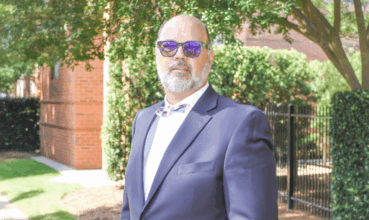

In a recent interview, Igor Zhizhin, Principal of American Street Capital, a national mortgage banking firm specializing in securitized non-recourse debt, shared valuable insights into the c...

Bringing Transparency to the 1031 Exchange Market Through Aligned Incentives

Written by:
Date:
02 Sep 2025
Share via Facebook

Share via Linkedin

Share via X

Copy to clipboard


The 1031 exchange market processes approximately $100 billion annually, yet alternative investment products like Delaware Statutory Trusts (DSTs) and 721 exchanges capture only 6-7% of that flow. For Mike Auerbach, recently appointed to lead business strategy at Bonaventure, this represents a significant opportunity to improve how investors approach tax-deferred exchanges.
“This should be at 20 to 30% like yesterday,” Auerbach explains. “But the problem is these products are a little bit complex. The education, the messaging, hasn’t been great, and the alignment of interests have been challenging so far.”
A Career Built on Real Estate Fundamentals
Auerbach’s path to Bonaventure reflects the diverse experience needed to navigate today’s investment landscape. His decade-long real estate career spans multiple roles, from broker to principal investor to qualified intermediary founder. Most recently, he was part of the founding team that built a qualified intermediary, helping investors defer capital gains and ensure compliance with 1031 exchange requirements.
“I’ve sat in a lot of seats in real estate,” Auerbach notes. This varied perspective proved crucial when sponsors began approaching him for deal evaluations. “A lot of sponsors would reach out and say, ‘What do you think about our deal for replacement property?’ I started to say, ‘Tell me about your deal. Tell me about how the business works.'”
What he discovered during months of research was concerning. “The business really worked where sponsors were generating fees on the capital that was raised but really didn’t have skin in the game. They were making money by selling their winners and keeping their losers, essentially not being able to generate the returns that were promised.”
The Alignment Problem in DST Investing
This misalignment of interests has created ongoing challenges across the DST industry. Traditional sponsors often collect substantial upfront fees while contributing minimal capital to their own deals, creating a disconnect between sponsor and investor outcomes.
“There’s been such a misunderstood industry from expectations and what people think they’re getting versus what people actually end up getting once they’re in the deal,” Auerbach explains. The consequences extend beyond individual disappointments, affecting the entire sector’s reputation.
Recent market conditions have amplified these issues. “You’re really starting to see the fallout from a sponsor perspective of buying bad deals in 2021 and 2022. Now their investors have not only suffered, but it’s actually given a bad connotation to the industry.”
Bonaventure’s Differentiated Approach
Bonaventure’s model addresses these alignment issues through substantial co-investment. The company has invested $565 million of its own capital across its nearly $3 billion portfolio, with $130 million specifically in their 721 upgrade product called BMIT, Bonaventure Multifamily Income Trust.
“We are the biggest investor in our deals,” Auerbach emphasizes. “When someone says they want to invest with us, we are doing everything we can to preserve and make sure the decisions are great, because it’s our money that’s really at risk alongside those partners, and the consequences are more dire for us based on our allocation than them.”
This approach stems from the company’s 25-year history as a private, family-focused operation. CEO Dwight Dunton built the platform initially to protect his own family’s wealth, transitioning from landlord operations in the 1960s to sophisticated wealth preservation strategies.
“The story he likes to say is his family started in the 1960s transitioning from being a landlord, and along the way, Dwight has been protecting and growing his family’s legacy while doing the same for other families and legacies,” Auerbach explains.
Solutions-Based Investment Strategy
Rather than offering generic investment products, Bonaventure takes a consultative approach tailored to individual client needs. “Every client is different. Some people want appreciation, some people want cash flow, some people want professional management. Some people want tax deferred options. Other people want to co invest with us on conventional deals.”
This customization extends to being selective about client relationships. “We are not a firm that is offering a generic opportunity for people. If we’re not the group that has a solution for them at this point in time, we’re comfortable saying that because adding value to people is really about looking out for their best interest.”
The strategy prioritizes capital preservation over aggressive returns. “We all romanticize about the upside, but what we’re really trying to do is limit downside risk and preserve capital. I don’t think a lot of people really lead with that.”
Market Positioning and Education
Auerbach positions Bonaventure as a “Plan B” solution rather than competing directly with commercial real estate brokers. “We really are a just-in-case scenario for a lot of people. We don’t want to compete with commercial real estate brokers. We just want to be that resource, just in case, if their client wants to see another option.”
This positioning requires extensive education across multiple stakeholder groups. “We want to create better materials for those folks to help them add value to their clients. Every group is different in the way that you need to relay that information, because they may or may not be educated, depending on where they sit in the transaction.”
The education extends to helping investors ask better questions. “Ask your sponsor how much they’re co-investing with you, or ask them about their debt profile. These are the things that investors need to start asking, because typically it’s a fire drill when they have to identify in two weeks or three weeks.”
Current Market Dynamics
Despite recent challenges, Auerbach sees opportunity in current market conditions. “A lot of people want to do deals. I think there’s been deal fatigue across the last couple years on when is there going to be the bottom? When is the nadir going to set in? I think we’re past that, and right now is really one of the best opportunities to strike before the herd mentality shapes in.”
However, he acknowledges ongoing uncertainties. “It’s been a tough market to navigate the last couple of years from a deal perspective” due to interest rates, political headwinds, and the need for more stability so people can make decisions.
Looking Forward
Auerbach’s roadmap for the next 6-12 months focuses on team building, product development, and market education. “We obviously want to launch some more DST products, which we have coming down the pipeline in Q4. Some of the products have optionality, which I think investors and some of our partners want to experience.”
The broader goal involves creating scalable solutions that benefit all stakeholders. “There’s alignment between us, our partners, the investor, and making everyone’s job easier. It is a heavy lift to explain everything to a potential client, go through the due diligence process. I don’t know if there’s a group that’s been successful out there to create a repeatable, scalable option yet.”
Industry Evolution
Auerbach’s vision extends beyond Bonaventure’s success to improving the entire DST sector. “A rising tide lifts all boats. I want the majority of sponsors in the space to continue to do well and have stamina.”
This industry-wide perspective reflects lessons learned from previous market cycles. “You can see there’s probably seven or eight sponsors still left over from the last crisis, and there’s a lot of new entrants in the space. How do you continue to have that stamina? It’s by doing the right thing and looking out for people’s interests.”
For real estate investors navigating the 1031 exchange landscape, Auerbach’s approach at Bonaventure represents a shift toward transparency, alignment, and education. By addressing the structural issues that have challenged the DST industry, the company aims to unlock the significant potential in tax-deferred exchange alternatives while protecting investor capital in an uncertain market environment.
Similar Articles
Explore similar articles from Our Team of Experts.