
The construction industry has long grappled with inefficient proposal processes, forcing marketing professionals to spend hours manually researching past projects and assembling responses to...

At the Intersection of Technology and Art: How Panoptikon Advances Architectural Visualization

Written by:
Date:
20 Jun 2025
Share via Facebook

Share via Linkedin

Share via X

Copy to clipboard


“A picture is worth a thousand words,” says Tudor Vasiliu, Founder and Director of Panoptikon, an architectural visualization studio that has transformed how real estate developers and architects communicate their vision for nearly two decades. “Architecture is a technologically intensive field, but what we do is translate that technology into a language of beauty that borrows elements from photography, cinematography, and theater.”
From Architectural Hallways to Global Visualization Studio
For Vasiliu, architecture runs in his blood. “I’ve been into architecture ever since I was born,” he shares. “My mother dropped me off in the hallways of the Architecture University in Bucharest while she was a student, and I got my first taste of what architecture meant from the professors there.”
This early exposure shaped his worldview: “Throughout my childhood, I was infused with intellectualism and this fight for beauty and design.” After studying in Switzerland and the Netherlands, where he mastered traditional techniques like airbrush and watercolor drawings, Vasiliu founded Panoptikon in 2006.
What began as a small studio has evolved into a global operation serving clients from North America to Asia, adapting as digital tools have revolutionized the industry.
The Art of Technical Storytelling
Panoptikon’s success stems from its ability to balance technical precision with artistic vision. “You have to learn all the ins and outs of what a structure is, how a building stands, materials, ecology, a little bit of everything,” Vasiliu explains. “Then you have to translate that into something beautiful and compelling.”
This fusion creates a powerful storytelling medium that helps stakeholders understand complex projects from multiple perspectives, a critical service in an industry where billions of dollars ride on investors and buyers being able to visualize the final product.
Bringing Naples to Life: Visualization in Action
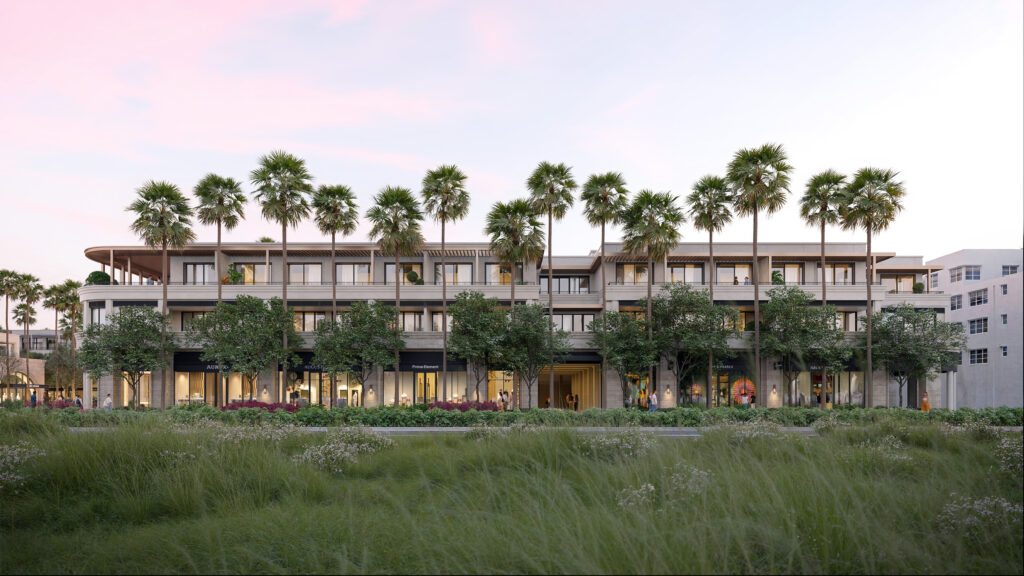
To illustrate Panoptikon’s process, Vasiliu describes a recent luxury development in downtown Naples, Florida—a project with approximately 50 luxury condominiums and retail space.
“These developers have to convince their audience and the neighborhood that the project is viable,” Vasiliu explains. “They come to us with average-looking renderings from the architects, and we transform them into a comprehensive visual story.”
The process begins with aerial perspectives showing how the development fits into the city and its proximity to the ocean. Then it moves to street level, showcasing what the project offers to the community, before focusing on the apartments and luxury amenities.
“We’re helping developers bring their vision to reality,” Vasiliu notes. “We throw a lot of visuals at them, testing and iterating to help them curate the perfect set of images that will tell their story.”
The Digital Transformation of Property Marketing
The way potential buyers experience properties has transformed dramatically, and Panoptikon has evolved alongside these changes.
“What happens when the buyer is somewhere across the ocean?” Vasiliu asks. “Do they fly in, or do they experience the property through a beautiful website and virtual showroom?”
For the Naples project, Panoptikon created static renderings and a film, while the developer took things further and separately developed a web-based virtual experience allowing potential buyers to explore the development from any angle. “They can go around the building and experience the view firsthand from specific balconies,” Vasiliu explains. “It’s a tangible product that goes beyond traditional marketing.”
Despite these technological advances, he notes that traditional renderings remain essential: “These virtual photographs are still in high demand. They’re the atom of everything that makes marketing work.”
Strategic AI Integration While Preserving Architectural Integrity
As AI tools transform creative industries, Panoptikon is strategically incorporating technologies like Stable Diffusion, Midjourney, and Runway while maintaining their commitment to architectural precision.
“For us, AI is primarily a way to improve the quality of our visuals,” Vasiliu says. These tools enable the studio to iterate rapidly, testing different views and options without the intensive rendering processes traditionally required.
However, he emphasizes the importance of maintaining architectural integrity: “Architecture is extremely specific. If you want to maintain specifications exactly as the architects designed them, you have to be careful with these tools. They tend to hallucinate and create beautiful versions of your project that might not be accurate.”
The Future of Architectural Visualization
As the industry continues to evolve, Vasiliu sees promising growth ahead. “The architectural visualization industry is poised to grow to about $6 billion globally, almost double compared to 2023,” he notes.
While some might view AI as a threat, Vasiliu sees it as an opportunity: “For us, it’s a power-up, like Photoshop was in its day. Those who didn’t learn Photoshop eventually had to or go out of business.”
He believes AI will transform workflows and enhance creativity but won’t replace the human element: “It’s like cinema, there has to be a director behind it all, a creative mind that puts it together.”
Despite global economic uncertainties, Panoptikon continues to see strong demand across markets from the Americas to Asia. As real estate marketing becomes increasingly digital-first, studios that balance technological innovation with artistic vision will remain essential in helping developers tell compelling stories about the spaces they create, whether through traditional renderings, immersive virtual experiences, or whatever new formats emerge next.
Similar Articles
Explore similar articles from Our Team of Experts.

Real Estate Investment, Industry Profiles, Residential Real Estate, Market Analysis & Policy, Top Articles
Northern New Jersey’s real estate market continues to defy national trends, maintaining intense competition and rising prices even as other regions cool. For agents and buyers in this dens...