
The retail commercial real estate market has seen major shifts in recent years, with transaction volumes rising and falling as interest rates increased and economic uncertainty grew. For bro...

Arizona’s Industrial Boom Drives Construction Growth Despite Power Grid Strains

Written by:
Date:
26 Dec 2025
Share via Facebook

Share via Linkedin

Share via X

Copy to clipboard

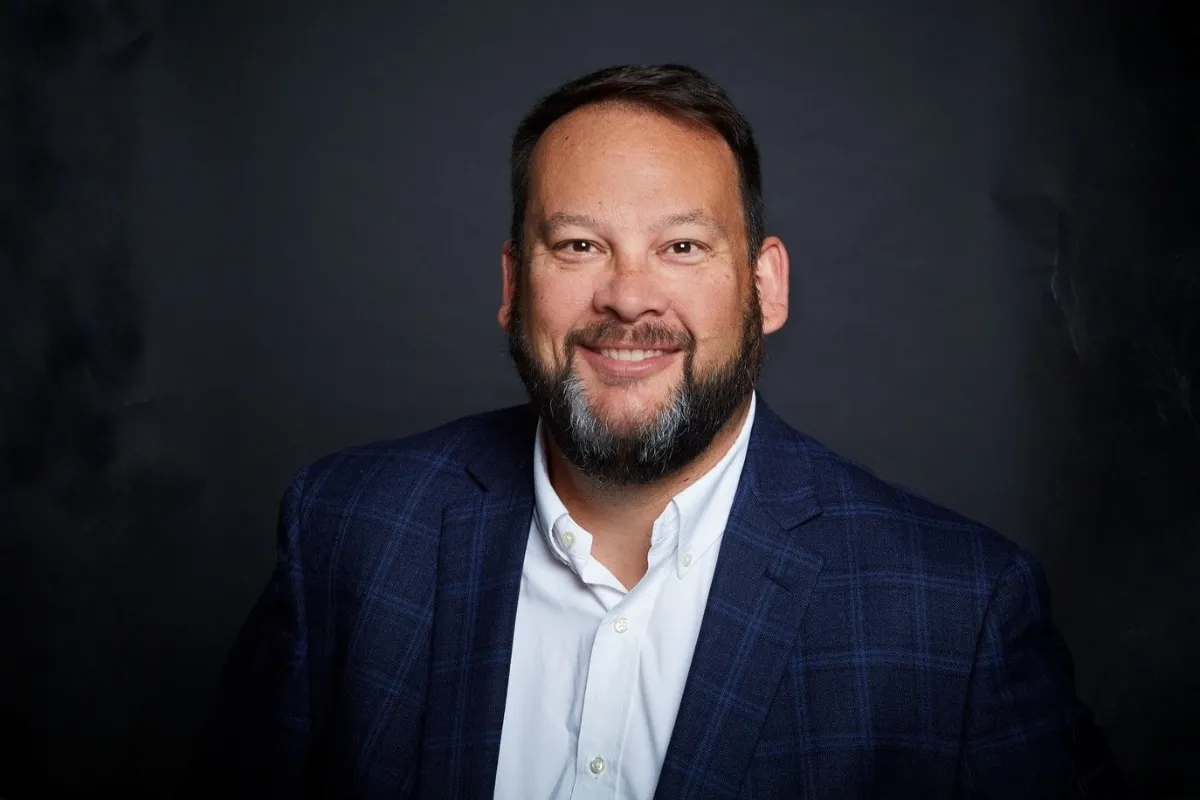
The Phoenix metropolitan area has rapidly evolved from a relatively quiet city in the 1990s into one of the nation’s most active construction markets. Jim Roland, Senior Vice President of Arizona Operations at Alcorn Construction, has worked in the region for nearly three decades and has seen firsthand how Phoenix has attracted national and international investment, reshaping its industrial landscape.
From Architecture Student to Construction Executive
Roland began his career studying architecture, but soon shifted to construction after an internship made it clear that construction offered the best opportunities. “I decided that the better opportunities were on the actual construction side, rather than the architecture side,” he says. After earning his bachelor’s degree in construction, Roland built his entire career in Phoenix, spending 15 years with a large national contractor, then working with local and regional firms before joining Alcorn Construction to launch its Arizona operations.
Alcorn Construction, founded by Chris and Amy Alcorn, grew out of Chris’s experience managing in-house construction for major developers. The company initially focused on industrial projects but has since expanded into hospitality, multifamily, Native American gaming, medical office, and retail. “We’re a general contractor, so that we can build anything,” Roland says.
A Comprehensive, In-House Approach
Alcorn distinguishes itself in Arizona’s competitive market by operating as a de facto in-house contractor for its clients. “Chris wanted a company that had the capabilities of acting like an in-house contractor, similar to what he came from working for other developers,” Roland explains. This model relies on early project involvement, offering design-build and design-assist services to optimize pricing and budgeting from the outset.
The company emphasizes collaboration from the beginning of each project. “We want to get in early with the client, work with them, understand where they’re at budget-wise, what their expectations are, so that we can get them a project that is within their budget and ideally exceeds all expectations,” Roland says.
Phoenix’s Explosive Growth and Redevelopment
Since Roland arrived in Phoenix in 1996, the city has shifted from building on former farmland to undertaking complex redevelopment and infill projects. “Now we’re seeing the second and third wave of redevelopment of areas, plus new construction going into fresh dirt that was farmland as of a year ago,” he says.
Phoenix’s appeal is now national and international. “It’s almost international for how crazy our market has been,” Roland notes. Alcorn regularly works with developers from California, Texas, Illinois, New York, and even Taiwan. This broad interest is driven by Arizona’s emergence as a logistics and data center hub.
The Rise of the 303 Corridor
The West Valley’s 303 corridor has become one of the country’s most active industrial areas. Roland confirms that the region’s reputation matches reality. “I was out there yesterday. It is not hype,” he says. “The industrial development on that 303 is a sight to be seen. It’s miles and miles of million square foot buildings.”
This concentration of industrial development is driven by strategic advantages: proximity to major trucking routes and large tracts of undeveloped land. “It was fresh dirt, old farmland, with a new freeway being cut in that needed frontage buildings. Now, people see an opportunity to put logistical and manufacturing hubs out there,” Roland explains.
Power Grid Limitations Affecting Development
Despite strong demand, Arizona faces a significant infrastructure challenge: its rapid growth and status as a data center hub have strained the power grid, delaying development timelines.
“There’s been huge demand on our existing power grid, and for the expansion of it. It’s just slowed our ability to develop at the rate that everybody wants to,” Roland says. This issue particularly affects speculative industrial projects. “A client is less likely to build a spec building when the end-use power requirements aren’t defined and may not be achievable. It could potentially restrict leasing of the new space.”
Instead of abandoning projects, Alcorn works closely with clients and utility authorities to develop temporary power solutions and coordinate to meet tenant requirements.
Labor Market and Construction Costs
The construction labor market in Arizona has achieved greater balance compared to the immediate post-pandemic period. “We’re not in the same boat as we were coming right out of COVID. This is not 2021–2022, when there was so much work going on, people couldn’t staff everything,” Roland says. “We’re seeing a little more balance in manpower these days.”
Alcorn remains disciplined in project selection to avoid taking on more work than it can staff. “You don’t want to overextend as a GC, just taking on as much work as you can and not being able to staff it. We go after projects that we have the manpower to support and the capabilities to succeed on,” Roland says.
Construction costs have stabilized after several years of significant inflation. While commodity prices continue to fluctuate, labor costs remain high. “Inflation forced everybody to raise wages. I haven’t seen anyone say they cut employees’ pay back to what it was four or five years ago. This has just become what the new norm is,” Roland observes.
Financing Conditions and Developer Approaches
The financing environment for new projects is mixed. Recent interest rate cuts have provided some relief, but developers still face challenges securing both equity and debt. “Some days, it’s having trouble getting equity. Other days, it’s trouble getting debt,” Roland says
Many established developers have created real estate investment trusts (REITs) to enable more flexible development, while others use cash reserves. “You find some developers who have cash on hand. They’re more unique, a bit of a unicorn in our world, but still a very valuable client,” he says.
Diversification and Resilient Sectors
Roland sees continued demand in sectors less sensitive to economic cycles. Student housing remains strong, supported by two major universities and several smaller campuses in the region. Senior living development continues to expand to meet the needs of Arizona’s aging population.
The company’s current project pipeline reflects market shifts: fewer new industrial buildings are breaking ground, but there is increased work on tenant improvements, including advanced technology installations. “We’re seeing some more hospitality work coming in. There’s been talk of office making a bit of a comeback,” Roland says.
Sustained Growth and Market Outlook
Despite broader economic uncertainty, Arizona’s core growth drivers remain intact. “We’re still seeing a huge influx of businesses and people moving into the state from other states,” Roland says. Alcorn’s relationships with commercial brokers provide early intelligence on companies planning relocations.
This early access helps the company stay ahead of market trends. “We slowed in perspective to where we are here internally, but we’re still leading the nation,” Roland says.
Looking ahead, Roland stresses that the region’s continued success will depend on effective government decisions, particularly on infrastructure and power grid expansion. “We’re dependent on the decisions made by government officials, and we just hope that they make good decisions,” he says.
For Alcorn Construction, Arizona remains a market of significant opportunity, but also one that demands strategic adaptation. The company’s collaborative approach, combined with careful project selection and creative problem-solving around power and labor constraints, positions it to serve the growing and diversifying needs of one of America’s fastest-growing construction markets.
Similar Articles
Explore similar articles from Our Team of Experts.