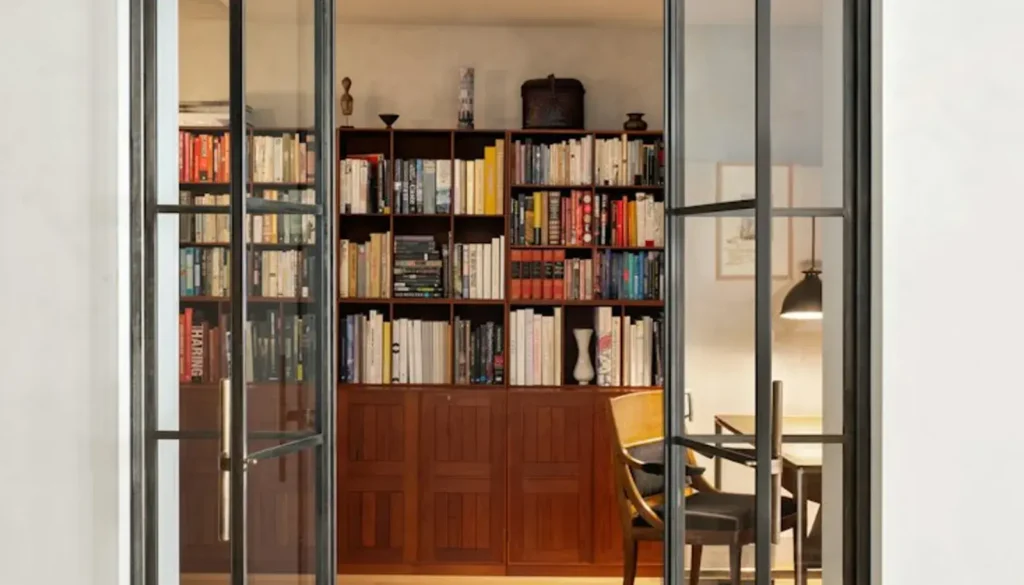
Interior designer Sharon Rembaum rebuilt this 2,100-square-foot condominium down to the joists as her own home.
Tribeca has no shortage of handsome renovated lofts. Sellers and developers, though, often finish them with the next buyer in mind, choosing what will read well on a tour and photograph well on the way to market.
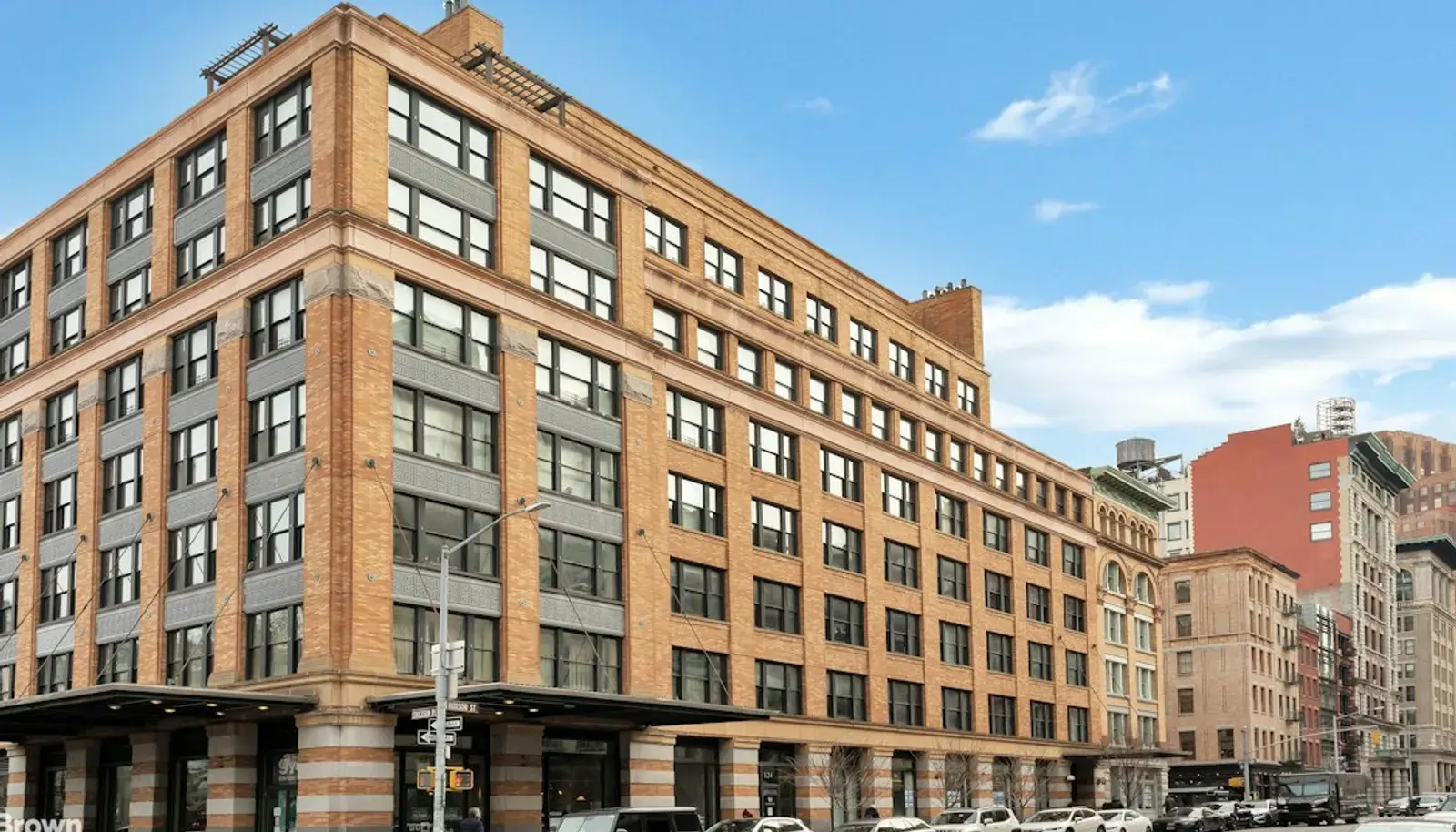
The residence on the third floor of 124 Hudson Street #3B started from a different premise. Interior designer Sharon Rembaum, whose work has appeared in Architectural Digest, ELLE Decor, and House Beautiful, rebuilt it as her own home. “It was not designed and created for resale,” says Sophie Ravet of Brown Harris Stevens, who holds the listing. “It was for herself.”
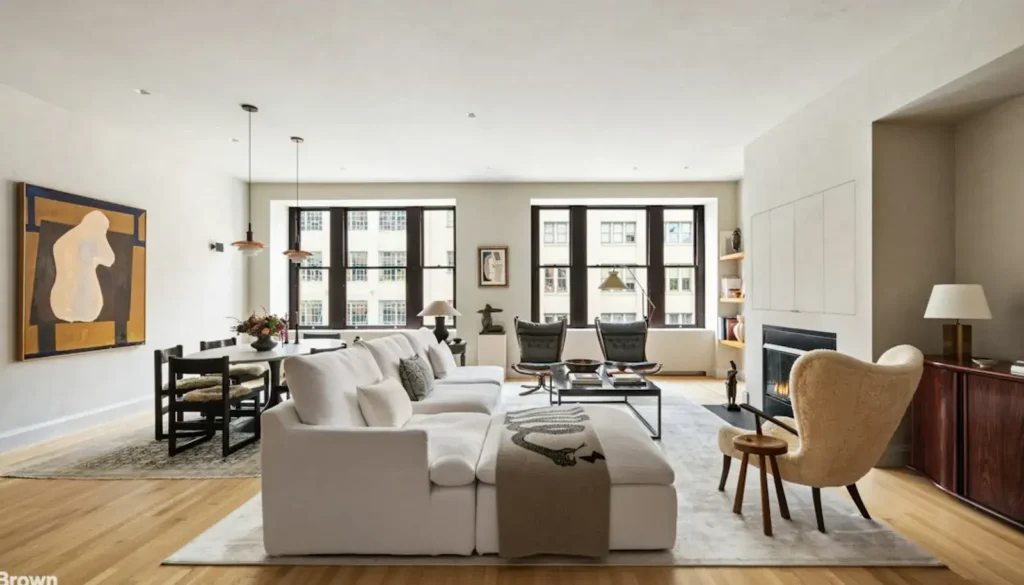
The result is a two-bedroom condominium of nearly 2,100 square feet beneath 10-foot ceilings, with a separate den and room to entertain. Ravet, who has lived and sold homes in Tribeca for 21 years, draws a firm line between a beautifully renovated apartment and a home built on a designer’s personal vision. That distinction raises a fair question: what, specifically, does a designer do differently when the client is herself?
What She Removed, What She Kept
The answer starts with how far Rembaum went. The apartment still carried the original finishes from the building’s completion in 2000, and she took it down to the joists. She put in a new kitchen, new bathrooms, and new ceilings fitted with a soundproofing system. She also designed the lighting from scratch, in layers, a step Ravet says many architects overlook.
Just as telling is what Rembaum left alone. The scale of the rooms and the height of the ceilings drew her to the apartment in the first place, so she preserved both and kept the plumbing where it was. Rather than move walls, she enlarged closets and built storage into nearly every surface, a real luxury in Manhattan. “She really utilized every single inch of the space in an intelligent, thoughtful, deliberate way,” Ravet says. Even the doors reflect that thinking. Rembaum swapped the original short doors for taller ones that carry the eye up to the 10-foot ceilings.
Visitors notice the results in the small things. Since the listing came on the market, Ravet says, buyers have responded most to the choice of finishes and the precision of their execution, down to the door handles and hinges. “The more you look at it, the more you appreciate all the details,” she says.
Room by Room
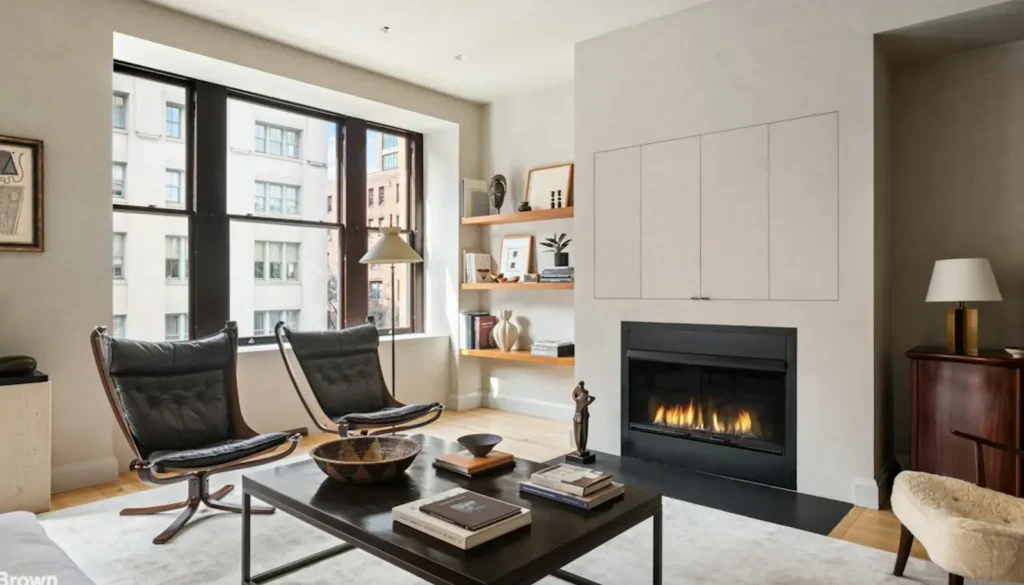
Those details gather in the rooms where daily life happens. The living room, whose scale Ravet singles out, centers on a gas fireplace with a new firebox and hearthstone. Around it, Rembaum designed floating shelves and built-in cabinetry that conceal the television, solving a problem most living rooms simply tolerate. Limewashed walls and flangeless square recessed lights give the room a warm, clean finish. “It’s hard to find such generous proportions with this level of intimacy and warmth,” Ravet says.
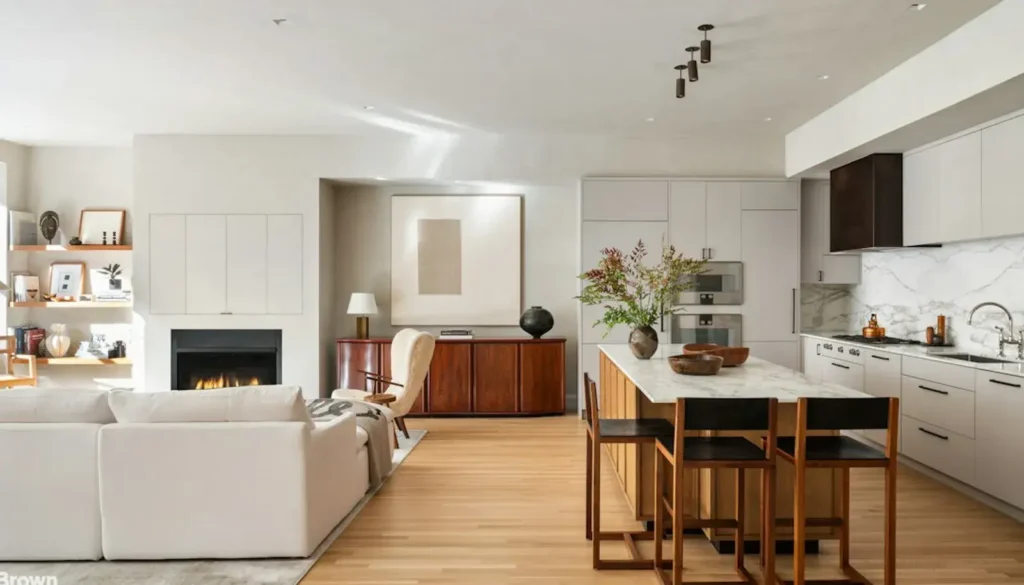
The open kitchen carries the same care into its materials. Calacatta marble covers the countertops and backsplash, an oak island sits on a bronze toe-kick, and a custom bronze hood and Sun Valley Bronze hardware complete the palette. Gaggenau supplies the cooktop, refrigerator, and ovens, and a dedicated closet holds the laundry.
The private rooms follow suit. In the primary bedroom, a full wall of bespoke millwork holds drawers and shelving fitted with horn hardware, and a walk-in closet adds storage. A custom pocket door opens to a primary bath with marble, custom cabinetry, Waterworks fixtures, radiant floor heating, and heated towel racks. The second bedroom matches the first in scale, and its bath pairs marble with Ann Sacks tile. A bifold door of iron and brass, also of Rembaum’s design, closes off a separate den that works as an office or a guest room, and the layout could accommodate a third bedroom.
Small Building, Wide Street
The building around the apartment puts the same priority on space over spectacle. 124 Hudson Street holds only 26 residences, nearly all of them large, and 3B is one of the smallest. Ravet, who has now sold three apartments in the building, says buyers at this level prefer neighbors whose homes are comparably sized, since that supports values across the building. In place of amenities, the condominium offers service: a full-time doorman, a live-in superintendent, and a landscaped interior garden. With gyms all over the neighborhood, Ravet says, buyers in this price range rarely miss the rest.
Hudson Street itself supplies the apartment’s light. The residence faces west, and because the street runs unusually wide, direct sun reaches the rooms from about 1:30 in the afternoon, especially in winter, when the sun sits lower. In the morning, a limestone façade across the street reflects light back through the tall windows. The neighborhood’s height limits help protect that light over time. The building isn’t a landmark, Ravet notes, but it sits within a historic district, where a new tower can’t simply rise next door.
Dining and Entertaining
Outside the door, Tribeca strikes the same balance of quiet and warmth that defines the apartment. The neighborhood has changed over the past two decades, but Ravet says it has held on to its character. Longtime institutions such as Walker’s and Bubby’s still sit around the corner, and unlike SoHo, Tribeca never became a shopping destination, with the crowds that come with one. “It’s quiet, but it’s not desolate,” she says. “And it is incredibly charming.”
That character of the neighborhood shapes how residents socialize. People rarely come to Tribeca to party, Ravet says, but its concentration of fine restaurants keeps residents dining close to home. The size of the neighborhood’s lofts matters, too. With room to entertain, Tribeca residents host at home far more often than people in neighborhoods of smaller apartments, such as the East Village. To the west, Hudson River Park has remade the waterfront over the past 20 years, linking Tribeca to the West Village and West Chelsea, with each stretch shaped to the neighborhood beside it.
Rembaum built the apartment to live in, not to sell, and she chose every finish with the long run in mind. “It will age beautifully,” Ravet says, “because it doesn’t follow any trends.”
About the Expert: Sophie Ravet is a Licensed Associate Real Estate Broker with Brown Harris Stevens in New York, where she focuses on residential sales in Tribeca.
This article is intended for informational purposes only and does not constitute legal, financial, or investment advice. The views and opinions expressed herein reflect those of the individuals quoted and do not represent an endorsement of any company, product, or service mentioned. Readers should conduct their own due diligence and consult qualified professionals before making any investment decisions.
Disclosure: Individuals or companies mentioned may have a commercial relationship with KeyCrew.
This article was sourced from a live expert interview.
Every month we conduct hundreds of interviews with active market practitioners - thousands to date.
Many real estate professionals in Southlake, TX, and across Dallas-Fort Worth are bracing for a slower stretch. Justin Nimergood, who leads the Top Gun Team at Epique Realty, believes the next 12 to 24 months will be difficult, and he is planning for it now instead of waiting to see how hard it hits. “It’s ...
Most aviation planning starts from a simple assumption: aircraft need airports, and airports need hundreds of acres. A demonstration flight in downtown Manhattan this month challenged that assumption directly. Lisa Wright, founder and CEO of Landings, was at the downtown helipad when Electra’s hybrid-electric aircraft flew in from Linden Airport in New Jersey, landed, took ...
Buyers searching for a home in Central Austin, TX often narrow their list to a handful of close-in neighborhoods and then have trouble choosing between them. Zilker, Bouldin, Crestview, Hyde Park, and North Loop all have loyal followings, and each one offers a different kind of daily life. Kathy Sokolic, co-founder of Mueller Residential Group, ...
For retirees comparing 55+ communities in Ocala, Florida, Stone Creek and On Top of the World often end up on the same shortlist. The two sit right next to each other, and a new road now connects them. Both offer strong amenities and a range of home options, so the decision usually comes down to ...
Ocala, Florida, is known as the Horse Capital of the World, but retirees who start looking here quickly find it offers something else in abundance: 55+ communities. The Villages, On Top of the World, Stone Creek, Candler Hills, Ocala Preserve, Oak Run, Spruce Creek Golf and Country Club, and Pine Run each offer a different ...
Many longtime homeowners in Austin, TX reach a point where the family home has more space and more upkeep than they need. For many of them, the next move is to Mueller, a master-planned neighborhood in Central Austin with a wide mix of home types and amenities close to home. Kathy Sokolic, co-founder of Mueller ...