
The coastal appeal of St. Augustine continues to attract buyers, but the market has changed significantly since the pandemic-driven surge. With home prices down about 9% from their 2021-2022...

Western Commercial Development Has Slowed. The Exceptions Are Instructive.

Written by:
Date:
03 Jul 2026
Share via Facebook

Share via Linkedin

Share via X

Copy to clipboard

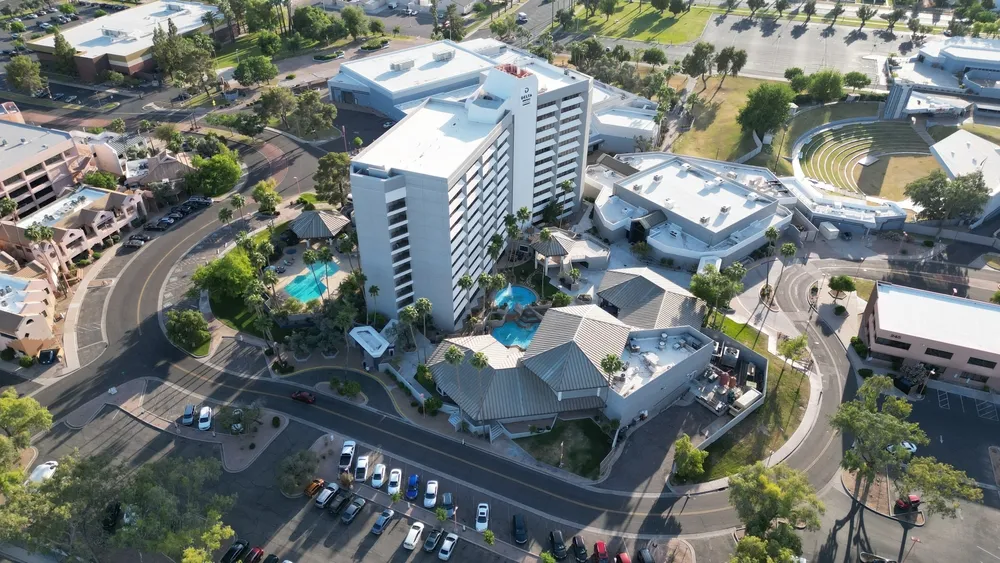
Commercial real estate development in the American West has entered a period of recalibration. After years of strong demand, rising construction costs, softening rents, and tighter equity markets have made new projects harder to justify. For developers who built their model around straightforward deals in favorable conditions, the current environment presents real challenges. For firms that built their model around complexity, it looks more like familiar territory.
LaPour Partners, a regional developer based in Nevada with active projects across Arizona, Colorado, and California, has spent 25 years pursuing exactly the kind of sites that tend to slow other developers down. The firm focuses on ground-up development across hotel, office, and industrial. According to Jeff LaPour, its founder and president, the appetite for difficult projects was less a strategic choice at the outset than a practical one.
The company was not as well capitalized as many competitors when it launched, so its earliest projects involved landfill reclamation, sites others avoided entirely. That pattern became the firm’s identity. “It became a competitive advantage to take complicated sites and put them into service,” LaPour says.
Entitlement Challenges To Market Records
One of the clearest illustrations of that approach is a mixed-use development LaPour completed in the Biltmore area of Phoenix, at the corner of 28th Street and Camelback Road. The site was occupied by a dated one-and-a-half-story office building from the 1970s and carried a deed restriction on building height, meaning any meaningful redevelopment required navigating a full zoning and city approval process.
The firm proposed replacing the existing structure with a five-story hotel and a four-story Class A office building. What followed was roughly 24 months of negotiations involving neighborhood opposition over height, traffic concerns, and a range of other site-specific issues. The project ultimately delivered a 160-room AC Marriott hotel and a 115,000-square-foot office building. When both assets were sold, they achieved record prices in the Phoenix market, on a per-key basis for the hotel and per-square-foot basis for the office.
“I think we designed a product that today the neighborhood’s proud of,” LaPour says. “And ultimately we prevailed.”
LaPour’s hospitality background, which includes early-career time at Hilton before moving into brokerage and then development, shapes how the firm evaluates all product types. Rather than starting with financial models, the approach begins with the end user, who will occupy the space, how they will use it, and what experience will drive retention or satisfaction. “That applies to industrial as well,” he says. “You really want to focus on who, in the end, is going to use it and how they’re going to use it.”
Reading the Current Capital Environment
The financing landscape today looks meaningfully different from what it was when the Biltmore project was capitalized. Construction debt remains available, but the equity side of the market has been more constrained. LaPour points to a peak around 2022, followed by a pullback driven by the cumulative effect of multiple interest rate increases.
That constraint, combined with a supply overhang in several product categories, has changed the math on deals that would have worked recently. Rents have softened, concessions have grown, and financial performance has weakened in oversupplied submarkets, yet land values have held relatively firm and construction costs have declined only modestly. The result is a gap between what new projects cost and what they can earn.
“The biggest hurdle in new construction is just too much supply, and in many areas, too much of a pipeline that’s still burning off,” LaPour says.
He expects conditions to normalize on a measured timeline. Supply additions have already tapered considerably, and LaPour anticipates a return to equilibrium within 18 to 24 months as absorption catches up.
Shallow Bay Industrial
Within the industrial sector, LaPour has long focused on shallow bay product, smaller buildings targeting tenants below 15,000 to 20,000 square feet. That distinction matters because the market dynamics for true shallow bay diverge considerably from broader industrial statistics.
Demand for these smaller spaces remains strong, and very little new construction has been added. LaPour Partners’ Denver shallow bay project is currently 100 percent leased. But the firm is candid about why more supply hasn’t followed: the cost of building small, individually finished units is high relative to achievable rents.
“The small buildings like this, with small finish-outs, are very costly, and in many cases too costly to justify the rents that are being paid,” LaPour says. That cost-rent gap has effectively kept new shallow bay supply limited even as occupier demand remains solid, creating structural tightness that benefits existing product while making new development difficult to pencil.
The Denver project was developed through a joint venture with EastGroup Properties, a relationship LaPour describes as situational rather than a repeating model. The firm had secured approvals on a site in what LaPour calls one of the most difficult entitlement environments in the country, and the project was shovel-ready at the moment EastGroup was looking to expand its Denver footprint. “We had a meeting of the minds, and things just seemed to click,” he says.
Hospitality as the Current Priority
Across LaPour Partners’ three core product types, the firm has made a clear near-term decision about where to concentrate. Hotel development is the current focus; it is where LaPour sees the best risk-adjusted returns and the strongest alignment with the firm’s expertise. Office, by contrast, has moved largely off the table. “Office is off the table for most everybody,” LaPour notes, a view widely shared across the industry but worth hearing confirmed by a developer who has built in that category.
The pipeline reflects that hospitality focus. A 240-room dual-brand Marriott combining AC and Element flags is currently under construction in North Phoenix. Beyond that, the firm has five additional hotel projects in various stages of development, with a total pipeline approaching $750 million, the majority of which is hotel-driven.
That level of forward commitment in hospitality, while much of the development industry remains cautious, reflects both LaPour’s read on where returns are most attractive and the firm’s comfort with assets that require more work to unlock. As supply pulls back across asset classes and equity markets begin to stabilize, the developers best positioned to move quickly in the next cycle will likely be those who kept their pipelines active during the slower period.
For LaPour Partners, that has meant staying close to the deal types most developers find inconvenient, and building a 25-year track record of making them work.
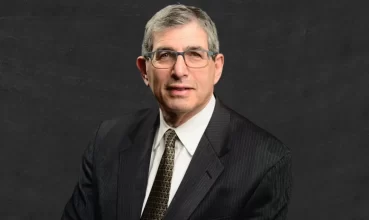
About the Expert: Jeff LaPour is founder and president of LaPour Partners, a regional developer based in Nevada with active projects across Arizona, Colorado, and California, focused on ground-up development in hotel, office, and industrial.
This article is based on information provided by the expert source cited above. It is intended for general informational purposes only and does not constitute legal, financial, or real estate advice. Readers should conduct their own research and consult qualified professionals before making any real estate or financial decisions.
Similar Articles
Explore similar articles from Our Team of Experts.
From Dyslexia to Real Estate Success: How Norman Bobrow Built a 45-Year Tenant-Only Brokerage Empire
New York City’s commercial real estate market processes about 50 million square feet of lease transactions each year, a scale unmatched in other U.S. cities. Norman Bobrow, founder of ...