The private lending sector is seeing record demand as real estate investors face tightened access to traditional bank loans. As banks raise lending standards and slow approval processes, pri...

Why Northern California Retail Real Estate Still Makes Sense Despite a Tough Development Climate

Written by:
Date:
17 Jun 2026
Share via Facebook

Share via Linkedin

Share via X

Copy to clipboard

The neighborhood shopping center business does not generate many headlines. No flashy towers, no record-breaking transactions, no viral social media moments. Yet for developers who have spent decades in the space, this quiet corner of commercial real estate is proving more resilient than most. While office markets struggle and industrial demand cools, the essential retail strip center, anchored by grocery stores, pizza joints, nail salons, and banks, is holding its own.
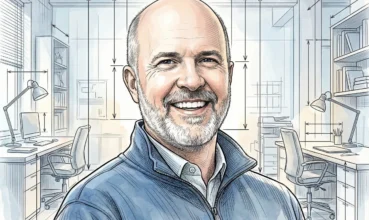
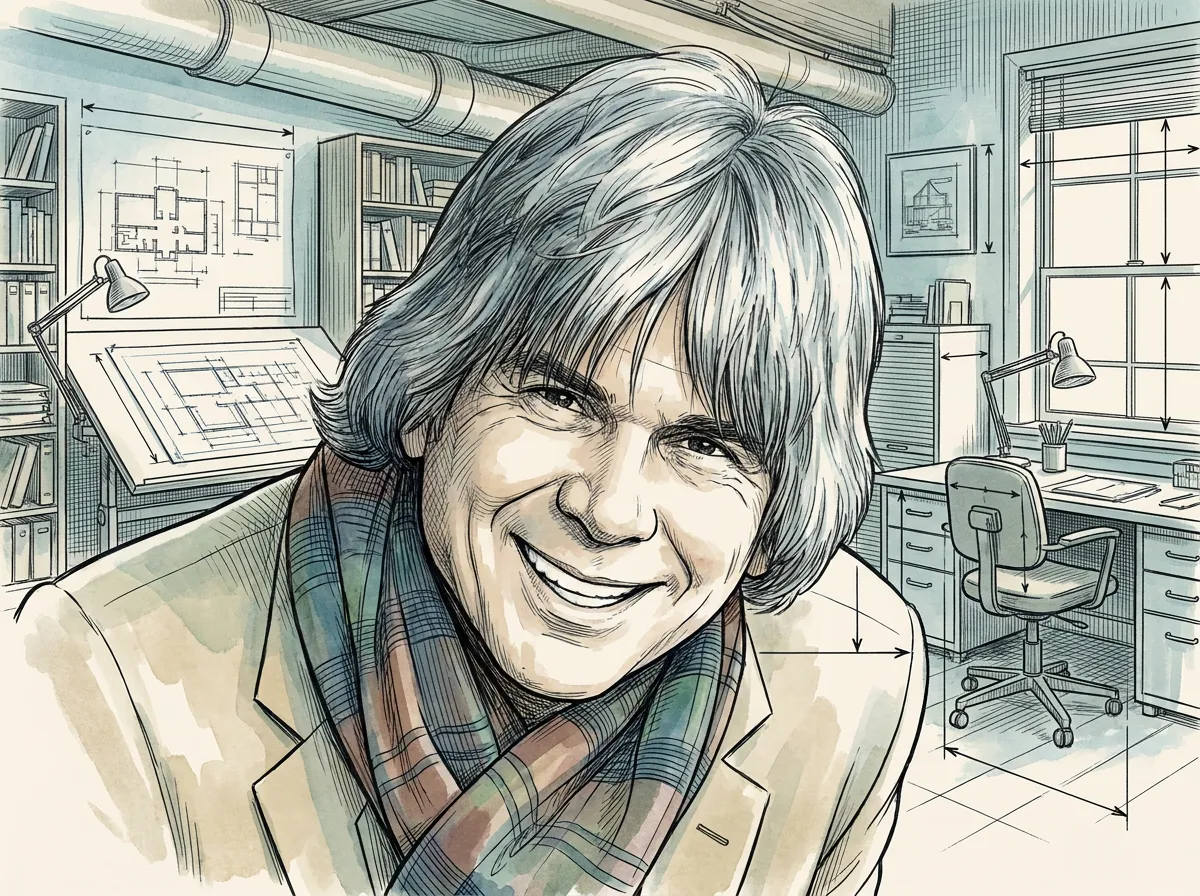
Few people have a longer view of this market than John McNellis, co-founder of McNellis Partners. This Palo Alto-based firm has been developing neighborhood retail centers in Northern California since the late 1970s. With nearly 100 deals completed over 45 years, almost all within a two-hour drive of San Francisco, McNellis Partners occupies a narrow but well-defined niche, and its founder has pointed observations about where the market stands today.
A Market That Works Better to Own Than to Build
The clearest theme in McNellis’s current thinking is the gap between owning existing retail and building a new product. “It’s a wonderful time to own a shopping center in my world,” he says. “It’s just a really tough time to build one.”
The math is straightforward. Construction costs remain elevated. Financing has moved from three to four percent a few years ago to seven or eight percent today. Exit cap rates are uncertain. And equity capital has grown more hesitant following renewed geopolitical instability. McNellis notes that younger developers are struggling to raise equity, while land and construction costs remain high and the potential resale value of finished projects is unclear.
For ground-up development to pencil, McNellis applies a firm standard: a 200-basis-point spread between return on cost and the anticipated sale cap rate. If a center is likely to trade at a six cap, he needs an eight percent return on cost at stabilization. He says he is not seeing deals that meet that threshold right now and doubts anyone else is either.
Pivoting to Smaller Deals
Rather than waiting for conditions to improve, McNellis Partners has adapted its deal structure. The firm, historically focused on 50,000-to-100,000-square-foot supermarket-anchored centers, has moved toward smaller, lower-risk transactions, primarily ground leases to quick-service restaurant operators like Chick-fil-A. These single-acre deals eliminate construction risk, reduce financing exposure, and offer predictable cap rate outcomes.
“We just pay cash for the land, and because those things sell all the time, you have a pretty good sense of where the cap rate is going to be,” McNellis explains.
That preference for control over scale traces back to the Savings and Loan era of the 1980s, when McNellis Partners briefly operated with institutional equity partners before the collapse of that lending environment prompted a strategic reset. “I said I’d rather own 100% of a million-dollar deal than 10% of a ten-million-dollar deal without control,” McNellis recalls. For the past 36 years, the firm has used only its own capital, an unusual approach that has shaped both the deals it pursues and the ones it walks away from.
Grocery Anchors Holding Steady
Not all anchor tenants perform equally, and McNellis draws a clear distinction between the two most common anchor categories in neighborhood retail.
Drug stores are in structural decline. Walgreens is contracting, Rite Aid has largely exited the market, and CVS is shrinking its footprint. McNellis Partners has owned several former Rite Aid spaces, including a vacant location in Orinda currently being re-leased. McNellis points to online pharmacy delivery and Amazon’s growing presence as long-term headwinds. “If you said I could develop a drug store at an eight cap, I’d say no thanks.”
Grocery anchors, by contrast, remain on solid footing. Despite the growth of online grocery pickup, most shoppers still visit stores in person. The broader category of essential retail – food service, personal care, and financial services – proved its durability during the COVID-19 period, when neighborhood centers reopened quickly, and traffic recovered fast. After years of being overlooked by institutional investors in favor of office, multifamily, and industrial, essential retail has gained renewed attention. “I think we’re one of the darlings of Wall Street investment right now,” McNellis says.
Where Transaction Activity Happens
With new development largely on pause, deal flow has shifted to repositioning existing assets. The most active players are value-add buyers – often backed by institutional capital – acquiring older centers at a seven cap, making cosmetic and leasing improvements, and targeting a resale at a six cap.
McNellis describes steady activity in second-generation space, with buyers painting, landscaping, and leasing up vacancies before selling at tighter cap rates. “I wouldn’t say there’s a feeding frenzy,” he notes, “but there are a lot of buyers running with institutional money trying to do exactly that.”
Tenant activity in the essential retail category is holding up. Pizza operators, hair salons, and similar service tenants are actively making deals, and McNellis’s centers are running close to full occupancy. The friction in the market is less about tenant demand and more about the financial structure of new transactions.
On Rates and Market Expectations
McNellis is skeptical of the widespread expectation that falling interest rates will unlock the market. “Inflation has spiked back up. I don’t think rates are coming down,” he says. He believes sellers are holding assets in hopes of better pricing that may not materialize.
He acknowledges the irony of his own career context: the first shopping center McNellis Partners developed in Healdsburg was built at a nine percent interest rate, with development returns targeted at 11 or 12 percent. The current environment, while challenging, is not historically unusual. The bigger issue is that many market participants remain calibrated to the anomalously low rate environment of the recent past and have not yet adjusted their expectations.
California’s Supply Constraint
On the question of California’s broader real estate outlook, McNellis pushes back against what he sees as exaggerated pessimism from outside observers. Population outflows, while real for a period, appear to have moderated. Demand for groceries, haircuts, and everyday services is not going away. And the regulatory difficulty of developing in California – often cited as a burden – functions as a supply constraint that protects existing assets.
“It’s so hard to develop here that if you develop a good property, you have an effective moat,” he says, pointing to the Healdsburg center his firm opened 43 years ago and still owns today.
Looking Ahead
For McNellis Partners, 2026 is shaping up as a year of portfolio rationalization rather than expansion. The firm intends to be a net seller, moving three or four assets while selectively pursuing a smaller number of acquisitions. Deals need to be both safe and clearly attractive to justify pulling capital from other uses.
McNellis has written publicly about the long-term comparison between stabilized real estate and equity index returns, and his current posture reflects that thinking. For new development to make sense, the numbers need to work on their own terms, not on the hope that rates will fall or that market conditions will improve.
For investors and developers watching the Northern California retail market, that combination of discipline, patience, and a clear-eyed view of current conditions may be the most useful framework available right now.
About the Expert: John McNellis is co-founder of McNellis Partners, a Palo Alto-based firm that has been developing neighborhood retail centers in Northern California since the late 1970s. The firm has completed nearly 100 deals over 45 years, operating exclusively within a two-hour radius of San Francisco using its own capital.
This article is based on information provided by the expert source cited above. It is intended for general informational purposes only and does not constitute legal, financial, or real estate advice. Readers should conduct their own research and consult qualified professionals before making any real estate or financial decisions.
Similar Articles
Explore similar articles from Our Team of Experts.