
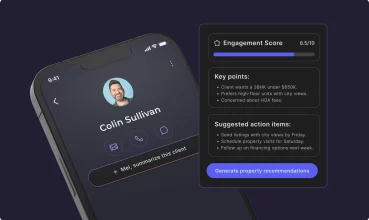
Real estate technology is experiencing a seismic shift as Radius introduces groundbreaking features that promise to fundamentally change how agents communicate with clients. The company̵...

The Data That's Already There – and the Money Asset Managers Are Missing Because of It

Written by:
Date:
30 Apr 2026
Share via Facebook

Share via Linkedin

Share via X

Copy to clipboard


There is a structural problem hiding in plain sight across commercial real estate portfolios. Asset managers are held accountable for NOI performance, insurance renewals, utility spend, and occupancy trends – yet they are routinely making those decisions with incomplete, delayed, or vendor-controlled data. The operational data that actually drives those outcomes sits locked inside building systems, siloed within vendor platforms, and inaccessible to the people responsible for portfolio performance.
Bill Douglas, CEO of OpticWise, a commercial real estate digital infrastructure firm, has spent more than a decade auditing properties and identifying where this data problem originates. His observations point to the same uncomfortable pattern: property owners invest in systems, collect the data, then never use it.
The Report That Hides More Than It Shows
The standard workflow for most portfolio owners involves a monthly or quarterly summary report generated from the property management system. That report shows leasing data, rent rolls, and basic financial KPIs. What it does not show is the operational data behind the numbers.
Douglas argues the problem goes deeper than missing data. Properties send management what they are asked for – nothing more. Asset managers receive what they requested, but they often do not know what else to ask for. They are measuring outcomes without seeing the inputs that drive them.
The property management system tracks leasing and tenant-facing activity. It does not track how the lighting control system is operating, how air conditioning demand is trending, or what access control logs reveal about space utilization. All of those systems generate data. Virtually none of it reaches the asset manager in a form they can use.
The Three Levers Nobody Is Pulling
Douglas identifies three major expense and revenue drivers that asset managers consistently lack visibility into: utilities, insurance, and occupancy. Each is data-dependent, and each is largely being managed reactively.
On utilities, the challenge is not simply reducing consumption – it is understanding the demand curve in the first place. If a property manager does not know when large motors are drawing peak power, or what the utility rate structure looks like for surge demand in that market, reducing the utility bill becomes guesswork. The levers exist. The data to find them does not.
On insurance, most owners walk into an annual renewal review without a coherent data package. A property that can demonstrate standard operating procedures around water leak detection, alarm response, and occupancy management – backed by actual system logs – presents a meaningfully different risk profile than one that cannot. Underwriters respond to documentation. Most properties cannot produce it.
On occupancy, the property management system can show lease rates and scheduled showings. It cannot show which areas of the building are underutilized, what gym usage patterns look like, or how parking availability compares to demand at different times of day. Those are revenue and experience drivers, and they are invisible to the people making portfolio decisions.
Who Gets Asked to Solve This Problem – and Why That Fails
When ownership groups recognize there is a data gap, the response is typically to hand the problem to one of three people: the IT manager, the property manager, or the asset manager.
None of these is a workable solution. IT managers focus on information technology – firewalls, directory services, corporate access policies. Operational technology, meaning the systems that actually run a building, is a different domain. Property managers are hired to lease space and serve tenants, not to manage network architecture or operational data. Asset managers are financial analysts; running analysis across a data lake is not their skill set and should not need to be.
Douglas is direct on this point: the wrong people are being asked to do the right tasks. The result is that audits never happen, data continues to sit inside vendor systems, and recoverable income keeps flowing away from the owners who are entitled to it.
What a Practical Data Strategy Actually Looks Like
The starting point is not a technology purchase. It is an honest inventory of what data currently exists at a property, where it lives, and who has access to it – what Douglas calls a data and digital infrastructure audit.
From there, the process is sequential rather than simultaneous. Which systems are generating data that nobody is collecting? Which represent the highest-value targets for improved visibility? What would a 90-day implementation look like that produces quick wins without requiring a full infrastructure overhaul?
A concrete example: one client already had a lighting control system installed that had never been activated. When OpticWise completed the audit and turned the system on, that property saved $70,000 in the following 12 months on electricity alone – no new hardware, no significant capital outlay, one system turned on and programmed properly.
The same logic applies to dynamic parking pricing, sub-metering by tenant, leak detection, and HVAC demand management. None of these are exotic solutions. All require data. And in most portfolios, that data is being generated right now – it is just not in anyone’s hands.
The Real Cost of Doing Nothing
The argument for maintaining the status quo is straightforward: the buildings are making money, the systems are running, and change is expensive. But the math shifts significantly when accounting for what is being left on the table.
A 400-unit apartment portfolio that could generate an additional $500 per door per year in net operating income is passing on $200,000 annually. An office building with 250,000 rentable square feet that could recover 50 cents per square foot is forgoing $125,000 in income. In both cases, the money exists – it is flowing somewhere else.
Commercial real estate owners in 2026 cannot rely on rent increases to drive returns. Most are realistically looking at 1 percent rent growth, not four or five. The path to value creation runs through optimization, and optimization requires data most portfolios still do not have.
Owners who address the data gap now are better positioned to act on cost recovery, renegotiate insurance terms, and improve NOI without waiting on market conditions. Those who do not are, in effect, choosing to leave income on the table year after year. That gap is not inevitable – it is a choice, most often made by inertia rather than strategy.
Bill Douglas is the CEO of OpticWise, a commercial real estate data & digital infrastructure firm helping CRE property owners own, manage, and monetize their building data and digital assets. OpticWise serves middle-market commercial real estate owners across multifamily and office sectors in the United States He is also co-author of Peak Property Performance, published by Fast Company Press.
This article is based on information provided by the expert source cited above. It is intended for general informational purposes only and does not constitute legal, financial, or real estate advice. Readers should conduct their own research and consult qualified professionals before making any real estate or financial decisions.
Disclosure: Individuals or companies mentioned may have a commercial relationship with KeyCrew.
Similar Articles
Explore similar articles from Our Team of Experts.