

The influx of out-of-state buyers is reshaping Pocatello’s newly built homes market. While these buyers see new homes as more affordable than what they left behind, local buyers often see ...

In South Florida, Ultra-Luxury Sales Are Running at Nearly One $10 Million-Plus Deal Per Day

Written by:
Date:
04 May 2026
Share via Facebook

Share via Linkedin

Share via X

Copy to clipboard

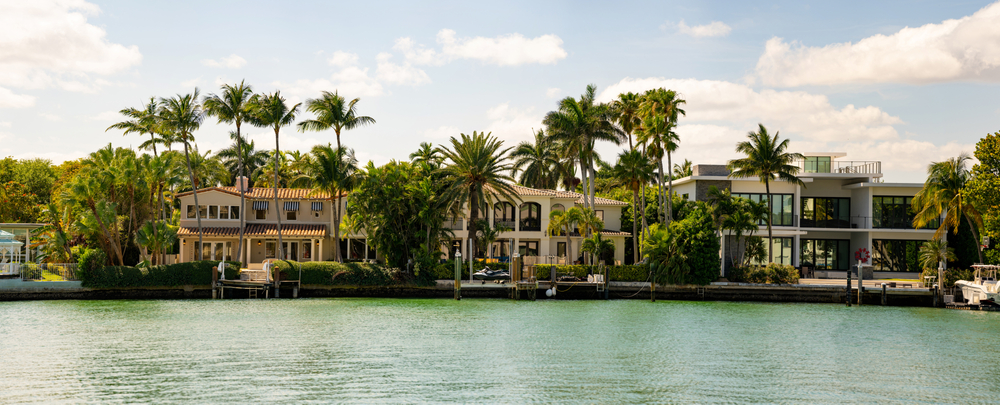
With 361 residential sales above $10 million recorded in 2025, South Florida’s ultra-luxury segment is running at roughly twice the pace of five years ago — and the buyer profile bears little resemblance to the speculative market that collapsed in 2008.
The “Bubble” Narrative
Outside South Florida, the reaction to Miami-area luxury prices is often the same: it looks like a bubble. Cody Sklar, Head of Operations at The Sklar Team, says that response is understandable but rooted in an outdated framework — one shaped by the 2008 crash rather than the structural changes that have reshaped the buyer pool over the past decade.
The 2008 collapse was driven by over-leveraged speculative buyers purchasing homes they could not afford with financing that was structurally unsound. The buyers active in today’s ultra-luxury market look almost nothing like that cohort. According to Sklar, the current buyer base is dominated by hedge fund managers, private equity partners, and family offices — buyers who are not dependent on financing and make long-term decisions rather than speculative short-term bets. “South Florida is no longer a cyclical play,” Sklar says. “It’s a core luxury market with absolute global relevance.”
Miami Leads the U.S. in All-Cash Purchases
One of the clearest indicators of how the buyer composition has changed is the prevalence of cash transactions. Sklar cites figures suggesting that Miami ranks as America’s top metro for all-cash home purchases, with roughly 38 to 39 percent of transactions closing without financing, compared to approximately 29 to 30 percent nationally. While Sklar acknowledges some uncertainty about the precise figures, the directional point — that Miami’s cash transaction rate significantly exceeds the national average — appears consistent with broader market reporting.
A market dominated by cash transactions is structurally insulated from the kind of forced selling that amplifies downturns. When prices fall in a heavily leveraged market, mortgage defaults create a cascade of distressed sales that accelerate the decline. In a cash-heavy market, buyers who experience paper losses have no obligation to sell, which limits downside pressure on prices.
361 Sales Above $10 Million
The volume data reinforces the case that ultra-luxury demand is not a temporary anomaly. According to Sklar, South Florida recorded 361 residential property sales above $10 million in 2025, the second-highest annual total on record, surpassed only by 2021 — the peak of pandemic-driven relocation demand. That translates to roughly one ultra-luxury sale per day, a pace Sklar describes as approximately twice what the market was doing five years ago.
The buyers driving this volume are not a monolithic group. Sklar describes a steady stream of high-net-worth individuals arriving from New York and California, drawn by the absence of state income tax and a more business-friendly regulatory environment. But the market has also attracted a growing cohort of financial and technology executives who are relocating their operations — not just their residences — to South Florida. Sklar points to Ken Griffin’s relocation of Citadel to Miami as an institutional anchor that attracts additional executive talent and creates sustained demand for ultra-luxury properties near employment centers.
“We’re seeing hedge fund managers, private equity partners, family offices — a steady stream of high-end buyers looking for luxury properties close to where they work,” Sklar says.
The Bet on Structural Demand
Those demand patterns are also shaping where and what developers choose to build. The Sklar Team, working in partnership with the Jills Zeder Group, has positioned Akoya Estates — a boutique development in Southwest Ranches with an entry price of $9.4 million — directly in the path of this buyer flow. The development sits squarely in the ultra-luxury segment, which has shown the strongest demand growth, and its location offers the privacy and acreage that buyers priced out of Star Island or Miami Beach increasingly seek. Akoya Estates is one of several developments targeting this price tier across South Florida, but its emphasis on acreage and privacy in a less dense setting distinguishes it from the condo and waterfront projects that dominate much of the ultra-luxury pipeline.
Sklar notes that the Jills Zeder Group’s recent transaction history — including a $170 million sale at 7 Indian Creek Drive — illustrates that demand at the very top of the market remains active. For buyers in the $9 million to $15 million range, Akoya Estates is positioned as an entry point into a segment that has demonstrated resilience even as the broader sub-$10 million market has experienced more volatility.
What Comes Next
Whether the ultra-luxury segment can sustain its current pace depends on continued inflows of high-net-worth buyers from domestic and international markets, and on whether South Florida’s financial and technology ecosystem continues to deepen. Sklar’s view is that the structural drivers — tax environment, lifestyle, and the growing concentration of financial firms — are durable enough to support the market well beyond the current cycle. If that assessment proves correct, the 2008 mental model that still shapes outside perceptions of South Florida luxury real estate may need to be reconsidered. But even cash-heavy markets are not immune to shifts in global capital flows, geopolitical disruption, or changes in tax policy — any of which could test the durability of the trends Sklar describes.
About the Expert: Cody Sklar is the Head of Operations at The Sklar Team, a luxury real estate group operating in South Florida’s ultra-high-end residential market.
This article is intended for informational purposes only and does not constitute legal, financial, or investment advice. The views and opinions expressed herein reflect those of the individuals quoted and do not represent an endorsement of any company, product, or service mentioned. Readers should conduct their own due diligence and consult qualified professionals before making any investment decisions.
Similar Articles
Explore similar articles from Our Team of Experts.