You found the house. It is 10:30 on a Tuesday night; you are scrolling through listing photos on your phone, and you have three questions you want answered right now. You fill out a contact ...

Thinking About Buying in Key Biscayne? Here's What Most People Get Wrong About This Miami Island

Written by:
Date:
01 May 2026
Share via Facebook

Share via Linkedin

Share via X

Copy to clipboard

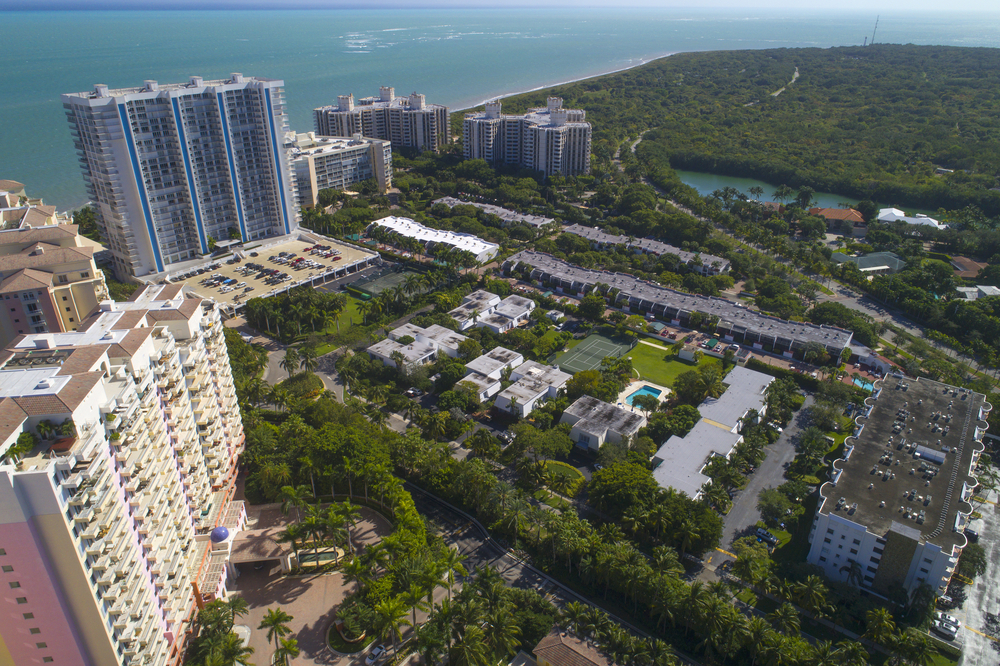
Most people who move to Miami have never heard of Key Biscayne. That’s not an exaggeration — it’s something Ximena Ulloa, a realtor with the Giulietta Ulloa Group at Berkshire Hathaway HomeServices EWM Realty, hears constantly from buyers relocating from New York, Chicago, and California. They come in asking for something close to the beach, walkable, calm, with good schools. She tells them about Key Biscayne. They say: “What’s that?”
Ulloa grew up on this island. She knows it the way only a local can — the best streets, the buildings worth buying into, the ones to avoid, and the hidden costs that catch newcomers off guard.
What Kind of Place Is This, Exactly?
Key Biscayne is a small barrier island just off the Miami coast, about 15 to 20 minutes from Brickell and 25 minutes from downtown. Ocean on one side, Biscayne Bay on the other, with state parks anchoring both ends. There’s almost no crime. Kids ride bikes and scooters to school. Everyone seems to be on a golf cart.
It’s also one of the most international communities in an already international city. Ulloa has seen a surge of Brazilian and Chilean buyers over the past two years, alongside longtime buyers from Spain, Venezuela, and across Latin America. More recently, domestic buyers — especially from New York — have started discovering it. “A lot of them don’t know Key Biscayne exists,” Ulloa says.
What Does It Actually Cost?
This is where buyers often get a reality check. Single-family homes start at roughly $2.8 to $3 million, and that entry point gets you something modest — under 2,000 square feet, three or four bedrooms, possibly no pool. These are older homes, sometimes called “mackle homes,” and many are candidates for renovation or teardown.
Condos are more accessible. The most active price range is $1 million to $2 million, with options starting around $700,000. Over 80 condos sold on the island in the past six months, compared to only about 15 to 16 single-family homes, according to Ulloa, which shows where most of the market activity is concentrated.
For international buyers or second-home owners, condos also offer practical advantages. When a hurricane approaches, the building handles preparation. You lock up and leave. That kind of low-maintenance ownership is a major draw for people who aren’t here year-round.
The Building Question Everyone Should Ask
After the 2021 Champlain Towers collapse in nearby Surfside, Florida, new regulations were enacted requiring condo buildings to maintain stronger reserve funds and undergo structural inspections. That created financial strain for many buildings and owners over the following years.
Most Key Biscayne buildings have now worked through the worst of it, according to Ulloa. Many have completed concrete restoration, redone pools, and rebuilt reserve funds to meet the new 10 percent requirement. HOA fees, while still higher than pre-2021 levels, have come down from their 2023–2024 peak as insurance costs have stabilized.
Not every building is equal, though. Some carry two separate fees — like the Ocean Club, where owners pay both a building HOA and a club membership fee, plus a minimum annual spend at the on-site restaurant. It’s a resort-quality lifestyle, but it comes with resort-level carrying costs. Ulloa recommends buyers understand the full monthly picture before committing to a unit.
What International Buyers Often Misunderstand
Ulloa works with international clients regularly and says the learning curve around U.S. real estate is steeper than most expect.
Many foreign buyers are advised to purchase under an LLC with two managers rather than in their own name. This structure can simplify a future sale and affect how certain taxes — including a federal withholding tax on foreign sellers — are applied at closing. This is something to discuss with a tax attorney before buying, not after.
The concept of working with one agent exclusively is also unfamiliar in many countries. In the U.S., a buyer’s agent relationship is typically exclusive. Ulloa is direct with her clients about this because it determines how much time and energy she can invest in finding them the right property.
Capital gains taxes at the time of sale also come as a shock to some international buyers. “They say, what is this? This isn’t a good investment,” Ulloa says. “And we tell them — it’s because you made so much money.”
The Bottom Line
Key Biscayne rewards buyers who do their homework. The island offers a walkable, low-crime, beach-adjacent lifestyle with strong schools and a tight-knit community — qualities that are difficult to find elsewhere in Miami. But the details matter. Monthly carrying costs vary widely between buildings. U.S. real estate rules around agent relationships, tax obligations, and ownership structures can trip up international buyers who don’t prepare. A good local inspector who knows which streets flood and which buildings are in strong shape is worth the investment. The island is special. Just go in with eyes open.
About the Expert: Ximena Ulloa is a realtor with the Giulietta Ulloa Group at Berkshire Hathaway HomeServices EWM Realty who grew up on Key Biscayne and specializes in guiding both domestic and international buyers through the island’s market.
This article is intended for informational purposes only and does not constitute legal, financial, or investment advice. The views and opinions expressed herein reflect those of the individuals quoted and do not represent an endorsement of any company, product, or service mentioned. Readers should conduct their own due diligence and consult qualified professionals before making any investment decisions.
Similar Articles
Explore similar articles from Our Team of Experts.