


The biggest mistake commercial real estate brokers make in presentations is focusing on market data before understanding client needs, according to Jim Kruse, Director of Brokerage at NAI Ca...

The Story Behind Boise’s Explosive Growth – What It Means for Buyers and Investors

Written by:
Date:
28 Apr 2026
Share via Facebook

Share via Linkedin

Share via X

Copy to clipboard

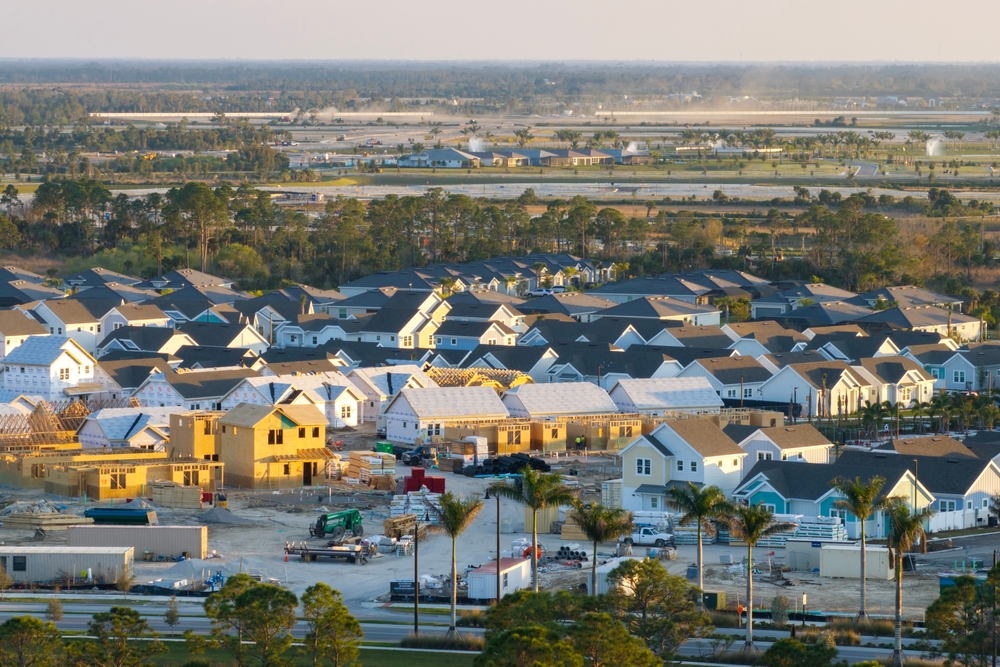
Boise’s real estate boom is often attributed to newcomers from California or retirees relocating from Seattle. Still, the real force driving growth in Southwest Idaho is a $15 billion federal investment in semiconductor manufacturing that is changing the region’s economic landscape.
Micron Technology, headquartered in Boise, is building two large chip fabrication plants in southeast Boise, funded by the federal CHIPS Act. The scale of the project has already strained local capacity: construction crews have filled the available on-site space, forcing subcontractors to search for office and storage facilities throughout the valley. This demand is only expected to intensify as the project continues.
“The biggest change is that we’ve started to realize what this investment means for Southwest Idaho,” says John Starr, partner in land brokerage services at Colliers Idaho. “In a community of just over a million people, a $15 billion investment is unimaginable.”
For buyers, sellers, and small investors, Micron’s expansion is creating both new opportunities and significant challenges that will shape the market for years.
On-the-Ground Impact
Micron’s expansion is not limited to jobs at the new plant. The project is driving demand for housing, retail, warehouses, and supporting infrastructure across the valley. Industrial space in southeast Boise is in short supply, with companies such as Peterbilt and Freightliner building new facilities and smaller businesses competing for flex yards and office space.
However, available land in the immediate area is nearly exhausted. Basic utilities are a bottleneck: sewer lines are three miles away, power capacity is maxed out, and while water and roads can be added, the lack of essential services is delaying new development.
“We need to deliver more land for development in southeast Boise,” Starr says. “But we’re missing some baseline service levels that would allow us to execute quickly.”
Because of these constraints, subcontractors and companies supporting the Micron build-out are expanding their search to the west end of the Boise airport, South Meridian, Nampa, and Caldwell. This is increasing competition and prices for industrial and commercial properties throughout the valley, not just near the Micron site.
Where Buyers and Investors Should Focus
For those looking to invest or buy, the most reliable strategy is to target areas where infrastructure is already in place. Land with access to utilities and transportation will see faster development and more stable appreciation than raw, unserviced parcels.
“Focus on those areas that already have a high level of service available,” Starr advises. He cautions against buying remote land in the hope that future development will catch up, noting that speculation on undeveloped parcels carries significant risk.
Multifamily housing is also seeing strong demand. As single-family home prices rise and inventory remains tight, rental demand has increased. Developers who can deliver apartments near job centers and public transit are achieving solid returns.
On the residential front, homes priced under $500,000 remain in demand, but buyers are more selective as inventory slowly increases. Sellers who price competitively and offer move-in-ready homes are finding buyers faster than those who overprice or list properties needing repairs.
Pitfalls to Avoid
One of the most significant risks in the current market is the shortage of electrical power. Idaho’s state-regulated utility cannot build new infrastructure without guaranteed demand, so power capacity is lagging behind development. Last year, data center developers approached the valley seeking land and resources, but local officials declined their proposals due to the strain such projects would place on the power grid.
“The power that a data center needs is a direct trade-off for housing,” Starr says. “And we need housing more than we need a data center.”
For investors, this means avoiding projects that depend on new, large-scale power infrastructure. The safest bets are areas where utilities are already in place or where expansion projects have secured funding and are underway.
Political factors are another consideration. Some cities in the valley have elected officials who campaigned on restricting growth, which can result in delays or even cancellations of development projects. Before committing to a property, research the local government’s stance on new development. Cities that are open to growth typically move projects forward more efficiently and with fewer surprises.
What’s Next
Boise’s growth is not expected to slow in the near term. The Micron project will take years to complete, and the resulting demand for housing, retail, and industrial space will persist well beyond the construction phase. However, infrastructure challenges — including utilities and political resistance — are likely to limit how quickly new projects can come online.
For buyers and investors, this environment requires a strategic approach. Focus on properties with strong fundamentals: existing infrastructure, supportive local governments, and realistic development timelines. Avoid speculative purchases in remote or unserviced areas, and be prepared for longer timelines as projects work through supply and utility constraints.
“The opportunities in Boise are real, but so are the constraints,” Starr says. “The key is knowing where to look — and where to stay away.”
About the Expert: John Starr is a partner in land brokerage services at Colliers Idaho in Boise. With more than 20 years of experience in commercial real estate, residential development, and property management, he specializes in land transitions and large-scale development projects across the Treasure Valley.
This article is intended for informational purposes only and does not constitute legal, financial, or investment advice. The views and opinions expressed herein reflect those of the individuals quoted and do not represent an endorsement of any company, product, or service mentioned. Readers should conduct their own due diligence and consult qualified professionals before making any investment decisions.
Similar Articles
Explore similar articles from Our Team of Experts.



Perspectives, Commercial Real Estate, Market Analysis & Policy, Real Estate Investment, Industry News, Residential Real Estate
A new breed of mid-sized real estate operators is emerging, combining institutional-grade expertise with the agility to pursue opportunities across specialty housing sectors, according to on...

Perspectives, Real Estate Investment, Industry News, Residential Real Estate, Market Analysis & Policy
The ultra-luxury real estate market in Miami Beach is seeing a significant trend toward cash transactions, reflecting advanced wealth management strategies among high net worth buyers, accor...

