Palm Beach County’s residential real estate market is showing measurable signs of recovery, providing an early preview of trends that may soon reach other parts of the country. After sever...

Upstate New York Commercial Real Estate Adapts to New Demands

Written by:
Date:
03 Apr 2026
Share via Facebook

Share via Linkedin

Share via X

Copy to clipboard

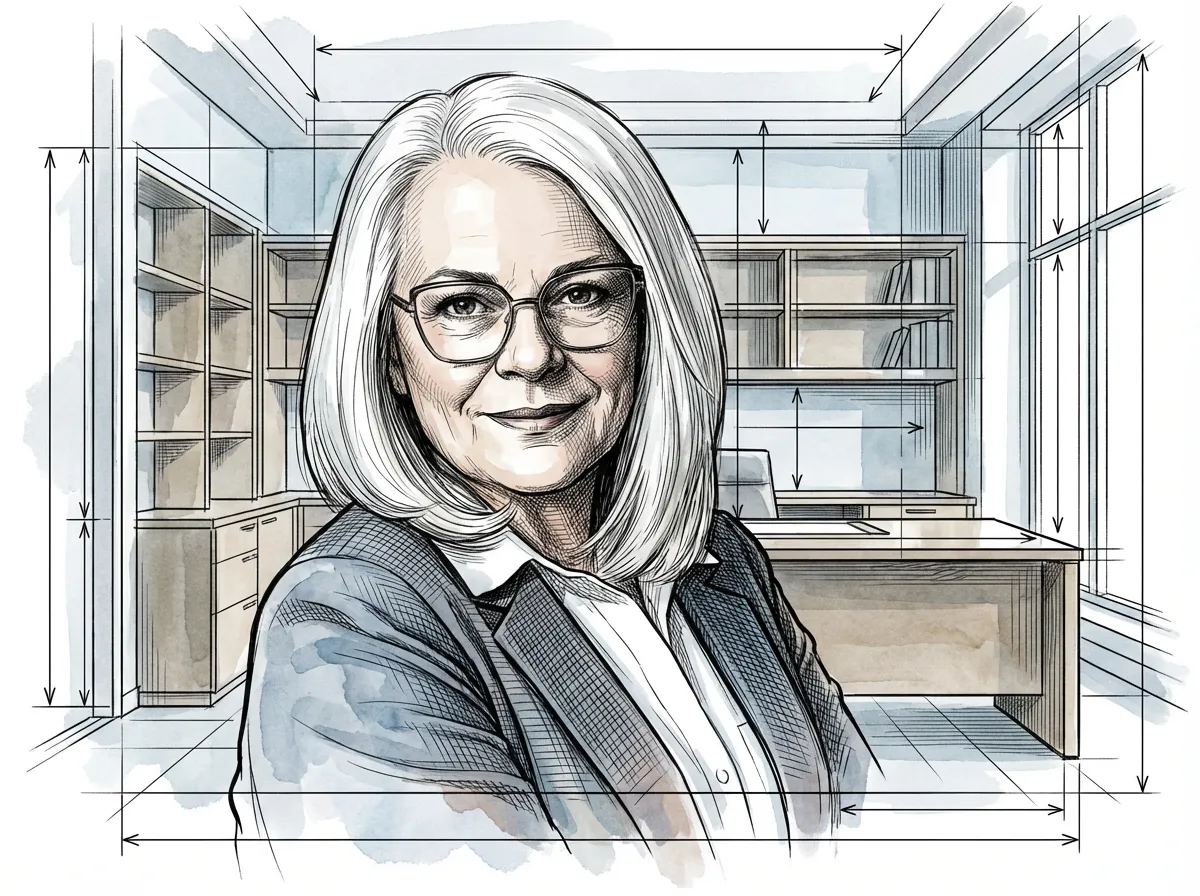
The commercial real estate market across upstate New York is experiencing significant changes, shaped by economic pressures, demographic shifts, and evolving business needs. While national trends such as rising interest rates and remote work have left their mark, upstate markets are responding with distinct strategies that reflect local strengths and challenges. Mercedes Brien, a 30-year commercial real estate veteran and current president of the New York State Commercial Association of Realtors (NYSCAR), offers a close look at how these markets are adjusting to today’s realities.
A Veteran Leads Industry Education
Brien entered commercial real estate after a career in banking, investments, and insurance, bringing a financial lens to her work from the start. Early in her career, commercial real estate in upstate New York was a male-dominated field, with just four women practicing full-time across the five-county region. This scarcity created opportunities for those who persisted, as established female agents sought to expand the profession’s diversity.
Mentored by a brokerage team with deep experience in large-scale land deals for companies like Kodak and Xerox, Brien learned how regional commercial markets develop and change over time. That foundation now informs her view of the dramatic shifts currently underway.
As president of NYSCAR, Brien leads an organization of nearly 700 commercial practitioners and affiliates across eight chapters. The association prioritizes continuing education tailored to commercial practice, offering monthly sessions on topics such as environmental regulations and specialized property types. Brien emphasizes the need for industry-specific knowledge, noting that commercial agents require expertise in areas such as wetland mitigation rather than in residential sales tactics. The group’s annual conference in June 2026 will focus on advanced education and networking, providing members with practical tools to navigate a changing market.
Industrial Market Shifts and Trends
One of the most notable changes in recent years has been the sharp rise in industrial property lease rates. Industrial space, once the most affordable commercial asset class, has seen substantial price increases. Brien notes that buildings that were leased for $5 per square foot a decade ago now command $9 per square foot, a nearly 80% increase.
The pace of increases is now slowing. After a period of rapid escalation, lease rates have begun to stabilize. Landlords, facing more cautious tenants, are showing increased flexibility, offering concessions and participating in build-outs to attract and retain occupants.
The pandemic also sparked a wave of new business formation, driving demand for small industrial and flex spaces. Individuals who started businesses in their garages in 2020 are now seeking commercial locations. Markets like Batavia, New York, located between Rochester and Buffalo, are seeing property owners subdivide larger industrial buildings into smaller, all-inclusive units. These spaces are leasing quickly due to reasonable pricing and simplified lease terms, highlighting a shift toward entrepreneurial growth and the need for flexible, affordable commercial space in secondary markets.
Mixed-Use Growth, Tight Inventory
Rochester, New York, offers a clear example of how upstate cities are reinventing themselves by reimagining the use of downtown buildings. Twenty years ago, Rochester’s inner loop had about 1,200 residential units. Today, that number has grown to around 10,000. Recognizing that vacant office buildings were dragging down downtown activity, developers began converting these properties into mixed-use spaces that combine offices, retail, and apartments, or, in some cases, shifting entirely to residential use. The result is a dramatic increase in downtown living, which brings more foot traffic and supports local businesses.
This approach is spreading to other upstate cities. Buffalo, New York, is halfway to Rochester’s level of downtown residential density, while Syracuse, New York, is accelerating its own conversion projects. According to Brien, these efforts are essential for the long-term health of upstate urban centers.
A key challenge across upstate commercial markets is the lack of quality inventory at reasonable prices. Brien says that properties worth buying are scarce, and those that do come to market are often overpriced. As a result, listings are lingering longer, and buyers are increasingly resistant to inflated valuations. Commercial and residential markets are showing similar patterns: tight inventory, upward pricing pressure, and increased activity from out-of-area buyers.
The pandemic accelerated this trend, as remote workers from higher-cost cities relocated to upstate communities, bringing cash and a willingness to pay premiums that have reset local price expectations. Their presence is also distorting commercial valuations, particularly for properties that might appeal to small business owners or investors seeking to capitalize on population growth.
Upstate Market Players and Dynamics
Upstate New York’s commercial real estate market operates differently from New York City’s high-stakes, principal-to-principal negotiation style. In Rochester and similar markets, transactions typically involve both tenant and landlord representatives working collaboratively to complete deals. Brien describes the local approach as team-oriented, where agents and brokers serve as intermediaries between clients and property owners. This model fosters greater cooperation and can lead to smoother transactions, especially in markets where relationships and reputation remain crucial.
Addressing concerns about New York’s tax environment, Brien acknowledges the state’s high taxes but argues that infrastructure and public services funded by those taxes support business operations and add value for property owners.
Brien also observes that today’s younger investors are more proactive and independent than previous generations. Rather than waiting for opportunities to be presented by brokers, these investors actively seek out deals, often contacting property owners directly and pursuing off-market transactions. This reflects broader changes in information access and the democratization of market data. Younger investors are leveraging online resources, networking, and direct outreach to identify and secure properties without relying solely on traditional brokerage channels. Brien sees this shift as a positive development, encouraging greater participation and innovation in the market.
Outlook for Upstate Markets
Upstate New York’s commercial markets are at a turning point. Urban redevelopment, entrepreneurial activity, and a new generation of investors are reshaping demand and driving adaptation. The move from struggling office corridors to vibrant mixed-use districts demonstrates how local problem-solving and collaboration can overcome broader market headwinds.
Continued success will depend on the region’s ability to balance pricing with value, respond to evolving space needs, and maintain the spirit of cooperation that distinguishes upstate markets. With experienced professionals guiding the next wave of practitioners, Rochester and its neighboring cities are positioned to build on recent gains and remain resilient amid national uncertainty.
For buyers, sellers, and investors, upstate New York’s commercial market is no longer defined by its past limitations but by its willingness to adapt, innovate, and seize new opportunities.
About the Expert: Mercedes Brien is a 30-year commercial real estate veteran and president of the New York State Commercial Association of Realtors (NYSCAR). Based in upstate New York, she works across the region’s commercial property markets and leads NYSCAR’s continuing education and professional development programs for nearly 1,000 practitioners statewide.
This article is based on information provided by the expert source cited above. It is intended for general informational purposes only and does not constitute legal, financial, or real estate advice. Readers should conduct their own research and consult qualified professionals before making any real estate or financial decisions.
Similar Articles
Explore similar articles from Our Team of Experts.