
Soaring land acquisition costs, infrastructure expenses, and permitting fees are adding $50,000 to $60,000 to the cost of every new home in the Orlando area before construction even begins, ...

Scottsdale, Arizona Real Estate Market Splits as Entry-Level Condos Lose Value and Luxury Homes Appreciate

Written by:
Date:
25 Mar 2026
Share via Facebook

Share via Linkedin

Share via X

Copy to clipboard

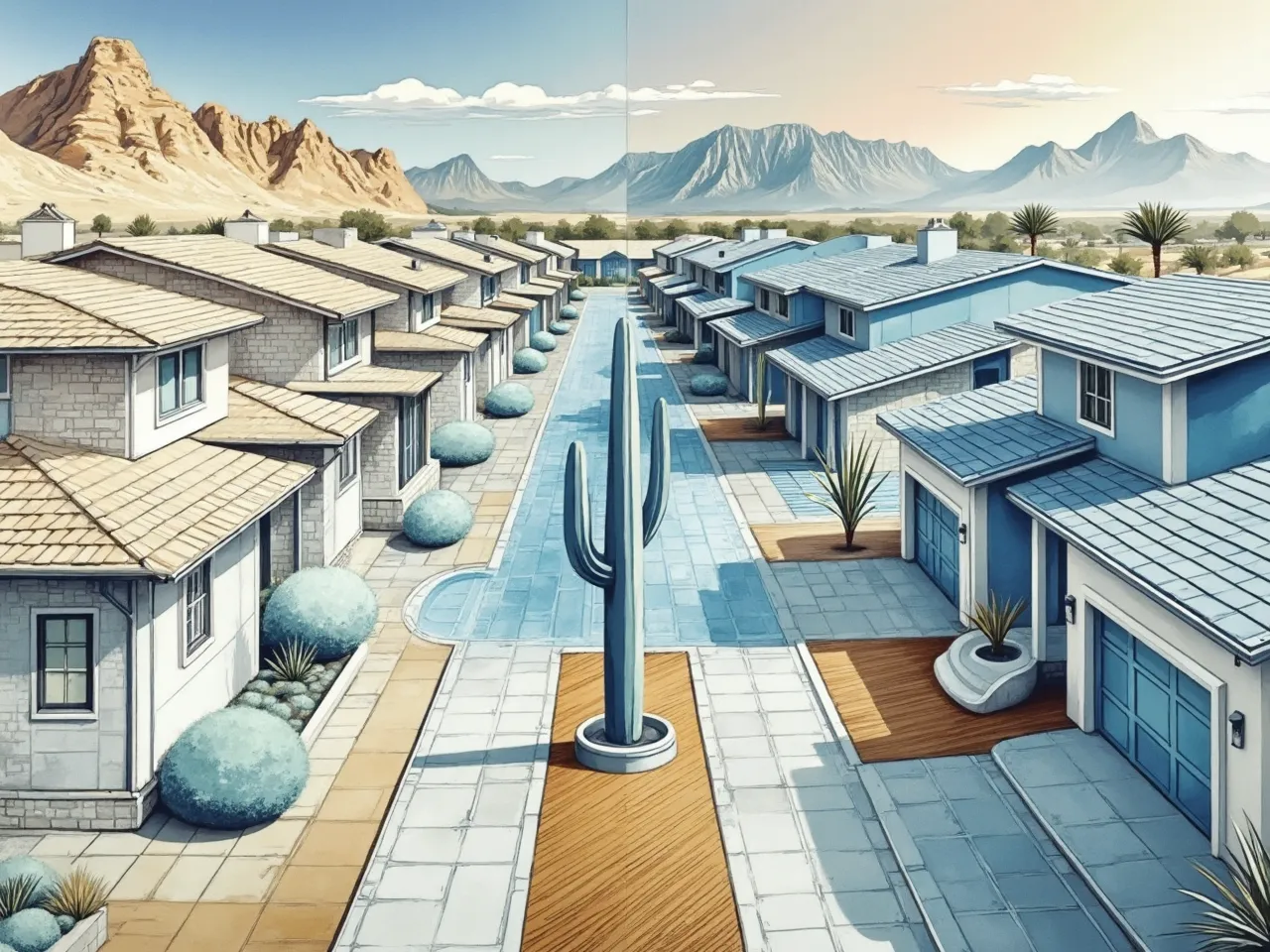
The Scottsdale real estate market is diverging by price points, with entry-level condos and homes under $400,000 losing value. At the same time, luxury properties in Paradise Valley and other high-end communities continue to appreciate. Jennifer Wilson, a Realtor at describes this widening gap as a direct response to rising interest rates and affordability pressures that affect buyer segments differently.
==
The Scottsdale, Arizona, real estate market is diverging by price point. Entry-level condos and homes under $400,000 are losing value, while luxury properties in Paradise Valley and other high-end communities continue to appreciate. Jennifer Wilson, a REALTOR®at Russ Lyon Sotheby’s International Realty, attributes the widening gap to rising interest rates and affordability pressures that affect buyer segments differently.
“We’re seeing the rich getting richer and the poor getting poorer,” Wilson says, highlighting how market gains are concentrated among higher-end buyers while middle-income households face mounting challenges.
This split challenges the assumption that all market segments move together. Wilson’s experience points to interest rates, buyer psychology, and equity positions as drivers of distinct outcomes at different price points. Understanding these separate realities is now essential for agents, investors, and policymakers assessing market health.
Entry-Level Home Values Decline
Entry-level condos and homes in Scottsdale are sitting on the market longer and selling for less than they did two years ago. Wilson points to a condo she sold for $350,000 in 2022 that is now listed below its previous sale price, with an expected loss of $10,000 to $15,000.
Year over year, condos and homes under $400,000 have seen the most pronounced declines. “Condos under $400,000 are losing value,” Wilson explains. The weakness is most acute in properties aimed at first-time buyers and middle-income households struggling with affordability.
Several factors are driving these declines. Interest rates have roughly doubled, raising monthly payments for buyers who rely on financing. Inflation has eroded household savings, making it harder to save for down payments or qualify for mortgages. The pool of move-up buyers has also shrunk, reducing demand for entry-level properties. Days on market have increased, and sellers are accepting lower prices.
Luxury Homes Hold Steady
Luxury homes in Paradise Valley and exclusive communities such as Silver Leaf continue to appreciate. Homes in Paradise Valley now start at $3 million and continue to set record prices, even as they spend more time on the market.
“Paradise Valley appreciation over the last three years has been astronomical,” Wilson says. While luxury homes may take up to six months to sell, they are not experiencing the same depreciation as lower-priced homes. “They’re not going down in value,” she explains.
The luxury segment’s resilience is closely tied to cash buyers. Since the pandemic, Scottsdale has attracted buyers who sold homes in California and other high-cost markets, bringing substantial equity and little reliance on financing. This influx of cash buyers has supported a strong price floor for luxury properties, insulating those homes from rising interest rates.
Wilson also cites Silver Leaf, a high-end community in DC Ranch, as another example of steady appreciation, with values continuing to climb in line with Paradise Valley trends.
Affordability Locks Out Buyers
The biggest challenge at the lower end of the market is an affordability crisis keeping first-time buyers out. In today’s market, renting is often cheaper than buying in Scottsdale, removing a key incentive for potential buyers.
Wilson notes that lower-priced homes are sitting on the market longer as buyers struggle to afford them. Inflation and rising non-housing costs have made it difficult for many buyers to save for a down payment or qualify for a mortgage at current interest rates.
These conditions have created a clear divide. Luxury buyers remain active and able to pay record prices, while entry-level buyers are increasingly shut out. As long as interest rates remain high and wage growth lags behind the cost of living, the divide is likely to persist.
One Agent’s Market Strategy
Wilson’s insights are shaped by her work across multiple Scottsdale communities, including Paradise Valley, DC Ranch, and Old Town Scottsdale. Active in the market since 2011, Wilson has developed a business model focused on digital marketing and client responsiveness. Wilson reports that her 2026 business already surpasses all of 2025, indicating that certain segments remain robust despite overall market bifurcation.
Her approach includes maintaining a lead-generating website and working with clients for extended periods, sometimes up to four years. Wilson attributes her success to remaining available for clients, especially on weekends when other agents may not respond. This accessibility, Wilson says, is key to capturing business in a competitive market.
Wilson’s experience underscores the need for segment-specific strategies. Relying on broad market assumptions can lead to missed opportunities or misread market signals. What works for luxury properties in Scottsdale, Arizona, does not necessarily apply to entry-level homes, and vice versa.
Broader Market Implications
The split in Scottsdale, Arizona’s market is not a temporary anomaly but a sign of broader shifts in how economic pressures affect different buyer segments. High interest rates and persistent inflation have created barriers for first-time and middle-income buyers, while luxury buyers, often paying cash, are largely insulated from these challenges.
This bifurcation has broader implications for real estate markets nationwide. As affordability pressures intensify and interest rates remain elevated, more markets may see similar divides. For Scottsdale, Arizona, recovery will depend on whether wage growth catches up with housing costs and whether interest rates ease enough to restore access for entry-level buyers.
Until then, agents and investors must focus on the realities of each segment. Strength at the top of the market does not translate to health across the board, and buyer and seller experiences can differ dramatically depending on price point. Understanding these differences is now essential for anyone navigating the Scottsdale, Arizona, real estate market.
Similar Articles
Explore similar articles from Our Team of Experts.