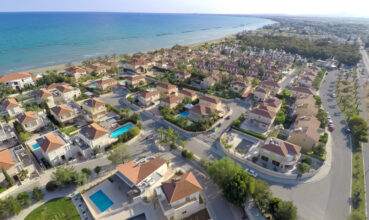

The luxury real estate market in Miami is experiencing a counterintuitive trend where dramatic price reductions do not signal a genuine market correction, according to Ignacio Villanueva, Se...

Appraisal Gaps Derail Home Sales in Essex County, New Jersey

Written by:
Date:
20 Mar 2026
Share via Facebook

Share via Linkedin

Share via X

Copy to clipboard


As investor competition accelerates in Essex County and neighboring areas, the gap between agreed-upon purchase prices and appraised values is causing more deals to fall through. This disconnect is now the leading reason transactions collapse in some of New Jersey’s most active real estate markets.
Appraisals Collapse Essex County Deals
Kurtia Thomas, a realtor with Keller Williams Realty in Westfield, New Jersey, says appraisal shortfalls have become the main obstacle to completing transactions. Thomas works in Essex, Middlesex, Somerset, and Union counties and estimates that about 65% of her clients are investors. That concentration amplifies the appraisal challenge, as investor activity pushes prices up faster than appraisers’ data can keep pace with.
“When I see deals falling apart, it’s usually because of the appraised value,” Thomas says.
The problem centers on timing. Investors are buying, renovating, and reselling properties on timelines as short as three to six months. Appraisers, meanwhile, base their valuations on recent closed sales, which often lag behind current market conditions. When prices rise quickly, the result is a growing gap between what buyers are willing to pay and what appraisers can support with comparable sales.
Essex County, with its high density of multi-family properties near New York City, is especially exposed. The area attracts both investors seeking rental income and buyers who value a short commute to Manhattan. This dual demand drives up prices, but traditional appraisal methods are slow to reflect these increases, leaving deals more vulnerable to collapse.
Investors Widen the Valuation Gap
Investor activity has intensified the appraisal gap. Thomas reports that investors are now targeting not only multi-family properties but also single-family homes, flipping and reselling them within months. This rapid turnover means that comparable sales data used by appraisers quickly becomes outdated.
“There are a lot of investors purchasing properties, even if it’s a single-family home — they’re flipping it and reselling it,” Thomas says.
A home that sold for $400,000 six months ago might now be worth $450,000. But if no recent sales at the higher price have closed and been recorded, appraisers lack the evidence to support the new value. This lag is especially problematic in fast-moving markets where properties change hands frequently.
Interest rate fluctuations add another layer of difficulty. Thomas notes that mortgage rates briefly dropped below 6%, then rose back above 6% and approached 7%. These swings affect both what buyers can afford and the volume of comparable sales, making consistent valuations harder to achieve. For buyers relying on financing, a low appraisal creates an immediate problem: they must either cover the shortfall with additional cash, convince the seller to reduce the price, or walk away. In competitive markets, sellers are often unwilling to negotiate, leaving more buyers unable to close.
Agents Counter With Their Own Comps
To address appraisal shortfalls, Thomas and other agents now submit their own recent comparable sales directly to appraisers before valuations are finalized.
“Submit your own comps to the appraiser — never hurts,” Thomas says. “If you do your comps properly, as the agent, you’re letting the appraiser know you are aware of the market.”
This tactic serves two purposes. It provides appraisers with additional, possibly more current, data — especially if sales from adjacent neighborhoods or off-market transactions haven’t yet appeared in public records. It also signals that the agent can justify the contract price with specific evidence. Thomas stresses that the quality of submitted comps is critical. Poorly chosen comparables can undermine an agent’s credibility. Effective submissions, however, can help appraisers defend valuations that reflect current market conditions rather than lagging averages.
Still, this strategy is only a partial solution. While it might resolve some marginal cases, it does not address the core problem: appraisals are inherently backward-looking, while investor-driven markets move forward quickly. Rapid appreciation means even the best supplemental data cannot always bridge the gap.
Can Appraisal Methods Keep Up?
The persistence of appraisal gaps raises questions about whether traditional valuation methods are still adequate for today’s markets. In Essex County, Thomas has seen homes purchased for $300,000 just two years ago now sell for $500,000 — a pace of appreciation that historical comps cannot capture.
Thomas points to her own experience: she bought her home in 2021 for $285,000, and it is now valued at $500,000, a 75% increase in less than five years. While that jump is partly due to proximity to New York City and limited inventory, it also highlights the limitations of appraisal methods designed for more stable markets.
For now, agents like Thomas are working within the current system, using strategies such as comp submissions and pre-listing inspections to reduce friction. But as investor activity continues to reshape New Jersey’s housing markets, pressure is growing to modernize the appraisal process to reflect fast-changing conditions better. Until appraisal practices adapt to real-time market dynamics, the gap between contract prices and appraised values will remain the top reason deals fall apart in New Jersey’s most competitive markets.
Similar Articles
Explore similar articles from Our Team of Experts.