


Amery, Wisconsin, about an hour from Minneapolis–St. Paul is one of many small cities actively seeking housing and business development. Unlike rural towns that merely express interest in ...

Jacksonville, Florida Industrial Leasing in 2025 Led by Small Tenants as Service Companies Drive Activity

Written by:
Date:
17 Mar 2026
Share via Facebook

Share via Linkedin

Share via X

Copy to clipboard

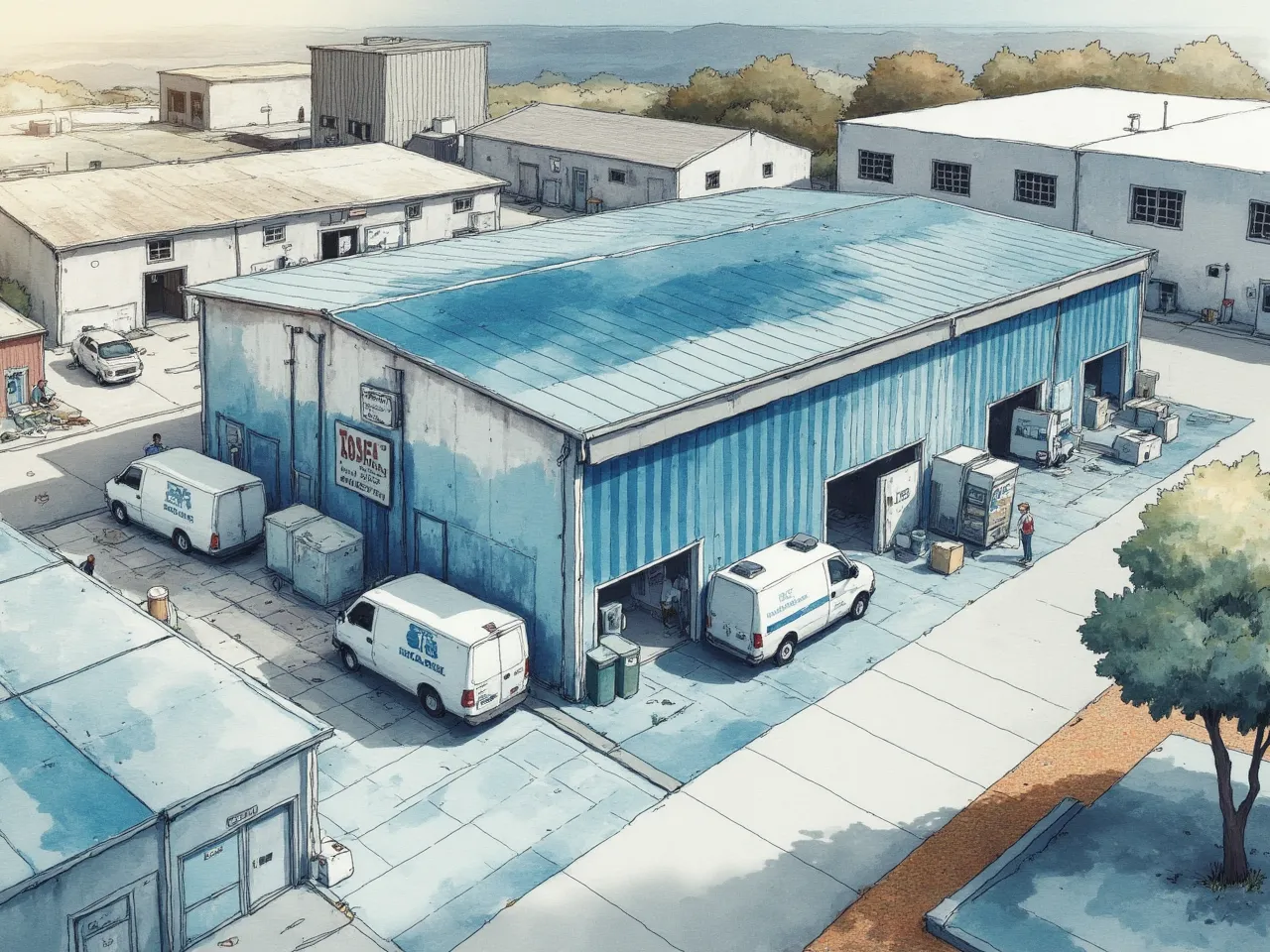
In 2025, Jacksonville’s industrial leasing market was led by small tenants, with most deals involving spaces under 10,000 square feet. According to John Cole, an Industrial Real Estate Advisor at Colliers, this trend highlights a shift in tenant demand, with locally focused service businesses becoming more active than large distribution and logistics operators.
In 2025, Jacksonville’s industrial leasing market was led by small tenants, with most deals involving spaces under 10,000 square feet. John Cole, industrial real estate advisor at Colliers, says this trend reflects a shift in tenant demand, as locally focused service businesses have become more active than large distribution and logistics operators.
Cole notes that the slowdown in large lease activity allowed smaller, service-oriented companies to dominate the market. “We had fewer large leases done. There were fewer bulk distribution tenants in the market. But the smaller, more localized service companies were still looking — they were still moving, expanding, consolidating, making decisions,” he says.
The primary drivers of this leasing activity are electricians, HVAC contractors, plumbing suppliers, pool service providers, cabinetmakers, and other businesses serving Jacksonville’s growing residential population. Unlike logistics operators, these companies expand in response to local population growth rather than global supply chain shifts or e-commerce trends.
Cole explains that service companies are less affected by economic uncertainty than larger industrial users. Factors such as tariff changes or international trade disputes have little impact on their operations. “They don’t really care what the import fees are from China. What they care about is how many people are in a five-mile radius around their location, and how quickly they can service them versus their competition,” Cole says.
South Side Leads on Service Demand
Jacksonville’s South Side submarket has been the most active area for industrial leasing, largely because it is home to service-oriented tenants. Cole attributes this to the submarket’s proximity to dense residential neighborhoods, which provide a steady customer base for businesses such as electricians, HVAC specialists, and plumbing suppliers.
For these companies, proximity to customers matters more than features like highway access, ceiling height, or loading docks. Real estate decisions are based on residential density and how efficiently businesses can reach clients, not on logistics efficiency or distribution optimization.
Service companies typically lease smaller spaces, which means their activity is often underrepresented in market reports that focus on large transactions. “Service companies typically take smaller blocks of space, so they don’t appear as pronounced on a tenant-in-the-market sheet, but that’s not to say that they aren’t looking,” Cole says. As Jacksonville’s population grows, these tenants expand to keep up with demand.
This dynamic creates a gap between market perception and actual leasing activity. Investors and analysts focused on large distribution deals may overlook steady demand from service providers, even though smaller tenants account for a significant share of transactions.
Service Companies Sustained Leasing Activity
The steady leasing activity from service companies during 2024 and 2025 stands in contrast to the pullback among larger industrial users. Logistics and distribution tenants delayed expansion decisions due to tariff uncertainty and broader economic concerns. Service companies, meanwhile, continued to lease space based on local population trends.
“They’re not as affected by the broader global issues,” Cole says. This insulation from macroeconomic volatility makes service companies a more reliable source of demand in secondary markets like Jacksonville, where population growth is steady but large-scale logistics activity is more limited.
Service companies are also less likely to delay decisions due to capital market conditions or corporate restructuring. Their growth is directly tied to the number of households in their service area, which has been increasing consistently in Jacksonville. Cole points to the city’s low cost of living and quality of life as key factors. “This is the highest quality of life and lowest cost of living in Florida. People continue to discover it every day,” he says.
Small Tenants Matter to Investors
The dominance of small-tenant leasing activity in Jacksonville challenges how investors and analysts typically evaluate the market. Standard industrial metrics such as net absorption, average lease size, and tenant industry mix are designed to capture activity from large logistics and distribution tenants. These measures are less effective at revealing steady demand from service companies, which lease smaller spaces and cluster in specific submarkets.
Cole’s observations indicate that Jacksonville’s industrial market is more diversified than headline statistics suggest. While large distribution tenants have slowed their activity, service companies have continued to expand, providing a stable demand base that supports occupancy in certain submarkets and property types.
For landlords, this means properties in service-oriented submarkets may outperform those in logistics-focused areas during periods of economic uncertainty. For investors, it signals the need to evaluate tenant mix and demand drivers in each submarket, rather than relying on market-wide averages alone.
Cole expects demand from service companies to grow as Jacksonville’s population increases. “The population is going to keep growing. As that happens, more companies will move here. We’re going to require more business services,” he says.
This incremental growth may not generate large lease transactions that dominate market headlines, but it provides a foundation of demand that supports property performance over time. For investors seeking stable, predictable cash flows in secondary markets, industrial properties serving service companies may offer a more resilient investment profile than logistics facilities that depend on global trade.
Jacksonville’s industrial market is likely to remain anchored by locally driven service demand, even as broader economic conditions fluctuate. This steady base of small tenants offers stability that helps insulate property owners and investors from volatility affecting the logistics sector.
Similar Articles
Explore similar articles from Our Team of Experts.



Perspectives, Commercial Real Estate, Property Technology, Market Analysis & Policy, Industry News, Top Articles
The explosive growth of artificial intelligence is driving data center developers to consider nuclear power as a solution to their massive energy needs, according to a leading real estate at...

Salt Lake City Office Buildings Drop From $350 to $100 Per Square Foot as Class A Space Grows Scarce
Office buildings in Salt Lake City that once sold for $350 per square foot are now trading for as little as $100 per square foot, according to Kip Paul, Vice Chairman of Investment Sales at ...

