
Anyone considering buying, selling, or investing in Fargo-Moorhead is entering a market that is moving quickly and in new directions. After a period of relative stability, the region’s com...

How St. Paul, Minnesota Is Using a Nonprofit Developer to Revive Its Struggling Downtown

Written by:
Date:
12 Mar 2026
Share via Facebook

Share via Linkedin

Share via X

Copy to clipboard

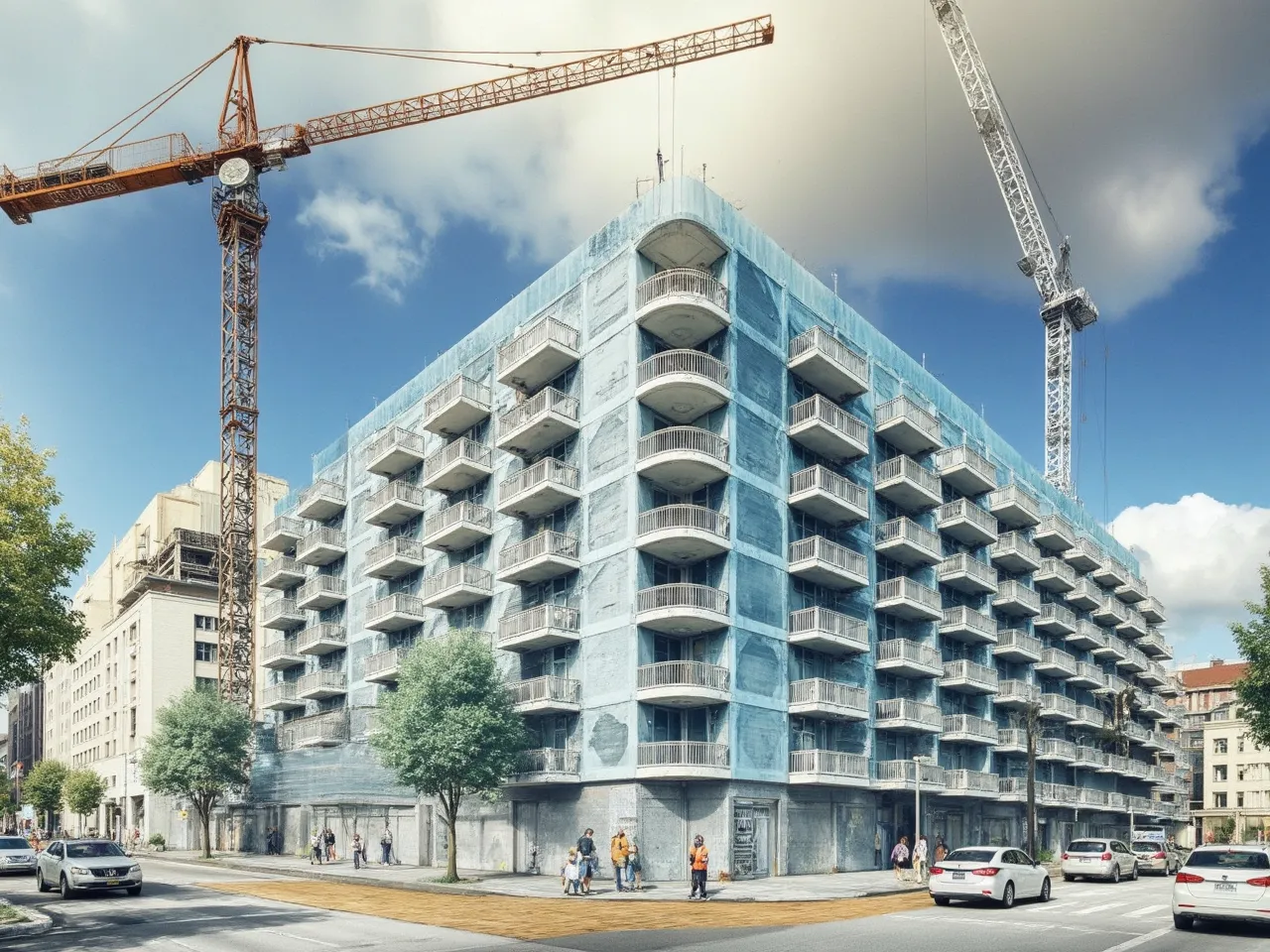
St. Paul’s effort to revive its downtown is built around a nonprofit development corporation that takes on projects private developers have deemed too risky or unprofitable. This approach, modeled after similar strategies in other cities, signals a new way for distressed urban markets to begin recovering when traditional investment stalls.
After the pandemic, the expectation in commercial real estate was that private capital would eventually return to undervalued downtown properties once prices dropped enough to make deals attractive. In practice, that rebound has not materialized in many urban cores. Dave Higgins, President of the St. Paul Downtown Development Corporation, says his organization was set up as a nonprofit specifically because for-profit developers could not justify the risk and low returns involved in restarting activity in a struggling downtown.
“In the current climate, the realization is there may need to be a loss leader or two in terms of projects downtown to really kickstart things,” Higgins says.
The organization raised $30 million in its first year and is seeking to significantly expand that pool. Its structure is modeled on Cincinnati’s 3CDC, the Cincinnati Center City Development Corporation, which raised about $50 million and has led high-profile redevelopment projects for over a decade. The decision to operate as a 501(c)(3) reflects a clear assessment: private capital alone cannot jumpstart a distressed downtown, especially when market fundamentals have deteriorated.
Why Private Capital Stayed on the Sidelines in St. Paul
St. Paul’s downtown faced a series of setbacks that private developers were unwilling or unable to tackle. In addition to pandemic-driven office vacancies, a major landowner who controlled a significant share of downtown property died in early 2024. His widow put the entire portfolio up for sale at once, flooding the market with uncertain pricing and overwhelming local investors.
By the time the St. Paul Downtown Development Corporation launched in early 2025, three prominent properties from that portfolio had been boarded up and condemned. Higgins says a combination of distressed assets, unclear valuations, and high interest rates made the risk too great for private developers to enter. “People needed to see some action at a time when the conventional for-profit, private sector community just wasn’t yet able to step in,” Higgins says.
In 2025, the organization acquired or gained control of five major properties: three office buildings, a retail building, and a standalone parking garage. Some of these assets span entire city blocks and together represent more than half a million square feet of space. This scale allows the nonprofit to carry out redevelopment at a level that can visibly change downtown.
How the Nonprofit Structure Expands Access to Capital
The decision to establish the organization as a 501(c)(3) was driven by two main goals: accessing a broader range of funding sources and accepting below-market returns on initial projects. Higgins says the nonprofit model enables the group to raise money from corporate employers, institutional stakeholders, and philanthropic donors who would not participate in a traditional for-profit development fund.
“We set it up as a nonprofit to access a broader array of capital,” Higgins says.
Unlike public development authorities, the organization is privately governed and funded, though it maintains a close partnership with the city. It does not depend on public funding at this stage. The nonprofit structure allows the group to take on projects that do not provide competitive returns in the short term but are necessary to create the conditions for private investment to resume.
Higgins describes the organization’s work as bridging a gap in the market. The nonprofit can pursue projects that private developers view as too risky or unprofitable, while still operating with the discipline and expertise of a private development firm. “We fill a void,” Higgins says. “It’s a private organization. It’s a 501(c)(3), it’s got a private board and private capital.”
What the St. Paul Model Means for Other Distressed Downtowns
The rise of nonprofit development corporations in cities such as St. Paul and Cincinnati raises questions about whether this model is a temporary solution or a lasting feature of urban redevelopment. Cincinnati’s 3CDC has operated for more than a decade, suggesting that nonprofit-driven interventions may persist even after market conditions improve.
For private developers, a well-capitalized nonprofit changes the risk calculation. When a nonprofit absorbs initial losses on projects that stabilize a market, private developers can enter later with lower risk and more conventional return targets. This dynamic can create a free-rider problem, where private capital benefits from the groundwork laid by nonprofit or philanthropic dollars without bearing the initial risk.
For cities, the nonprofit development corporation model provides a way to restart market activity without direct public subsidy or the political challenges associated with tools such as eminent domain or tax increment financing. This approach depends, however, on the willingness of corporate and institutional partners to invest significant capital, often with little expectation of short-term financial gain.
St. Paul’s experience shows that in markets where private capital has stalled, nonprofit development corporations may be the only entities capable of executing the large-scale interventions needed to shift market momentum. Whether this approach becomes a standard tool for downtown revitalization or remains limited to cities with strong institutional support will depend on how many other urban cores face similar challenges in the years ahead. As more markets confront prolonged vacancy and disinvestment, the nonprofit model may become an essential part of the urban redevelopment toolkit.
Similar Articles
Explore similar articles from Our Team of Experts.
Residential Real Estate, Real Estate Investment, Industry News, Commercial Real Estate, Market Analysis & Policy, Featured Articles
While housing affordability dominates headlines and rectangular apartment blocks multiply across urban landscapes, one development firm is charting a different course. Cedar Street Partners ...