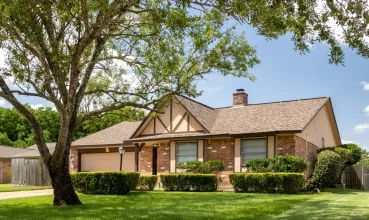

The Tampa Bay real estate market is undergoing significant changes as the region adapts to the aftermath of the 2024 hurricane season. The landscape now reflects two distinct markets: one gr...

Limited Supply Drives Shift in Northern New Jersey Housing Market

Written by:
Date:
20 Mar 2026
Share via Facebook

Share via Linkedin

Share via X

Copy to clipboard


The northern New Jersey real estate market is undergoing a dramatic change as a severe inventory shortage forces both buyers and sellers to adjust expectations and strategies. In Bergen and Rockland counties, homes for sale are at their lowest levels in decades, upending long-standing patterns and making it more difficult for first-time buyers to enter the market.
Robert Abbott, President and Broker of Record at Berkshire Hathaway HomeServices Abbott Realtors, has spent over 40 years in the region’s real estate industry. He describes the current shortage as the most extreme he has seen. “The biggest challenge today is inventory – lack of inventory,” Abbott says.
A Sharp Drop in Listings
In towns like Ramsey and Wyckoff, which would normally have around 80 homes for sale each, there are now just two active listings per town. This drastic reduction means that first-time buyers in Bergen County are now facing entry points close to $1 million, a level once reserved for higher-end properties.
Above $1.5 million, inventory loosens slightly, but below that threshold, the shortage is severe. The squeeze has made it harder for younger and less affluent buyers to secure a foothold, raising concerns about long-term affordability and market accessibility.
Why Inventory Has Collapsed
This shortage traces back to the Federal Reserve’s emergency rate cuts during the pandemic. When mortgage rates fell below 3%, many homeowners either bought or refinanced, locking in historically low interest rates. Now, with mortgage rates around 6%, homeowners are reluctant to give up those favorable terms. As a result, they are staying put and choosing to renovate rather than move.
Abbott explains that homeowners are investing in additions, new kitchens, and bathrooms instead of selling, leading to a sharp reduction in the number of homes available for sale. This has created a ripple effect: move-up buyers who would typically free up entry-level homes are instead improving their current properties, leaving fewer options for those trying to enter the market.
Market Still Shows Strength
Despite these constraints, the Bergen and Rockland county markets remain strong. Abbott projects home values will appreciate between 7% and 11% in 2026, outpacing areas like Florida, Texas, and California, where prices have softened or declined. He attributes this resilience to the region’s continued desirability and economic stability.
The competition for homes under $1.5 million is intense. Multiple offers are common, with buyers often waiving inspection and mortgage contingencies to stand out. Some listings draw up to 25 offers, making it especially challenging for first-time buyers and those without strong financial backing.
“The market here is not tanking,” Abbott says. “We’re seeing high appreciation every year.”
Rental Market Tightens
At the same time, Bergen County’s rental market is unusually tight, with vacancy rates falling to just 1–2%. This is a departure from the typical pattern, where strong home sales would be matched by weaker rental demand. Instead, both markets are strong, reflecting the broader housing shortage.
Potential buyers priced out of the sales market are turning to rentals, increasing demand for apartments and single-family homes. Meanwhile, homeowners with low-rate mortgages are opting to renovate rather than move, further limiting the supply of both homes for sale and for rent.
Investment Prospects
For investors, Abbott sees the best opportunities in multifamily properties, particularly three- and four-unit buildings that can be financed with conforming loans rather than more restrictive commercial loans. The extra units help cover maintenance costs and benefit from the tight rental market.
“I like three-family or four-family properties because they’re easier to finance, and that extra unit helps with expenses,” Abbott says.
Smaller retail spaces, especially those around 1,500 square feet, are also performing well, while larger office spaces remain the least attractive segment, consistent with national commercial real estate trends.
Development and Financing Shifts
Development activity is still strong in both Bergen and Rockland counties, but financing conditions have shifted. Banks are now more conservative about lending on speculative single-family home construction. Instead, they prefer mixed-use projects with rental apartments above retail, as these provide a steady income stream and are seen as less risky.
“Banks want to see rental income before they’ll lend,” Abbott explains. “It’s safer than funding a $3 million home that may not sell quickly.”
This shift in lending standards has encouraged developers to focus on apartment complexes and mixed-use projects. At the same time, speculative single-family construction has slowed, further limiting the supply of homes for sale.
Local Market Differences
Bergen County alone contains more than 50 separate municipalities, each with its own tax rates, school systems, utility providers, and municipal services. This creates significant price variations even between neighboring towns. Abbott notes that moving just one block can mean a 25% difference in home prices due to these hyperlocal factors.
Such fragmentation makes deep local knowledge critical for buyers, sellers, and investors. Understanding the differences between towns and even neighborhoods is essential for accurate pricing and successful transactions. Abbott argues that this complexity favors experienced local professionals over automated, technology-driven solutions.
Changes in Professional Practices
Recent regulatory changes regarding buyer representation have formalized practices that Abbott’s firm has used for years. Agents are now required to use explicit buyer brokerage agreements and to discuss compensation and fiduciary duties with clients clearly.
“We’ve always used buyer brokerage agreements and made sure buyers understood our obligations to them,” Abbott says.
The new rules also address a common misconception: some buyers believe working directly with the listing agent gives them an edge, but dual agency can lead to conflicts of interest and weaker representation.
Technology’s Role and Limitations
While artificial intelligence and automated tools are gaining popularity in real estate, Abbott remains cautious. He says his team prefers to use direct data sources, such as MLS systems and municipal records, to ensure accuracy. AI-generated summaries, he notes, can contain errors and should not replace thorough research.
“Some agents use AI for quick information, but we still need to verify everything with primary sources,” Abbott says.
What’s Next for the Market
Looking ahead to 2026, much depends on where interest rates settle. Abbott believes that rates would need to fall below 5% to prompt a significant increase in inventory. Only then, he says, will more homeowners consider selling and moving, loosening the current gridlock.
“Once rates drop below five, you’ll see people retiring, moving, and buying up – and more homes will come on the market,” Abbott predicts.
Until then, buyers will face stiff competition, limited choices, and the need for aggressive offers. Sellers, on the other hand, are in a strong position to capitalize on high demand and rising prices.
Why Local Expertise Matters Now
Northern New Jersey’s real estate market highlights how local factors can diverge sharply from national headlines. While much of the country is seeing softer prices or even declines, Bergen and Rockland counties remain highly competitive, with persistent shortages and strong appreciation. This environment puts a premium on regional expertise and deep market knowledge.
For buyers, navigating this market requires preparation, realistic expectations, and experienced guidance. For sellers, it is an opportunity to achieve strong results – but still requires careful pricing and awareness of hyperlocal trends. As the market continues to evolve, those who understand the unique dynamics of northern New Jersey will be best positioned to succeed.
Similar Articles
Explore similar articles from Our Team of Experts.