The European hotel investment market staged a strong comeback in 2025, with transaction volumes reaching €23.6 billion, according to data from Savills. This marks a rebound from subdued ac...

Building Trust Through Technology and Community Engagement in Florida’s Changing Market

Written by:
Date:
12 Mar 2026
Share via Facebook

Share via Linkedin

Share via X

Copy to clipboard

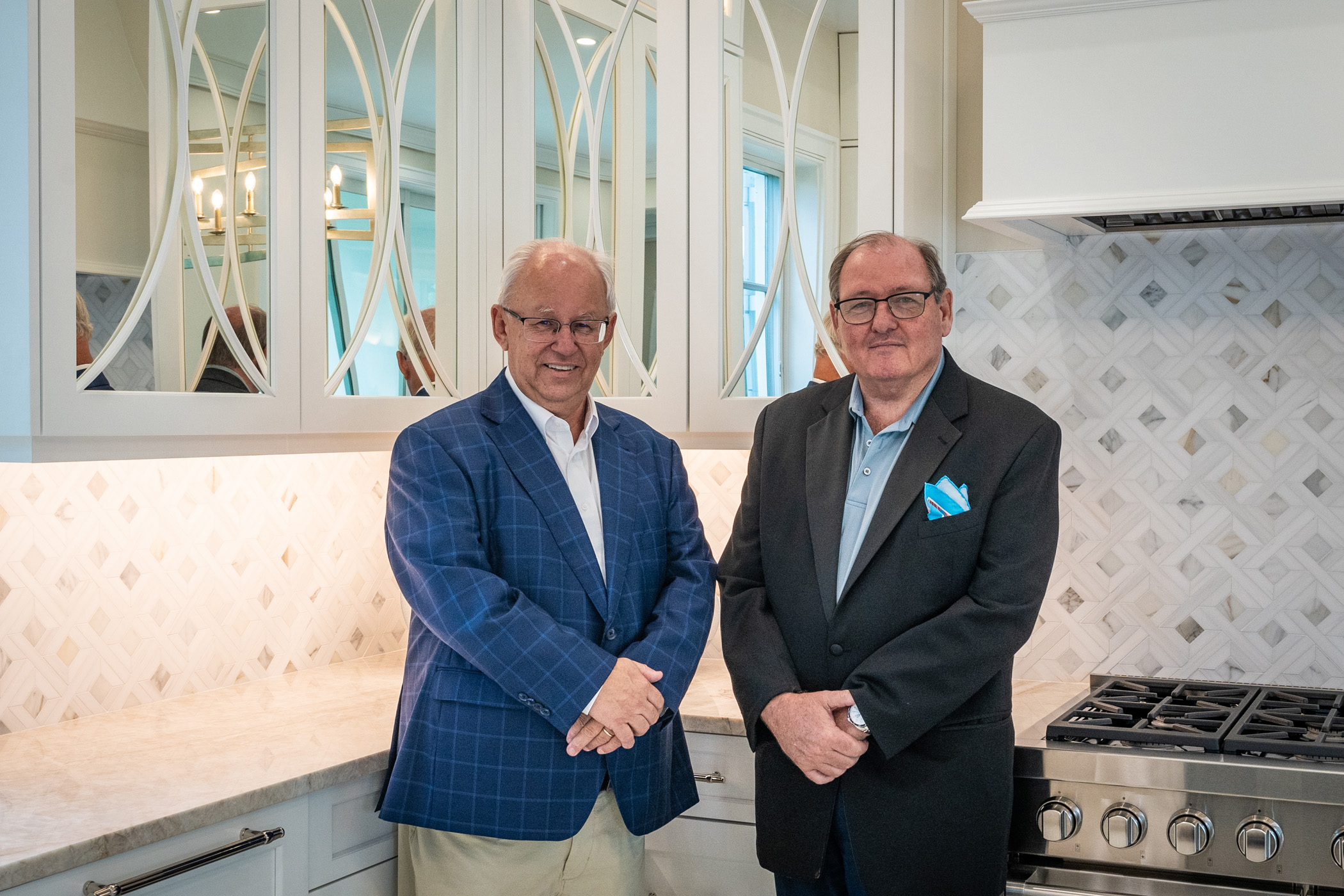
Florida’s real estate market is recalibrating after the pandemic boom, but agents who blend technology with deep local ties are finding new ways to grow. In Vero Beach, the partnership of Ben Bryk and J. Vance Brinkerhoff shows how mixing traditional relationship-building with advanced marketing tools can drive results, even as conditions become more challenging.
From Radio Waves to Real Estate
Ben Bryk entered real estate after watching technology reshape his former field. Working in advertising and radio in Connecticut, he saw firsthand how digital media squeezed traditional broadcasters. “I was in advertising, and the internet and technology made it tough for radio to compete,” Bryk says.
A financial advisor suggested he shadow J. Vance Brinkerhoff, a top-producing agent with Coldwell Banker Paradise, along 50 miles of Florida’s coastline. After a day with Brinkerhoff in 2014, Bryk decided to make the switch.
Brinkerhoff’s own path to real estate began in a different industry. With degrees in economics and business management, he began his career as a landman for Phillips Petroleum, negotiating oil and gas mineral leases with property owners. Those negotiation skills, he says, translate directly to residential real estate.
Market Correction
Vero Beach is now working through what Bryk and Brinkerhoffcall a “COVID hangover” — a period of price adjustment following the pandemic’s dramatic run-up. “We had the COVID bubble in Florida, and prices went up 50 or 60%,” Bryk explains. “Now we’re seeing a realignment, with prices dropping 20 to 30%. But over five years, they’re still up about 25%.”
This correction has split the market. The lower end faces affordability problems as higher interest rates cut into buying power, while the luxury segment remains active. “The traditional market is struggling with affordability,” Bryk says. “But luxury activity has been strong, especially in recent months.”
Vero Beach stands out for its high share of cash buyers. “We have the strongest cash market in America, 62.7% of our transactions are cash,” Bryk notes, pointing to the area’s appeal for affluent buyers who are less affected by loan rates.
Pricing Tactics for Sellers
Navigating the new pricing environment requires careful strategy, especially for sellers anchored to last year’s highs. Brinkerhoff uses a “scheduled price reduction” approach to test buyer interest while managing expectations.
His method involves launching a property at a competitive price and then planning a series of reductions if needed to spark interest. “We get it out there, then use a tiered test to find the point where buyers start to see value,” Brinkerhoff explains. This approach leverages buyer psychology, creating urgency as prices approach a more attractive level.
Leveraging AI and Digital Tools
Bryk and Brinkerhoff have made artificial intelligence central to their marketing. “I don’t send an email or write a listing description without using AI,” Bryk says. Every social media post and listing is run through AI, but the process is interactive. “We ask AI for help, review what it gives us, edit it, and go back and forth until it fits what we want,” Brinkerhoff explains.
They use AI for more than just content. When mortgage rates dipped below 6%, Bryk fed a national news story into AI and asked it to translate the impact for Vero Beach buyers and sellers, tailoring the message to local conditions.
The team is also an early adopter of a new CRM from Luxury Presence that uses AI to identify potential sellers and market shifts by tracking life events and neighborhood trends. “If there’s a divorce or a death in the family, or if people in a neighborhood typically sell after four years, the system notifies us to reach out,” Bryk says.
Comprehensive Marketing Beyond the MLS
Their marketing goes far beyond standard listings. Every property gets cinematic video, drone footage, and professional photography. As Zillow Showcase Realtors, their listings appear with enhanced visibility — a distinction held by only 5% of agents and resulting in “80% more views, 75% more shares, and 75% more saves,” Bryk notes.
They have also developed a proprietary mobile app, Vero Premier Properties, currently on the Apple App Store, with Android coming soon. Video is a key pillar: “Anytime you have a video, it gets seen 430 times more than a single photo,” Bryk says. Their YouTube channel has grown to 585 videos and 4,200 subscribers, mostly from the Northeast and South Florida.
Infrastructure Upgrades Fuel Demand
Recent transportation upgrades have boosted Vero Beach’s appeal. After three decades without commercial flights, the local airport now serves three carriers. “Breeze Airways flies to nine Northeastern cities, and JetBlue added daily service to New York and Boston,” Bryk says. American Airlines recently launched service to Charlotte, with Durham on the way. “We were a hidden gem, but now the word’s out,” Bryk observes.
Smart Growth and Careful Planning
Unlike Florida cities that saw unchecked sprawl, Vero Beach has enforced “concurrency” — a policy requiring infrastructure to keep pace with development. “You can’t just build a 500-lot subdivision without water, sewer, roads, schools, and a hospital in place,” Brinkerhoff says.
Strict height limits also preserve the area’s character. Only two beachside high-rises, built before current rules, rise above four stories. This keeps density manageable and allows ocean breezes to reach inland neighborhoods.
Community Involvement
Bryk and Brinkerhoff maintain deep roots in the community. They sponsor the Vero Beach International Tennis Open, which draws 100 players from 37 countries, and support local charities, cancer research, and scholarship funds.
The region’s philanthropic culture supports vibrant arts and culture. The Vero Beach Museum of Art is undergoing a $126 million expansion, with $100 million raised locally. Riverside Theatre produces six Broadway shows annually, with major donors helping keep ticket prices affordable.
Looking Ahead
The team expects Vero Beach to benefit from continued migration out of South Florida’s most expensive markets. “Prices in Miami, Palm Beach, and Naples have jumped so much,” Bryk says, citing a $42 million sale near Mar-a-Lago after an $18 million renovation.
Their digital efforts are paying off. Website traffic leapt from 8,000 in August to 67,000 in January, with February expected to top 80,000. “That didn’t happen overnight — it took months of consistent effort,” Bryk says.
Nationally, the National Association of Realtors predicts 14% growth in transactions and 4% appreciation. Bryk expects Vero Beach to outperform: “If the national forecast is 14%, I think we’ll be up 20% locally.”
Similar Articles
Explore similar articles from Our Team of Experts.
From Dyslexia to Real Estate Success: How Norman Bobrow Built a 45-Year Tenant-Only Brokerage Empire
New York City’s commercial real estate market processes about 50 million square feet of lease transactions each year, a scale unmatched in other U.S. cities. Norman Bobrow, founder of ...