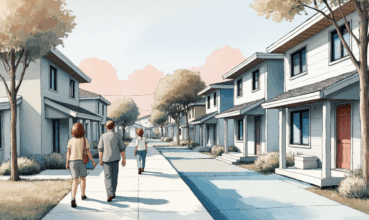

Selling a home in a market flooded with new construction is hard enough. Selling one when the builders down the street are offering sub-5% interest rates and covering closing costs is harder...

Austin Real Estate Market Shows Buyer Fatigue After Prolonged Slowdown

Written by:
Date:
27 Feb 2026
Share via Facebook

Share via Linkedin

Share via X

Copy to clipboard


Austin’s real estate market is showing signs of what local agent Soomin Kim calls “buyer patience fatigue.” After two years of uncertainty, some renters who can afford to buy are reaching their limit and purchasing homes out of frustration rather than optimism. Kim, team leader at Soomin Kim Group (eXp Realty),says recent buyer activity reflects impatience rather than stronger market fundamentals.
Kim, who has sold over $250 million in Austin real estate since 2020, sees a clear pattern. At the start of the year, she noticed a brief spike in buyer activity, which she attributes to fatigue rather than changing economic conditions. “You saw a blip of an increase in buyers in the market,” Kim says. “That’s because they’re tired. They don’t want to keep waiting another year. I don’t care what the news says. I’m gonna buy a home.”
This trend highlights how buyer psychology is now driving decisions more than interest rates or home prices. Many renters who have monitored listings for months or years say they are reaching a personal breaking point.The emotional cost of continuing to rent now outweighs concerns about timing or affordability.
Financially Qualified Renters Are Choosing to Wait
The core issue is that a large share of Austin’s renters could qualify for a mortgage but are choosing not to buy. Kim says this isn’t about financial barriers. Instead, many renters are holding back because of uncertainty, negative headlines, and a lack of confidence in the market.
“There are more people who can afford a home that are renting right now,” Kim explains. “They can qualify to purchase, but they’re renting. Why? Because the news told them rates are high, and they think if others aren’t buying, they shouldn’t either.”
This has created a backlog of potential buyers who are financially ready but psychologically hesitant. They watch the market closely, receive daily Zillow alerts, research homes within their budget, and wait for external validation before making a move. As a result, demand lies below the surface, emerging only when renters become too frustrated with the status quo.
Kim describes this pattern as “buyer patience fatigue.” Renters grow tired of paying high rents and seeing homes they want pass by. Eventually, the emotional toll overrides their hesitation, and they decide to buy, often abruptly. “They’re sick of paying rent. They’ve been looking at beautiful homes. They’re on Zillow every morning,” Kim says. “There’s essentially a buyer patience fatigue happening.”
These purchases are often emotionally driven, not triggered by rate drops or increased inventory. Buyers are responding to their own fatigue, not to improved market conditions.
Brief and Unpredictable Buyer Activity
For sellers and agents, this fatigue-driven activity is difficult to predict or capitalize on. Kim notes that the early 2026 uptick in buyer activity quickly faded, and the market has since returned to stagnation. “That’s kind of waning off now, and we’re seeing a little bit of a stagnation once again,” she says.
The pattern creates periods of brief activity followed by slower stretches. Sellers who list during a surge may find buyers quickly, while those who list during quieter periods face longer times on the market and weaker negotiating positions. The lack of predictability makes it challenging to time listings or forecast demand.
Looking ahead, Kim expects 2026 to mirror 2025, with slightly more activity as buyer fatigue continues to accumulate and interest rates show modest improvement. “This year will be a little bit like last year, but with a little bit more activity, emotional activity, of people just tired,” she says.
Austin’s housing market may remain in a stop-and-start pattern until a larger group of hesitant buyers decide to act at once or external factors, such as government incentives or major rate cuts, shift conditions. For now, the next surge in activity is likely to come not from improved market conditions, but from individual buyers reaching their personal limit.
Implications for the Austin Housing Market
Austin’s market is now shaped less by economic fundamentals and more by the emotional state of renters who have delayed buying for years. Sellers and agents must recognize that demand is present but remains unpredictable. Instead of waiting for traditional signals like rate drops or inventory shifts, the next wave of buyers will emerge when enough renters decide they can’t wait any longer.
Until then, Austin’s real estate market will likely continue in fits and starts, with activity dictated by buyer fatigue rather than confidence or enthusiasm. For buyers, the takeaway is straightforward. If you are financially ready and tired of waiting, the decision to purchase may depend more on your personal timeline than on broader market conditions.
Similar Articles
Explore similar articles from Our Team of Experts.