
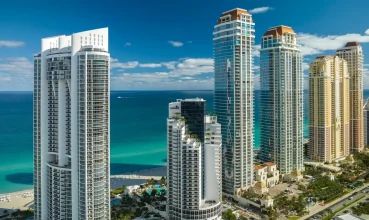
The pitch sounds compelling: buy a condo near the ocean in South Florida, rent it out, and let tenants cover your costs while the property appreciates. But the math on South Florida condos a...

Why the Luxury Segment in Downtown Jersey City Plays by Its Own Rules

Written by:
Date:
16 Feb 2026
Share via Facebook

Share via Linkedin

Share via X

Copy to clipboard


Foreign cash buyers and Manhattan relocators are driving robust price growth in downtown Jersey City’s luxury condo market, setting it apart from the broader region, according to Sandy Cuevas, a realtor with Weichert Realtors who works across multiple Jersey City neighborhoods. While much of the local market is slowing and inventory is building, downtown’s $900,000–$1 million condo segment continues to see strong demand and rising prices.
A Separate Market for Luxury Condos
Cuevas describes downtown Jersey City as operating in a distinctly different environment than the rest of the city. The area’s proximity to Manhattan and its appeal to international and high-net-worth buyers have created a market dynamic largely insulated from the affordability challenges and longer selling times seen elsewhere.
“Downtown Jersey City is one of the closest locations to Manhattan,” Cuevas says. “The buyers there are very different – you have a lot of foreign cash buyers and investors coming from overseas.” These buyers, she explains, are generally seeking modern, Manhattan-style condos but at a relative discount to New York City prices. For many, downtown Jersey City offers the urban lifestyle and amenities of Manhattan without the same level of competition or cost.
This demand has translated into real numbers. While Jersey City overall has seen prices rise about 2% over the past year, downtown’s luxury condo segment has grown by 11%. Properties in Jersey City Heights and single-family homes in other neighborhoods are sitting on the market longer, but downtown condos continue to move quickly and command premium prices.
Who’s Buying
The typical downtown buyer, according to Cuevas, is not a first-time homeowner sensitive to mortgage rates or employment fluctuations. Instead, these are buyers with international portfolios, often deploying cash and prioritizing asset preservation and proximity to financial centers. Many are relocating from New York’s wealthiest neighborhoods, while others are investors seeking stable returns in a market tied closely to Manhattan’s fortunes.
Cuevas points out that the average condo in downtown now sells for between $900,000 and $1 million – a price point that puts these homes out of reach for most local buyers. “It’s a different market, and your average homeowner trying to get into the first-time home buyer is not the same buyer,” she says.
This buyer base is less affected by rising interest rates, inflation, or local economic slowdowns. “They’re making decisions based on asset preservation and diversification, not on mortgage payments,” Cuevas explains. As a result, the luxury segment has remained resilient even as other parts of Jersey City contend with slower sales and more cautious buyers.
Downtown’s Market Immunity
While much of Jersey City is seeing homes linger on the market and sellers forced to lower expectations, downtown’s luxury condo market operates in what Cuevas calls a “completely different ecosystem.” Inventory remains tight, and buyers are less likely to negotiate aggressively or wait for further price reductions. The decision-making timeline is also faster, with cash buyers able to close quickly and compete for desirable units.
This divergence means that downtown cannot be used as a bellwether for the broader Jersey City market. “You have to understand the locations in Jersey City. There are some really hot areas and some not so hot areas,” Cuevas says. Even within downtown, she warns that market conditions can vary block by block, and what holds for luxury condos may not apply just a few streets away.
Future Implications
Cuevas’s insights point to a long-term split in Jersey City’s housing market. As affordability pressures persist elsewhere, downtown is likely to remain a haven for international capital and wealthy relocators, with continued price growth and strong demand. Other neighborhoods, by contrast, will increasingly compete for buyers who are sensitive to interest rates, carrying costs, and financing challenges.
Whether this divide grows or narrows will depend on how quickly the broader market adjusts to new realities in affordability and buyer expectations. For now, downtown Jersey City stands apart – driven by a global buyer profile and a set of market dynamics that most local buyers and investors watch from the sidelines. As Cuevas puts it, “Downtown is playing a different game with different players and different rules.”
Similar Articles
Explore similar articles from Our Team of Experts.