
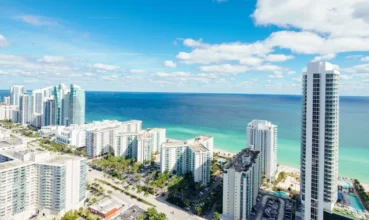
If you are shopping for a condo in South Florida and wondering why so many units seem to linger on the market, the price tag is not the whole story. Agents working the Miami corridor are see...

New York Tax Policy Is Driving High Net Worth Buyers to New Jersey and Beyond

Written by:
Date:
09 Feb 2026
Share via Facebook

Share via Linkedin

Share via X

Copy to clipboard


Recent changes in Manhattan’s political and tax environment are fueling a visible exodus of wealthy individuals from New York City, with many relocating to northern New Jersey and other lower-tax states. According to Christian Di Stasio at Christian Di Stasio Group, a broker associate specializing in luxury transactions up to $15 million, this migration is not about lifestyle preferences or market cycles. Instead, it is a direct response to tax policy and the need to protect accumulated wealth amid growing political uncertainty.
“Within just the last few hours, the political shift in Manhattan has high net worth buyers deeply concerned,” Di Stasio says. “They’re leaving New York City for New Jersey, for Connecticut, or even for other regions entirely.”
Di Stasio cites specific tax proposals targeting affluent residents as the primary motivator. “When you look at the current mayor’s plans for high net worth individuals, it’s clear the intent is to tax them simply because they’re wealthy,” he explains. “There’s no compelling reason for them to remain just to pay extra fees for their success.”
Why Tax Policy Drives Wealthy Buyers
For high-net-worth individuals, real estate is more than just a place to live. Di Stasio emphasizes that these buyers use property as a vehicle for wealth preservation. “High net worth real estate isn’t just a home – it’s foundational wealth,” he says. “People are parking assets in real estate, treating it as a secure store of value rather than just shelter.”
This approach helps explain why even proposed tax policy changes can prompt immediate action among the wealthy. If a jurisdiction begins targeting wealth with new taxes, the logical response for those who use real estate to preserve capital is to move those assets elsewhere. Property location is a critical part of the overall investment strategy, and when the local tax environment becomes less favorable, buyers look for alternatives.
Di Stasio notes that this trend accelerated around 2023, when market volatility led clients to shift from stocks to real estate. “In the last few years, I’ve had clients tell me they’re liquidating part of their portfolio and putting it into real estate,” he says. This represents both a move toward hard assets in uncertain times and a deliberate strategy to shield wealth from market swings and unfavorable policies.
New Jersey: A Temporary Solution
Ironically, Di Stasio points out, New Jersey is not immune to the same problems pushing people out of New York. “One of the biggest reasons people are leaving is high taxation. New Jersey has the same issue,” he says. “We’re losing high net worth individuals for the same reasons.”
But the migration is broader than just the ultra-wealthy. Di Stasio notes that middle-class residents are also leaving, citing unaffordable housing, steep property taxes, and rising energy costs. “We’re losing quality blue and white collar people – ordinary residents – because costs keep climbing, and there’s no real solution in place,” he says. “The only government response seems to be more taxes and increased reliance on expensive energy sources, which only drives costs higher.”
As a result, New Jersey often serves as a temporary stop for wealthy New Yorkers seeking relief. However, the state’s tax structure and cost of living prompt many to leave the region over time. “Some high net worth buyers are downsizing to townhouses or renting luxury properties so they can remain flexible,” Di Stasio says. “Many are just waiting until retirement before leaving the region altogether.”
Decisions and Consequences
Di Stasio frames his analysis in economic, not political, terms. “This isn’t about which party is in office – it’s about the reality on the ground,” he says. Policy decisions in both New York and New Jersey have led to higher costs for residents. He cites New Jersey’s move to close in-state energy production, forcing the state to buy more expensive energy from elsewhere. Additionally, new taxes are regularly added, including surcharges on utility bills for programs such as electric-vehicle rebates, some of which are set to take effect in February.
“They shut down our energy production and outsource it to other states, which raises costs,” Di Stasio explains. “And the new taxes keep coming, often hidden in utility bills.” The cumulative effect is a steady increase in the total cost of living, especially for those with significant assets.
For wealthy individuals, these rising expenses create a clear financial incentive to relocate. Di Stasio emphasizes that these moves are not about avoiding civic duty or disliking the region. “They’re leaving because the total cost of maintaining wealth here – property taxes, income taxes, energy, and other state-level expenses – is simply too high compared to alternatives,” he says. Other states offer significantly better value for those seeking to preserve capital.
Impact on the Real Estate Market and Local Economies
The ongoing migration of high-net-worth individuals has consequences that go beyond individual property transactions. When these residents leave, they take with them not just their tax payments but also their spending, business investments, and philanthropic participation. The loss is structural, not just fiscal, and it affects everything from retail sales to charitable giving to business startups.
In the real estate sector, the trend can make property values appear stable or even strong due to low inventory, but the underlying cause is a shrinking population. Sellers with urgent reasons to move can still secure premium prices and then exit the state. This can mask deeper demographic and economic challenges, creating the appearance of a healthy market even as the region’s wealth base erodes.
How the Industry Is Responding
Di Stasio’s business has adapted to these shifts by helping clients navigate tax and migration issues. His firm works not only in New Jersey residential and commercial real estate, but also offers international investment options, including syndication in high-tourism areas of Italy. This allows clients to diversify holdings and seek more advantageous tax environments outside the Northeast.
Whether other brokerages follow suit by expanding into tax-favored markets or policymakers take steps to retain high-net-worth residents will shape the long-term direction of real estate in both New York and New Jersey. For now, the pattern is clear: tax policy changes are driving the region’s wealthiest individuals to seek better opportunities elsewhere, and the effects are rippling through the broader economy.
Looking Ahead
The current migration is not a short-term trend but a reflection of deeper economic calculations. As long as tax burdens and living costs in the Northeast outpace those in competing states, high-net-worth buyers will continue to move their capital and lives to jurisdictions that offer a stronger value proposition. This shift has the potential to reshape real estate patterns, local economies, and community composition across the region for years to come.
Similar Articles
Explore similar articles from Our Team of Experts.