
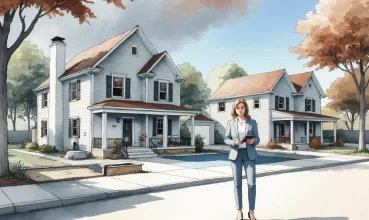
Bergen County, New Jersey, stands apart from other suburban markets, maintaining strong home prices despite broader affordability pressures. The key factor is its unmatched proximity to Manh...

Why Home Condition Has Become the Real Deal-Breaker in Bergen County's Hot Market

Written by:
Date:
01 Feb 2026
Share via Facebook

Share via Linkedin

Share via X

Copy to clipboard

In Bergen County’s current real estate market, where homes routinely sell above asking price and inventory remains tight, the biggest obstacle to closing deals is not price but property condition. Paula Clark, a 30-year industry veteran and team leader of The Paula Clark Group, reports that inspection contingencies have become the primary source of negotiation—and the most common reason for failed transactions—even when buyers make aggressive offers.
Clark points to a clear pattern: “A lot of people that don’t maintain their homes really well, they might have roof issues, furnace issues, air conditioning issues, they might have radon. We do see radon here, but that can be remediated, different water intrusions, grading of the properties,” she says. These problems, she explains, are the leading causes of buyers requesting credits or walking away from deals.
The Inspection Paradox
Despite homes selling for six to fifteen percent above asking price, many deals fall apart during the inspection phase. This disconnect shows that buyers’ willingness to compete on price does not extend to accepting deferred maintenance or hidden problems. According to Clark, the inspection process is where initial excitement meets practical reality. Buyers who fought to win a bidding war often reconsider when faced with the costs of bringing a home to actual move-in condition.
“If the house is a move-in condition home, it is selling quickly,” Clark says. In today’s market, condition now outweighs list price as the primary driver of how fast a home sells.
What Kills the Deal
Clark sees the same inspection issues repeatedly derailing transactions: roof damage, aging or faulty HVAC systems, radon, water intrusion, and grading problems. These are not minor cosmetic flaws; they represent significant expenses and potential risks for buyers. The prevalence of these issues reflects a buyer pool that is thorough in its due diligence and unwilling to absorb significant repair costs after closing, even in a competitive environment.
Some problems, like radon, offer a more straightforward path to resolution. “We do see radon here, but that can be remediated,” Clark notes, indicating that buyers may negotiate or accept issues that have straightforward, affordable solutions. In contrast, more complex or costly repairs—such as structural water intrusion or roof replacement—are likely to end a deal.
Sophisticated Buyers, Calculated Decisions
Clark describes today’s buyers as “sophisticated,” focused on the total cost of ownership rather than just the purchase price. Even as competition drives up offers, buyers remain cautious about taking on homes with significant deferred maintenance. Many are unwilling to pay a premium for a property that will require additional investment immediately after closing.
The Investor Opportunity and Its Limits
For investors and flippers, Clark’s experience highlights a potential opportunity. Properties that fail inspections due to remediable issues may be available at a discount, and once repaired, these homes can command premium prices from buyers who want move-in-ready condition. “Investors are buying something, fixing it up, and then renting them out,” Clark says. However, she cautions that genuine bargains are rare because demand keeps even distressed property prices high. “There are very few deals to be had because the market numbers are so high,” she explains. The economics only work “if the price is right,” meaning that even investors must be selective.
How Inspection Standards Are Changing the Market
Clark’s observations suggest that the inspection phase has shifted from a procedural step to the primary determinant of whether deals close. In a market where location and demand are relatively fixed, condition is now the variable that separates homes that sell from those that linger or fall out of contract.
The increased scrutiny during inspections is also extending transaction timelines. “Days on market might be a little bit longer because of inspections, but pretty much, we are pretty low on days on market. Maybe it’s increased by 10 to 20 days,” Clark notes. This additional time is not due to a lack of interest, but rather to buyers and agents working through the inspection and negotiation process.
A Proactive Approach to Condition
To address these challenges, Clark’s nine-member team—including a Director of Operations and a transaction coordinator—has created systems to manage inspections and remediation negotiations. This operational infrastructure is now essential for closing deals in an environment where inspections can derail even the most competitive offers.
Looking Ahead: Condition Over Price
As Bergen County’s market continues to favor sellers on price but gives buyers leverage during inspections, properties that are truly move-in ready are commanding even higher premiums. Clark’s experience suggests that sellers who invest in pre-listing inspections and address significant issues before going to market may see faster sales and fewer failed deals. The industry’s growing recognition that condition, not just price, is the key competitive factor may soon lead to new standards for preparing homes for sale, and could reshape the definition of value in a high-demand market.
Similar Articles
Explore similar articles from Our Team of Experts.