
Albuquerque’s real estate market has fractured into two distinct realities. In some neighborhoods, homes in desirable school districts attract multiple offers and sell well above asking pr...

New Construction Pricing Creates Impossible Competition for Resale Homes

Written by:
Date:
30 Jan 2026
Share via Facebook

Share via Linkedin

Share via X

Copy to clipboard

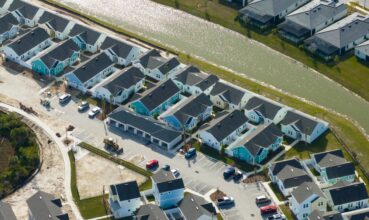
A significant pricing war is taking shape in Florida real estate markets, as builders use deep discounts and below-market mortgage rates to move inventory. This strategy, according to veteran realtor Bob Ruiz of Ruiz Group SRQ at William Raveis Real Estate, has created a market where homeowners who bought in the past two years cannot compete, either on price or on financing terms.
Ruiz says builders are now selling new homes identical to those built two years ago at prices up to 15% lower than buyers paid in 2022. “The builders are building the same house from two years ago, and they’re selling them for as much as 15% less than they sold them for two years ago,” he says. This aggressive discounting is pushing down overall market prices, making it nearly impossible for recent buyers to resell without taking a loss.
But the price cuts are only part of the challenge. Builders are also offering subsidized mortgage rates far below current market rates, giving new buyers a significant cost advantage.
The Financing Advantage
Builders are not just lowering prices—they are also making monthly payments much more affordable by offering mortgage rates as low as 4.75%. Ruiz explains that this financing incentive creates a significant cost gap for buyers choosing between new construction and resale homes, even when the properties are otherwise identical.
In one example, Ruiz describes a client who bought a home for $800,000 two years ago at a 6% interest rate. Today, the same model from the builder sells for $700,000 with a 4.75% mortgage. A buyer choosing the resale option would pay $100,000 more and face a higher interest rate, resulting in about $730 more in interest per month, or nearly $9,000 more per year on a $700,000 loan. This price and financing gap leaves resale homes at a clear disadvantage.
The Strategic Inventory Shift
Builders are also changing how they manage inventory, further intensifying competition. Rather than flooding the market with unsold homes, they are limiting the number of speculative (spec) homes under construction. “They’re building fewer spec homes than they would have built in the last few years. Now they’re building fewer spec homes and only building when people order the home,” Ruiz says.
Previously, a development might have 10 spec homes available at any time; now, builders keep only 2 or 3. This approach allows builders to focus their discounts and financing on a smaller pool of available houses, making those deals even more attractive to buyers. At the same time, it reduces the builders’ financial risk by minimizing unsold inventory.
However, this strategy does not ease the pressure on resale sellers. If anything, the limited supply of new homes with attractive financing concentrates demand, making it harder for owners of existing homes to attract buyers unless they are willing to cut prices steeply.
The Transaction Cost Barrier
Florida’s transaction costs add another layer of difficulty for resale sellers. Ruiz notes that sellers pay approximately 7% in combined county taxes and real estate commissions when selling a home.
For those who bought in 2022 or 2023, this means they must see significant appreciation to avoid a loss. But with builders undercutting their prices by 15% and offering better financing, most recent buyers are facing the prospect of selling at a loss—or being unable to sell at all without bringing cash to the closing table.
The Lock-In Effect
These dynamics are creating what Ruiz calls a voluntary lock-in for many homeowners. Those who bought during the pandemic housing boom and secured a mortgage at 3% to 3.5% are now reluctant to sell, as moving would mean accepting a loss and taking on a new mortgage at 6% or higher. “If they were going to sell and take a $150,000 loss and then have to buy a new home at 6% interest rate, they just say no, I’m not going to do that. I’ll stay where I’m at,” Ruiz explains.
This lock-in only protects those who have the option to stay put. Homeowners facing divorce, job relocation, or other life changes may have no choice but to sell into a hostile market—often at a steep loss.
Market Implications
Ruiz’s experience points to a market split: new construction, supported by builder discounts and financing, continues to attract buyers, while resale inventory struggles to gain traction. Most buyers are choosing new homes with lower interest rates, leaving recent resale buyers unable to compete unless they accept deep price cuts.
This situation raises questions about how long builders will continue to offer below-market financing. If mortgage rates remain high and builders continue to subsidize loans, resale sellers could be locked out of the market for an extended period.
For now, the result is a market where few homeowners who bought in the last two years can sell without taking a loss. Many are effectively trapped, unable to move unless they are willing to pay out of pocket to cover the difference. If builders maintain their current incentives, this dynamic is likely to persist, keeping pressure on resale prices and limiting mobility for recent buyers.
Looking ahead, the sustainability of builder incentives will determine whether this is a temporary phase or a longer-term shift in the balance between new and resale homes. Until market mortgage rates fall or builder subsidies end, resale sellers in Florida face a challenging road, and many may find themselves waiting years for conditions to improve.
Similar Articles
Explore similar articles from Our Team of Experts.